
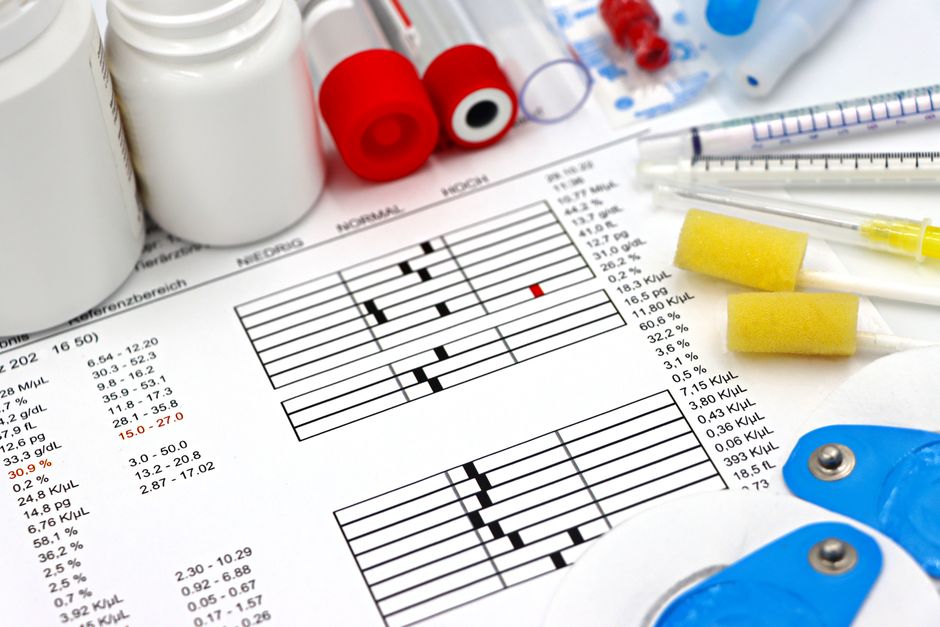
Drug tests screen for a defined list of substances, most often marijuana, cocaine, opioids, amphetamines, benzodiazepines, barbiturates, methadone, and PCP. What they test for depends entirely on who is ordering the test and why. A pre-employment panel, a hospital workup, a probation check, and a roadside investigation are not the same test, even when they share a name.
The word “drug test” describes a category, not a single procedure. Different panels look for different compounds. Different sample types detect different windows of time. Understanding what is actually being measured removes a lot of the confusion around these tests.
What Do Drug Tests Test For?
Most standard drug tests look for a fixed set of drug classes rather than a long list of individual substances. The most common is the five-panel test, which covers:
- Amphetamines — including methamphetamine and prescription stimulants like Adderall
- Cocaine — detected through its metabolite benzoylecgonine
- Opiates — typically morphine, codeine, and heroin metabolites
- PCP — phencyclidine
- THC — the psychoactive component of marijuana, detected through its metabolites
A ten-panel test adds substances such as benzodiazepines, barbiturates, methadone, propoxyphene, and sometimes MDMA or oxycodone, depending on the lab. A twelve-panel test may add hallucinogens, anabolic steroids, or certain prescription opioids.
Two points matter here. First, most screens detect drug classes, not specific drugs. An opiate screen cannot tell fentanyl from heroin. Second, the panel is chosen by the employer, court, or clinician. There is no universal standard that applies to every test.
What Is the Difference Between a Screen and a Confirmation Test?
A screening test is a fast, inexpensive first pass. A confirmation test is a slower, more precise analysis that identifies the exact substance.
Most screens use immunoassay technology. Antibodies bind to drug metabolites in the sample, and the result is either positive or negative based on a cutoff concentration. These tests are quick and cheap, but they can produce false positives. Common over-the-counter medications, certain foods, and other compounds can trigger a positive screen for a drug the person never used.
Because of that risk, a positive screen is not a final result in most settings. It is typically confirmed using gas chromatography-mass spectrometry (GC-MS) or liquid chromatography-mass spectrometry (LC-MS). These methods separate and identify molecules by their chemical properties. They are far more specific and far less prone to cross-reactivity.
This distinction matters. A positive immunoassay is an initial finding. A confirmed result is a different level of evidence.
How Long Do Drugs Stay Detectable?
Detection windows vary widely based on the drug, the dose, how often it was used, the person’s metabolism, and the type of test. The table below reflects general patterns, not guarantees.
| Substance | Urine | Blood | Saliva | Hair |
|---|---|---|---|---|
| Marijuana (THC) | Days to weeks; longer with heavy chronic use | Hours to a few days | Up to about 24 hours | Up to months |
| Cocaine | 2–4 days | Hours to about a day | About 1–2 days | Up to months |
| Opiates | About 2–4 days | Hours | About 1–2 days | Up to months |
| Amphetamines | About 2–4 days | Hours | About 1–2 days | Up to months |
| Benzodiazepines | Days to weeks, depending on the drug | Hours to days | Hours to days | Up to months |
These ranges are general. Individual results can fall outside them. Chronic, high-dose marijuana use in particular can extend urine detection well beyond the typical window because THC metabolites are stored in body fat and released slowly.



Which Sample Type Is Used and Why Does It Matter?
The sample type determines what the test can detect and how far back it looks.
Urine is the most common sample. It is inexpensive, non-invasive, and detects recent use across most drug classes. Its main limitation is that detection windows are long and variable, which makes it hard to pin down when use occurred.
Blood is used when recent use matters — for example, in emergency rooms or impaired driving investigations. Blood detects active drug levels and is the most direct measure of current impairment. Its detection window is short, often only hours.
Saliva is increasingly used in workplace and roadside testing. Collection is easy to observe, which reduces the chance of tampering. Detection windows are generally shorter than urine.
Hair provides the longest detection window, potentially months, because drugs and their metabolites are incorporated into the hair shaft as it grows. Hair testing is less useful for detecting very recent use. There is also ongoing debate about the risk of external contamination affecting hair results, and some labs use specialized washing procedures to address this.
What Can Cause a False Positive?
False positives on screening tests are a real and documented issue. They are one reason confirmation testing exists.
Common sources of cross-reactivity include:
- Certain cold and allergy medications for amphetamine screens
- Some antibiotics and antidepressants for various panels
- Poppy seeds for opiate screens
- Some over-the-counter pain relievers and decongestants
This is not a reason to assume any positive result is wrong. It is a reason to understand why an initial screen alone is not treated as definitive in most clinical and legal settings. Confirmation testing with mass spectrometry resolves the vast majority of these cases.
What Do Drug Tests Not Detect?
Standard panels miss a lot. They are designed to catch common drugs of abuse, not everything a person might use.
Many standard panels do not include:
- Synthetic cannabinoids such as K2 or Spice, which require specialized tests
- Fentanyl, unless the panel is specifically expanded to include it
- Most prescription medications that are not part of the standard panel
- Alcohol, which is tested separately using breath, blood, or other methods
- Designer drugs and novel psychoactive substances, which change faster than panels are updated
This is a moving target. New synthetic compounds appear regularly, and test panels are updated on their own timelines, not in real time. A negative result on a standard panel does not mean no substance was used.
Why the Question Matters
People ask what drug tests test for because the answer affects real decisions — employment, medical care, legal outcomes, and personal health. The honest answer is that it depends on the panel, the sample, and the purpose.
What is consistent is the underlying science. Immunoassays screen. Mass spectrometry confirms. Detection windows vary by substance and sample. No single test covers everything.
Frequently Asked Questions
What drugs does a standard 5-panel drug test check for?
A standard 5-panel test checks for amphetamines, cocaine, opiates, PCP, and THC. The exact substances included can vary by lab and employer.
Can a drug test detect prescription medications?
Only if those medications are part of the specific panel being used. A standard opiate screen may detect some prescription opioids, but most other prescription drugs require a separate, targeted test.
How accurate are drug tests?
Confirmation tests using mass spectrometry are highly specific and reliable. Screening tests are less specific and can produce false positives, which is why positive screens are usually confirmed by a second method.
Does a drug test detect alcohol?
No. Standard drug panels do not include alcohol. Alcohol is tested separately using breath, blood, urine, or other methods.
