
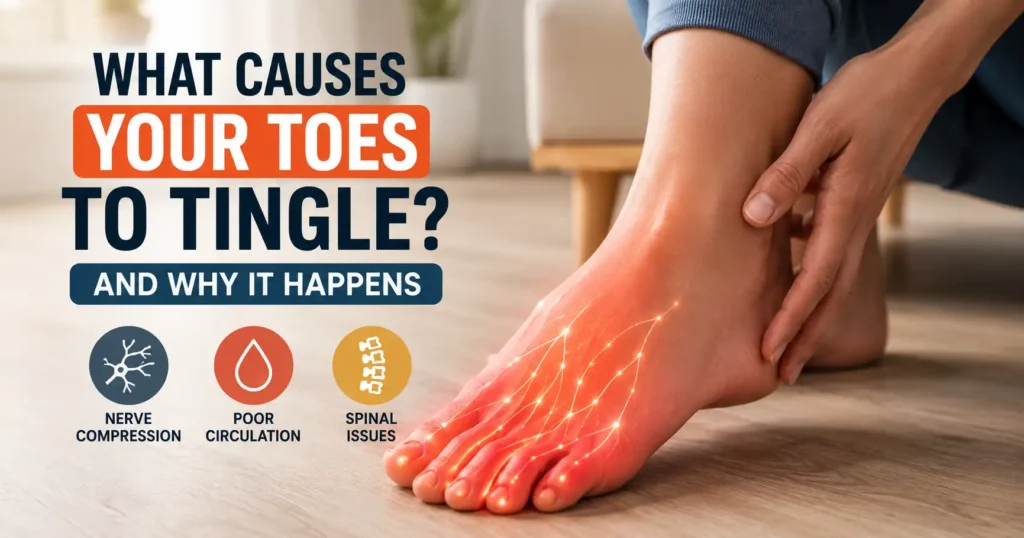
That pins-and-needles feeling in your toes is called paresthesia. It happens when a nerve is compressed, irritated, or damaged. Most of the time it is temporary and harmless — like when your foot falls asleep. But if the tingling comes back often or does not go away, something deeper may be going on. The cause can range from simple shoe pressure to underlying health conditions that need attention.
What Causes Your Toes To Tingle? Why It Happens
The most common cause is temporary nerve compression. Sitting in one position too long, crossing your legs, or wearing tight shoes can press on a nerve. This cuts off blood flow and signaling for a bit. Once you move, the feeling fades in a few minutes.
But when tingling sticks around, the cause is often more persistent. Peripheral neuropathy is the medical term for nerve damage outside the brain and spinal cord. It affects about 20 million people in the US, according to the National Institutes of Health. Diabetes is the leading cause, responsible for roughly half of all neuropathy cases.
Other causes include vitamin deficiencies, especially B12, B6, and folate. Alcohol use disorder can also damage nerves over time. So can certain autoimmune diseases like lupus or rheumatoid arthritis. Infections such as shingles or Lyme disease may trigger tingling too.
Is Tingling Toes a Sign of Something Serious?
Sometimes yes, but not always. You need to pay attention to the pattern. If tingling appears suddenly after a head or back injury, it could signal a spinal problem. That warrants a doctor’s visit right away.
Gradual tingling that spreads up your legs may indicate peripheral neuropathy. The CDC reports that about 60 to 70 percent of people with diabetes develop some form of neuropathy. If you have diabetes and your toes tingle, it could be diabetic neuropathy starting.
Other serious possibilities include multiple sclerosis, which affects the central nervous system, or a pinched nerve in your lower back, like sciatica. A herniated disc can press on the nerves that travel to your feet. Tingling combined with weakness or loss of bladder control is a red flag and needs emergency care.
But many cases are benign. If the tingling comes and goes with certain positions or activities, it is likely mechanical pressure. The key is duration and accompanying symptoms.
What Does Research on Toe Tingling Show?
Research published in the journal Diabetes Care has shown that tight blood sugar control reduces the risk of diabetic neuropathy by about 60 percent. That is a strong finding. It means if you have diabetes, keeping your A1C under 7 percent can make a real difference.
Studies on vitamin B12 deficiency are also clear. A 2019 review in Nutrients found that B12 deficiency is common in older adults and vegans, and that supplementation often improves nerve symptoms. But the research also shows that taking B12 when you do not need it does not help.
Some studies suggest that certain medications can cause tingling. Chemotherapy drugs, some antibiotics, and statins have all been linked to nerve symptoms. If your tingling started after a new medication, that is worth discussing with your doctor.
Evidence on alternative treatments is weaker. Acupuncture and alpha-lipoic acid show some benefit in small studies, but the data are not strong enough to recommend them as primary treatments. The American Academy of Neurology advises caution with unproven supplements.
| Common Cause | How Common It Is | What Typically Helps |
|---|---|---|
| Nerve compression | Very common, happens to most people | Changing position, better shoes |
| Diabetic neuropathy | About 50% of diabetics | Blood sugar control, medication |
| Vitamin B12 deficiency | Up to 15% of older adults | B12 supplements or injections |
| Alcohol-related neuropathy | Common in heavy drinkers | Stopping alcohol, B vitamins |
| Pinched nerve in back | Less common, but real | Physical therapy, sometimes surgery |
| Medication side effect | Varies by drug | Switching or stopping medication |





What Can You Do About Tingling Toes at Home?
Start with the basics. Check your shoes. Tight shoes or high heels can compress nerves in your feet. Switch to shoes with a wider toe box and good arch support. This alone fixes many cases.
Move more. Sitting or standing in one position for hours can cause tingling. Take a break every 30 minutes to walk and stretch. Simple calf stretches and toe wiggles improve blood flow.
Look at your diet. If you eat a lot of processed food or follow a strict vegan diet without supplements, you may be low in B vitamins. Foods rich in B12 include meat, fish, eggs, and dairy. Fortified cereals also work. If you are vegan, a B12 supplement is a good idea.
Limit alcohol. Heavy drinking damages nerves directly. If you drink daily or in large amounts, cutting back can stop the damage from getting worse. The National Institute on Alcohol Abuse and Alcoholism defines heavy drinking as more than 4 drinks per day for men or 3 for women.
Try a foot massage. Gentle massage can improve circulation and temporarily relieve tingling. It does not fix the underlying cause, but it feels good and is safe.
What Are the Treatment Options for Chronic Toe Tingling?
Treatment depends entirely on the cause. There is no one-size-fits-all fix. If diabetes is the culprit, the first step is better glucose control. Metformin and insulin are the mainstays, but newer drugs like GLP-1 agonists also help.
For vitamin deficiencies, supplementation is straightforward. B12 shots or high-dose oral supplements work well. Blood tests can confirm whether you are low.
If a pinched nerve in your spine is causing the tingling, physical therapy is often the first line of treatment. Stretching and strengthening exercises can relieve pressure on the nerve. In some cases, corticosteroid injections or surgery are needed.
Medications for nerve pain include gabapentin, pregabalin, and certain antidepressants like amitriptyline. These do not cure the nerve damage but can reduce the tingling sensation. They work by calming overactive nerve signals.
Topical treatments like capsaicin cream or lidocaine patches can also help. They are applied directly to the skin and work locally. Some people find them helpful, though the evidence is moderate at best.
What to Avoid When Your Toes Tingle
Do not ignore persistent tingling. If it lasts more than a few weeks or keeps coming back, see a doctor. Waiting too long can allow nerve damage to become permanent.
Do not self-diagnose with internet articles. Many serious conditions share the same symptom. Only a doctor can run the right tests — like nerve conduction studies, blood work, or MRI scans — to find the real cause.
Do not fall for miracle cures. The supplement industry is full of products claiming to reverse nerve damage. Most have no solid evidence behind them. The FDA does not regulate supplements the same way it regulates drugs. What is on the label may not match what is in the bottle.
Do not smoke. Smoking constricts blood vessels and reduces circulation to your feet. That can worsen nerve symptoms. If you smoke and have tingling toes, quitting is one of the best things you can do.
- Do not sit with your legs crossed for long periods
- Do not wear shoes that are too tight or lack support
- Do not ignore tingling that comes with weakness or pain
- Do not assume it is just aging — it is not normal
- Do not take high-dose B6 supplements without a doctor — too much B6 can actually cause neuropathy
Common Misconceptions About Toe Tingling
One widespread myth is that tingling toes always mean poor circulation. That is not true. While circulation problems can cause numbness or cold feet, tingling is usually a nerve issue. The two are different conditions with different treatments.
Another myth is that tingling is just part of getting older. It is not. While nerve function can decline with age, persistent tingling is not normal. It signals something specific that should be investigated.
Some people believe that if tingling does not hurt, it is not serious. That is false. Many serious nerve conditions start with tingling before pain appears. Diabetic neuropathy often begins with tingling and progresses to numbness, which is actually more dangerous because you cannot feel injuries.
A final misconception is that all tingling is caused by a back problem. While a pinched nerve in the spine can cause foot tingling, it is not the most common cause. Peripheral issues like shoe pressure or local nerve entrapment are much more frequent.
Frequently Asked Questions
Can anxiety cause tingling in toes?
Yes, anxiety can cause tingling through hyperventilation or muscle tension. This is usually temporary and goes away when the anxiety subsides.
How long should I wait before seeing a doctor for tingling toes?
See a doctor if tingling lasts more than two weeks or comes with weakness, pain, or changes in bladder control. Sudden tingling after an injury needs immediate attention.
Does tingling in toes mean I have diabetes?
Not necessarily, but it is a common early sign. About half of people with diabetic neuropathy have type 2 diabetes that was not yet diagnosed. A simple blood test can check.
Can dehydration cause tingling in toes?
Dehydration can cause electrolyte imbalances that may trigger tingling. This is less common than other causes but possible, especially after intense exercise or illness.
