
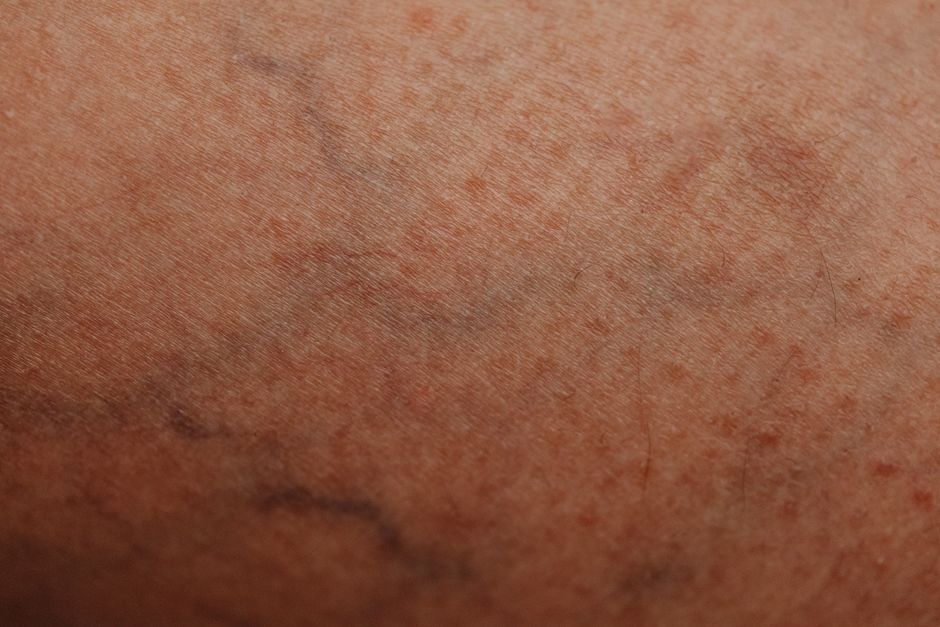
Varicose veins are swollen, twisted veins that appear just under the skin, usually in the legs. They happen when the one-way valves inside your veins stop working properly, allowing blood to pool instead of flowing back up to your heart. This pooling increases pressure inside the vein, causing it to stretch, bulge, and twist. While they are common and often harmless, they can cause discomfort and, in some cases, lead to more serious health problems.
How Do Veins Work and What Goes Wrong?
To understand varicose veins, you need to know what healthy veins do. Arteries carry blood from your heart to your body. Veins carry blood back. In your legs, that means blood must travel upward against gravity.
Your leg veins have tiny one-way flaps called valves. These valves open to let blood move up and then close to stop it from falling back down. When these valves weaken or fail, blood does not move efficiently. It pools in the vein, increasing pressure and leading to the bulging, rope-like appearance you see on the surface.
This is not a surface skin problem. It is a problem with the circulatory system deep in the leg. The visible bulges are often connected to larger, deeper veins that are failing in the same way.
What Causes Varicose Veins In Legs?
The direct cause of varicose veins is damaged or weakened vein valves. But why do those valves fail in the first place? It usually comes down to a combination of genetics, age, and physical factors.
Genetics play a major role. If your parents or grandparents had varicose veins, you are significantly more likely to develop them. You inherit the structural weakness in your vein walls that makes valve failure more likely.
Age is another unavoidable factor. Over time, vein walls naturally lose elasticity. They become stiffer and less able to stretch and recoil. This gradual wear and tear makes the valves less effective at sealing, which is why varicose veins become more common as people get older.
Pregnancy is a well-established trigger. During pregnancy, blood volume increases to support the fetus, putting extra pressure on the veins. Hormonal changes also relax vein walls. Many women first notice varicose veins during pregnancy, and they often improve after delivery.
What Increases Your Risk?
Several lifestyle and health factors increase the pressure on your leg veins and raise your risk of developing varicose veins.
Prolonged standing or sitting is a major contributor. When you stand for hours, gravity constantly pulls blood down into your legs. Your calf muscles normally help pump blood upward when you walk, but standing still does not activate that pump. This puts continuous strain on the vein valves.
Obesity increases pressure in the abdominal and leg veins. Excess weight compresses the veins and makes it harder for blood to return to the heart. This added pressure directly contributes to valve failure.
Being female is also a risk factor. Hormonal changes from puberty, pregnancy, and menopause all affect vein walls. Women are more likely to develop varicose veins than men, and the condition often worsens with each pregnancy.
A history of blood clots can also damage vein valves. Even if the clot resolves, the valve structure may be permanently harmed, leading to varicose veins later in life.





Are Varicose Veins the Same as Spider Veins?
No. They are related but different conditions. Spider veins are small, thin, red or blue lines that appear close to the skin’s surface. They often look like a web or a tree branch. They are mostly a cosmetic concern.
Varicose veins are larger, raised, and often painful. They can feel heavy or achy, especially after standing for a long time. The distinction matters because varicose veins are more likely to cause symptoms and complications that require treatment.
Having spider veins does not necessarily mean you will develop varicose veins. But having a family history of either condition increases your chances of developing both.
When Are Varicose Veins a Medical Problem?
For many people, varicose veins are a cosmetic issue. But they can progress to a medical condition called chronic venous insufficiency. This means the veins are so damaged that they cannot return blood to the heart effectively.
Common symptoms include aching, heaviness, burning, throbbing, and swelling in the legs. These symptoms often worsen after prolonged standing or sitting and improve with walking or elevating the legs.
More serious signs require prompt medical attention. These include skin changes like discoloration, hardening, or thickening around the ankle. Skin ulcers, bleeding from a varicose vein, or a sudden, painful, red, warm area could indicate a complication. In rare cases, blood clots can form in the superficial veins, a condition called superficial thrombophlebitis.
If you notice any of these signs, see a doctor. Do not wait for them to resolve on their own.
What Are Your Treatment Options?
Treatment depends on the severity of symptoms and whether complications are present. For mild cases, lifestyle changes are often the first step.
Compression stockings are a standard first-line treatment. These specially fitted stockings apply graduated pressure to the legs, helping blood move upward and reducing swelling and pain. They do not cure varicose veins, but they manage symptoms effectively.
Elevating your legs above heart level for 15 to 30 minutes several times a day helps drain pooled blood. This is a simple, effective way to relieve discomfort.
Exercise, particularly walking, activates the calf muscle pump. This natural mechanism pushes blood out of the lower legs and reduces the strain on your veins.
For more significant cases, medical procedures are available. Endovenous ablation uses laser or radiofrequency energy to heat and close the affected vein. Sclerotherapy involves injecting a solution into the vein that causes it to collapse and fade. Phlebectomy is a minor surgical procedure to remove smaller varicose veins through tiny incisions.
These procedures are generally safe and effective, but they are not always permanent. New varicose veins can develop over time, especially if the underlying risk factors remain.
Can You Prevent Varicose Veins?
You cannot change your genetics or your age. But you can reduce your risk and slow the progression of existing varicose veins.
Maintaining a healthy weight reduces pressure on your leg veins. Regular physical activity improves circulation and strengthens the calf muscle pump. If your job requires long periods of standing or sitting, take breaks every 30 minutes. Walk around, flex your ankles, or do calf raises to keep blood moving.
Avoid sitting with your legs crossed for long periods. This can restrict blood flow and increase pressure in the veins. When possible, elevate your legs when resting.
These measures do not guarantee prevention. But they meaningfully reduce the strain on your veins and can delay or reduce the severity of varicose veins.
Frequently Asked Questions
Can varicose veins go away on their own?
No, varicose veins do not go away without treatment. Once vein valves are damaged, they do not repair themselves, though symptoms can improve with lifestyle changes like elevation and compression.
Are varicose veins dangerous?
Most varicose veins are not dangerous and only cause cosmetic concerns or mild discomfort. However, they can lead to complications like skin ulcers, bleeding, or blood clots, which require medical attention.
Does walking make varicose veins worse?
No, walking is actually beneficial. It activates the calf muscle pump, which helps push blood upward and reduces the pressure that causes varicose veins to worsen.
Are varicose veins a sign of heart problems?
No, varicose veins are not a sign of heart disease. They are a local problem with the valves in your leg veins, not a problem with your heart’s ability to pump blood.
