
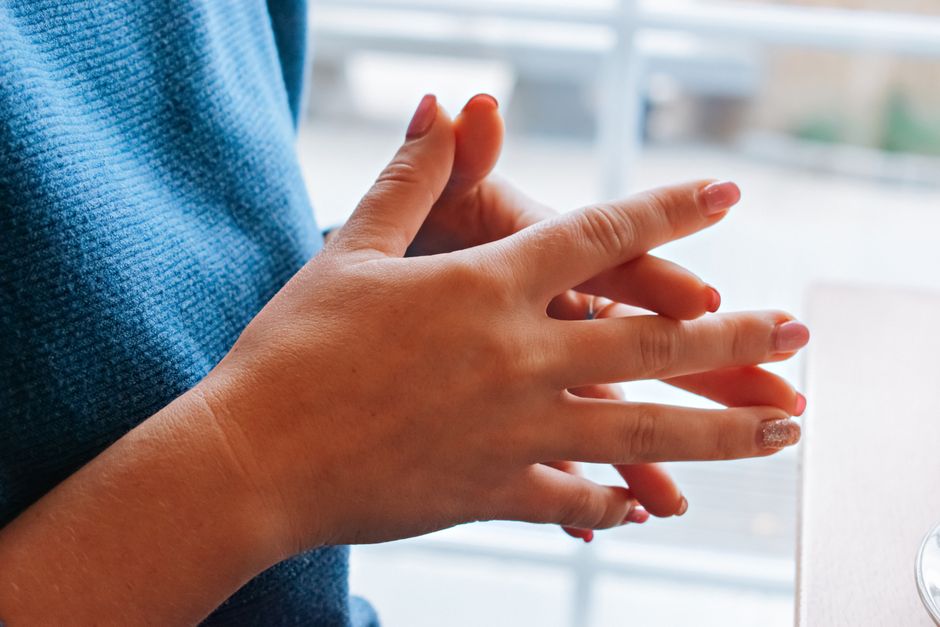
If your ring finger locks, clicks, or gets stuck in a bent position, you likely have trigger finger. The ring finger is the most common finger affected by this condition. It happens when the tendon sheath in your palm becomes inflamed and thickened, creating a physical mismatch between the tendon and the tunnel it slides through. This causes the finger to catch or lock as you try to straighten it.
What Exactly Happens Inside the Finger to Cause Trigger Finger?
Your fingers bend because of long tendons that run from your forearm muscles through tunnels in your palm and into your fingers. These tunnels are called tendon sheaths. They keep the tendons in place and lubricate them so they slide smoothly.
In trigger finger, the tendon sheath at the base of your finger becomes inflamed and narrows. The tendon itself may also develop a small nodule or thickening. When you bend your finger, the nodule passes through the narrowed sheath easily enough. But when you try to straighten it, the nodule gets stuck at the tight spot. That is the “trigger” — the catching sensation you feel.
Research published in the Journal of Hand Surgery has shown that the condition involves both inflammation and a fibrocartilaginous change in the sheath. It is not just swelling. The tissue actually changes structure over time. This is why early treatment matters more than many people realize.
What Causes Trigger Finger In The Ring Finger More Than Other Fingers?
Studies have found that the ring finger is the most commonly affected digit for trigger finger. The thumb is second. No one knows for certain why the ring finger is so vulnerable, but there are strong theories.
The ring finger has a unique anatomical position. It shares a common flexor tendon with the middle and little fingers. This means forces from gripping and grasping are distributed unevenly across the hand. The ring finger often bears the highest load during power grip activities. Over time, this repeated stress may cause more wear on its tendon sheath.
Another theory involves the palmar aponeurosis — the thick connective tissue in your palm. The ring finger’s tendon sheath is closely connected to this tissue. Some hand surgeons believe this anatomical link makes the ring finger more prone to mechanical irritation and inflammation.
Evidence for these theories is indirect. There is no single study proving why the ring finger is most affected. But the pattern is consistent across multiple large patient studies reported in hand surgery literature.
Who Is Most Likely to Develop Trigger Finger?
Trigger finger is not rare. The American Academy of Orthopaedic Surgeons estimates that about 2 to 3 percent of the general population will experience it at some point. The rate is higher in certain groups.
People with diabetes are at significantly higher risk. Studies have found that 5 to 10 percent of people with diabetes develop trigger finger. The reason is not fully understood, but it likely relates to changes in collagen and connective tissue caused by high blood sugar. People with type 1 and type 2 diabetes both have elevated risk.
Women are affected more often than men, particularly between ages 40 and 60. The exact reason is unclear, but hormonal factors and differences in hand use may play a role.
Occupations matter. Jobs that involve repetitive gripping, prolonged tool use, or forceful hand movements increase risk. Construction workers, musicians, and assembly line workers are commonly affected. But trigger finger also occurs in people with no obvious repetitive strain history.
Other medical conditions linked to trigger finger include:
- Rheumatoid arthritis
- Hypothyroidism
- Gout
- Amyloidosis
- Kidney disease requiring dialysis
Having one of these conditions does not mean you will get trigger finger. It simply means your baseline risk is higher.





Can Trigger Finger Go Away Without Treatment?
Some people report that their trigger finger symptoms improve on their own. This is widely claimed in online forums and by some patients. But strong clinical evidence for spontaneous resolution is limited.
A 2020 review in Orthopedic Reviews found that mild cases — where the finger catches only occasionally and does not lock — may improve with rest and activity modification. But the review also noted that most people who seek medical care have symptoms that persist or worsen over time.
The natural history of trigger finger is not well studied. Most research focuses on treatment outcomes rather than untreated progression. What is known is that if the finger becomes stuck in a bent position and you have to use your other hand to straighten it, spontaneous recovery is unlikely. The structural changes in the tendon sheath have progressed beyond what rest alone can reverse.
If your finger locks but you can still straighten it on your own, you have more options. Some people manage symptoms for years with simple strategies like avoiding tight gripping and using their other hand for heavy tasks. But the condition rarely resolves completely without intervention once symptoms are noticeable.
What Treatments Actually Work for Trigger Finger?
Treatment options range from simple to surgical. The evidence supports different approaches depending on severity and duration of symptoms.
| Treatment | How It Works | Evidence Strength |
|---|---|---|
| Activity modification | Avoiding repetitive gripping and using ergonomic tools | Weak — helps mild cases, but no strong trials |
| Splinting | Keeping the finger straight at night to reduce inflammation | Moderate — effective for mild to moderate cases |
| Corticosteroid injection | Reducing inflammation in the tendon sheath | Strong — 60 to 80 percent success rate in studies |
| Percutaneous release | Needle inserted through skin to cut the tight sheath | Strong — success rates above 90 percent |
| Surgical release | Small incision to cut the sheath under direct vision | Strong — success rates above 95 percent |
Corticosteroid injections are the most common first treatment. Research published in the Journal of Hand Surgery reports that one injection resolves symptoms in about 60 percent of people. A second injection helps another 20 percent. The main downside is that symptoms may return after several months.
Surgical release — either with a needle or a small incision — has the highest success rate. Recovery is usually quick. Most people return to normal activities within a few weeks. The procedure is done under local anesthesia and takes about 10 minutes.
Physical therapy and anti-inflammatory medications like ibuprofen have limited evidence. They may help with mild symptoms, but they do not address the structural narrowing of the tendon sheath.
What Should You Avoid If You Have Trigger Finger?
Some popular treatments are not supported by evidence and may even make things worse.
Vigorous stretching is one of them. Many people assume that forcing the finger straight repeatedly will break up the nodule. It will not. Aggressive stretching can increase inflammation and make the locking worse. Gentle passive range of motion is fine. Forcing through a locked position is not.
Finger splints that keep the finger completely straight all day are also not recommended. They prevent the finger from bending, which can lead to stiffness in the other joints. Night splinting is different — it keeps the finger extended while you sleep and does not interfere with daytime function.
Massage guns and deep tissue tools applied directly to the palm near the tendon sheath are another common mistake. These devices are designed for muscle tissue, not for inflamed tendon sheaths. Using them on the palm can increase swelling and irritation. Some people report temporary relief, but there is no clinical evidence that they treat the underlying problem.
Topical creams marketed for trigger finger should be viewed with skepticism. As of 2026, there is no clinical evidence that any topical cream resolves the structural changes in the tendon sheath. These products are not regulated by the FDA for this purpose.
Common Misconceptions About Trigger Finger
One persistent myth is that trigger finger is caused by typing or smartphone use. There is no strong evidence linking trigger finger to keyboard work or texting. The forces involved in typing are relatively low compared to gripping and grasping. People who spend hours on computers do develop trigger finger, but not at rates higher than the general population.
Another misconception is that trigger finger is the same as Dupuytren’s contracture. These are two different conditions. Dupuytren’s involves thickening of the connective tissue in the palm, causing fingers to bend permanently toward the palm. Trigger finger involves the tendon sheath and causes locking, not permanent bending. Some people have both conditions, but they are distinct.
A third myth is that surgery will make your finger weaker. Research shows that after recovery, grip strength returns to normal in most patients. The tendon is not cut or damaged during release. Only the tight sheath is divided. The tendon continues to work normally.
Frequently Asked Questions
Can trigger finger spread to other fingers?
Yes, trigger finger can affect multiple fingers, often in the same hand. The ring finger and thumb are most commonly involved, but any finger can develop the condition.
How long does it take for a steroid injection to work?
Most people notice improvement within three to seven days after the injection. Full effect usually occurs within two weeks.
Is trigger finger permanent if left untreated?
It can become permanent if the tendon sheath continues to thicken and the finger becomes stuck in a bent position. Early treatment offers the best chance of full recovery.
Can exercise make trigger finger worse?
Exercises that involve repetitive gripping or forceful hand movements can aggravate symptoms. Gentle finger stretches and tendon gliding exercises under guidance from a hand therapist are generally safe.
