

Spinal torsion is a twisting of the spine that pulls vertebrae out of their natural alignment. It is most often caused by repetitive poor posture, muscle imbalances, or sudden injury. Treatment focuses on physical therapy to correct muscle patterns, manual therapy to restore alignment, and exercises to stabilize the core. Most cases improve without surgery when caught early.
What Exactly Is Spinal Torsion?
Spinal torsion is not a formal medical diagnosis in most cases. It describes a rotational strain where one vertebra twists slightly relative to the one above or below it. This twisting can happen in the neck, mid-back, or lower back.
The spine is designed to rotate. Healthy rotation is about 5 to 10 degrees between each vertebra. Torsion happens when rotation exceeds normal limits or happens in a way the supporting muscles cannot control. The result is uneven pressure on discs, joints, and nerves.
Many people confuse torsion with scoliosis. Scoliosis is a structural curve that develops over years. Torsion is an acute or chronic rotational stress. They can coexist but are not the same thing.
What Causes Spinal Torsion?
The most common cause is repetitive asymmetrical loading. That is a fancy way of saying you do the same one-sided movement over and over. Carrying a bag on the same shoulder every day. Sleeping in the same twisted position. Leaning to one side while sitting at a desk for years.
Muscle imbalances drive torsion more than bone structure does. When one side of your back is tighter than the other, it pulls the spine toward it. Over time, the vertebrae rotate to accommodate the pull. The American Chiropractic Association notes that poor ergonomics and prolonged sitting are major contributors to spinal misalignment.
Sudden injuries also cause torsion. Car accidents, sports collisions, and falls can force the spine past its normal range of motion. The twisting happens in an instant. The pain and stiffness can last months if the rotation is not corrected.
Some people have a genetic tendency toward spinal rotation. Conditions like Ehlers-Danlos syndrome cause loose ligaments. When ligaments are loose, vertebrae can twist more easily. This is less common but worth knowing if you have always been flexible and have chronic back issues.
What Are the Symptoms of Spinal Torsion?
Symptoms vary depending on which part of the spine is affected. In the neck, torsion often causes headaches, dizziness, and pain when turning the head. In the mid-back, people feel a burning ache between the shoulder blades. In the lower back, torsion can mimic sciatica with pain shooting down one leg.
A key sign is asymmetry. One shoulder sits higher. One hip feels tighter. Your head tilts slightly to one side in photos. These are not just cosmetic issues. They indicate the spine has rotated enough to change your posture visibly.
Pain often gets worse after sitting or standing in one position for more than 20 minutes. It improves when you move around but does not fully go away. Many people describe it as a dull ache with sharp twinges during certain movements.
Numbness or tingling in the arms or legs can happen if the twisted vertebrae press on a nerve. This is less common with mild torsion but is a sign you should see a healthcare provider promptly.




How Is Spinal Torsion Diagnosed?
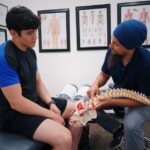
Diagnosis starts with a physical exam. A doctor or physical therapist will check your posture, range of motion, and muscle strength. They will look for the asymmetry mentioned above. They may press on specific vertebrae to see which ones are tender.
Imaging is not always needed. Many cases of torsion are diagnosed based on symptoms and physical findings alone. X-rays can show rotation when taken from specific angles. MRI is used if there is concern about disc damage or nerve compression.
Research published in the journal Spine has shown that CT scans are the most accurate way to measure vertebral rotation. But CT scans expose you to radiation. Most clinicians reserve them for complex cases or before surgery.
A common mistake is treating torsion as general back pain without identifying the rotation. General back pain treatments like rest and heat may help symptoms temporarily but will not fix the twist. That is why getting a specific diagnosis matters.
What Are the Best Treatments for Spinal Torsion?
Treatment depends on the cause and severity. For most people, conservative care works well. Physical therapy is the foundation. The goal is to strengthen the muscles that hold the spine in neutral rotation and stretch the ones pulling it out of alignment.
Manual therapy from a trained professional can help. Chiropractic adjustments, osteopathic manipulation, and massage therapy all have evidence supporting their use for spinal rotation. A 2021 review in the Journal of Manipulative and Physiological Therapeutics found that spinal manipulation combined with exercise was more effective than either treatment alone for rotational back pain.
Here is a comparison of common treatment approaches:
| Treatment | What It Does | Evidence Level |
|---|---|---|
| Physical therapy | Corrects muscle imbalances through targeted exercises | Strong – multiple studies support it |
| Spinal manipulation | Applies controlled force to rotate vertebrae back into alignment | Moderate – effective for acute cases |
| Massage therapy | Relaxes tight muscles that cause rotational pull | Moderate – helpful as part of a program |
| Bracing | Limits rotation during healing | Weak – rarely needed for adults |
| Surgery | Fuses vertebrae to stop rotation | Reserved for severe, unresponsive cases |
Exercise is essential. The best exercises target the core, hips, and shoulder blades. A strong core acts like a natural brace that keeps your spine from twisting too far. Planks, side planks, and bird-dog exercises are commonly prescribed. Your therapist should give you a program specific to your rotation pattern.
Some people report relief from yoga or Pilates. These practices emphasize controlled movement and body awareness. They can help, but only if the instructor understands spinal mechanics. Random stretching without knowing which side is tight can make torsion worse.
What Should You Avoid If You Have Spinal Torsion?
Avoid prolonged sitting in unsupported chairs. Your spine rotates more when your pelvis is not stable. Use a chair with good lumbar support or a rolled towel behind your lower back. Get up every 30 minutes.
Do not stretch aggressively without knowing your specific imbalance. If your right side is tight and your left side is weak, stretching both sides equally will not help. It may actually increase the instability on the weak side. A physical therapist can tell you which stretches are right for you.
Avoid heavy lifting with poor form. Deadlifts and squats with a twisted spine put enormous pressure on the discs. If you lift weights, work with a coach who can check your form for rotational asymmetry.
Do not ignore the problem hoping it will go away. Mild torsion can become chronic if the underlying muscle imbalance is not corrected. The longer the spine stays rotated, the more the ligaments and discs adapt to the abnormal position. That makes treatment harder later.
Common Misconceptions About Spinal Torsion
One widespread myth is that cracking your back fixes torsion. The pop you hear is gas releasing from the joint, not the spine realigning. Cracking your back repeatedly can actually loosen the ligaments that hold vertebrae in place, making instability worse over time.
Another myth is that torsion always causes pain. Many people have some degree of spinal rotation without any symptoms. Imaging studies show that vertebral rotation is common in people who report no back pain at all. Pain happens when the rotation irritates nerves or forces muscles to work overtime.
Some believe that torsion is permanent once it develops. That is not true for most people. Muscles can be retrained. Joints can be mobilized. The spine has remarkable ability to return to neutral when the right forces are applied consistently over time.
The idea that you can fix torsion with a single adjustment is also false. Even if a chiropractor rotates a vertebra back into place, it will drift back if the muscles pulling it out are still tight. Lasting correction requires changing the muscle patterns that caused the problem.
Frequently Asked Questions
Can spinal torsion heal on its own?
Mild cases can improve with activity changes and better posture. Moderate to severe cases usually need professional treatment to fully resolve.
How long does it take to fix spinal torsion?
Most people see improvement in 4 to 8 weeks of consistent physical therapy. Chronic cases may take 3 to 6 months.
Is spinal torsion the same as a slipped disc?
No. Torsion is a rotation of the vertebrae. A slipped disc is when the cushion between vertebrae bulges or ruptures. They can happen together but are separate problems.
What doctor treats spinal torsion?
A physical therapist, chiropractor, or osteopathic physician are the most common providers. An orthopedic doctor can help if conservative treatment does not work.
