
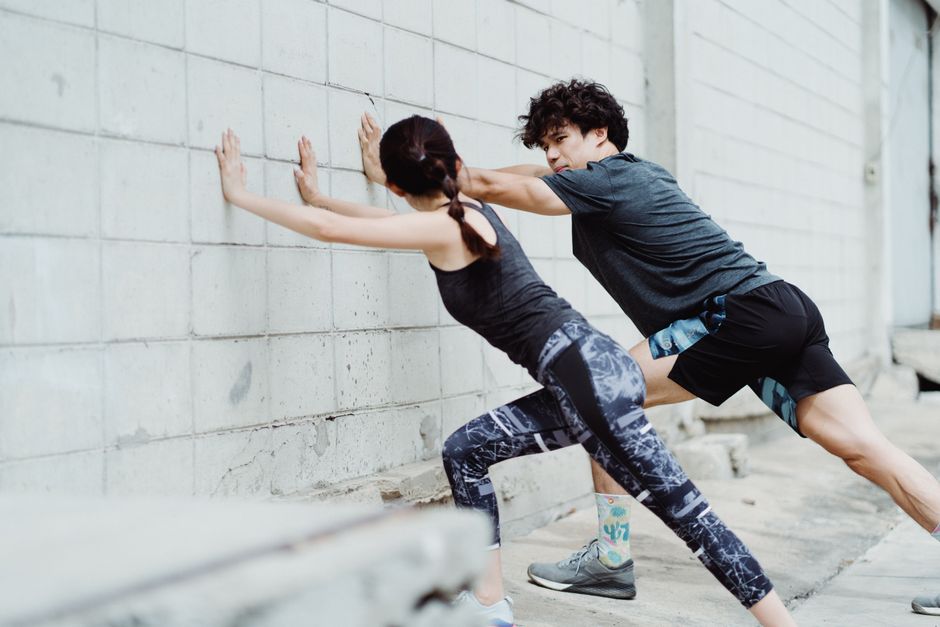
Your calf feels tight no matter how much you stretch. You roll it with a lacrosse ball. You try yoga. Nothing sticks. The problem might not be your gastrocnemius — the big calf muscle you can see. It might be the soleus, a flat muscle underneath that rarely gets the attention it needs. Soleus tightness is common, often misunderstood, and usually fixable with the right approach. The main causes are prolonged sitting, improper footwear, overtraining without adequate recovery, and poor ankle mobility. Relief comes from targeted strengthening, eccentric loading, and addressing movement patterns — not just stretching harder.
What Exactly Is the Soleus and Why Does It Get Tight?
The soleus is a broad, flat muscle that runs from just below your knee to your Achilles tendon. Unlike the gastrocnemius, which crosses both the knee and ankle, the soleus only crosses the ankle. This makes it a pure ankle plantar flexor — it points your foot down.
Because the soleus is made mostly of slow-twitch muscle fibers, it is designed for endurance. It works constantly when you stand, walk, or run. It does not fatigue quickly. But that also means it can stay tight for a long time without you noticing until the tension becomes chronic.
Research published in the Journal of Orthopaedic & Sports Physical Therapy has shown that the soleus has a higher density of muscle spindles — sensory receptors that detect stretch — than many other leg muscles. This makes it sensitive to changes in length and tension. When it stays in a shortened position for hours, those spindles adapt and hold that shortened state even when you try to lengthen it.
Most people think calf tightness is a stretching problem. For the soleus, it is usually a positioning and loading problem.
What Causes Soleus Tightness in Daily Life?
Prolonged sitting is the most common cause. When you sit, your knee is bent at roughly 90 degrees. In this position, your soleus is shortened — not fully contracted, but held shorter than its resting length. After hours of this every day, the muscle adapts. The fascia tightens. The muscle fibers lose some of their ability to lengthen fully.
Shoes with a raised heel — including most dress shoes, running shoes with a high drop, and even some casual sneakers — keep the soleus in a slightly shortened position all day. The American Council on Exercise notes that a heel lift of even 10 millimeters changes the resting length of the calf muscles. Over months and years, this adds up.
Standing on hard surfaces for long shifts also contributes. The soleus works continuously to stabilize your ankle. Without adequate foot support or regular position changes, it accumulates tension that does not fully release during rest.
One less obvious cause is sleeping with your feet pointed down — plantar flexion. If you sleep on your back with your toes pointed or on your stomach with your feet hanging off the bed, your soleus stays shortened for 6 to 8 hours. Some people wake up with tight calves every morning and never connect it to their sleep position.
How Soleus Tightness Differs From Regular Calf Tightness
A standard calf stretch — standing with your leg straight and leaning forward — primarily targets the gastrocnemius. The soleus is mostly bypassed because your knee is straight. To stretch the soleus, you need your knee bent.
| Stretch Type | Knee Position | Muscle Targeted |
|---|---|---|
| Straight-leg calf stretch | Extended | Gastrocnemius |
| Bent-knee calf stretch | Flexed | Soleus |
| Downward dog | Extended | Gastrocnemius |
| Seated calf stretch with towel | Flexed | Soleus |
If you stretch your calf every day with a straight leg and still feel tightness, you are probably missing the soleus entirely. This is why many people report that “nothing works” for their calf tightness. They are stretching the wrong muscle.
Another difference is how the tightness feels. Gastrocnemius tightness often feels like a pulling sensation high in the calf. Soleus tightness tends to feel deeper — more like a dull ache or a band of pressure around the lower calf and Achilles area.


What Does Research Say About Relieving Soleus Tightness?
Stretching alone has limited effectiveness for chronic soleus tightness. A 2021 systematic review in the International Journal of Sports Physical Therapy found that static stretching provides short-term increases in range of motion but does not change muscle stiffness at the tissue level beyond 24 hours. For lasting change, you need to address why the muscle is staying tight.
Eccentric loading has the strongest evidence. The Alfredson protocol, originally developed for Achilles tendinopathy, involves heavy slow heel drops off a step. Research published in the British Journal of Sports Medicine found that eccentric calf exercises significantly reduced calf muscle stiffness and improved ankle dorsiflexion in patients with chronic tightness.
Dry needling has some support. A 2019 study in the Journal of Orthopaedic & Sports Physical Therapy found that a single session of dry needling to the soleus reduced muscle tension and improved ankle range of motion for up to one week. The effect was modest but statistically significant compared to sham needling.
Massage and foam rolling provide temporary relief but do not change the underlying cause. A 2020 study in the Journal of Sports Science and Medicine found that foam rolling the calf reduced perceived tightness for about 20 minutes but did not alter muscle stiffness measured by ultrasound. It helps with symptoms, not the root problem.
Practical Steps to Relieve Soleus Tightness That Actually Work
Start with bent-knee calf stretches. Sit on the floor with your leg straight. Loop a towel around the ball of your foot. Keep your knee bent at about 30 degrees — not fully straight. Pull your toes toward you until you feel a stretch in the lower calf. Hold for 30 seconds. Do this twice per leg, twice per day.
Add eccentric heel drops. Stand on a step with your heels hanging off. Lower one heel slowly over three seconds until you feel a deep stretch in the calf. Push back up with both feet. Do three sets of 15 reps per leg. Go slow. The lowering phase is what creates the tissue adaptation.
Check your shoes. Look at the heel-to-toe drop. A drop of 8 millimeters or more keeps your soleus shortened. Zero-drop or minimalist shoes force your calf to work through a fuller range of motion. Transition slowly if you switch — going from high-drop to zero-drop overnight can strain your Achilles.
Change your sitting habits. Every 30 minutes, stand up and take a few steps. Point your toes up toward your shins while standing. This takes the soleus from shortened to lengthened in a few seconds. It does not replace a full stretch, but it prevents the muscle from adapting to a shortened position over hours.
Sleep with your feet supported. If you sleep on your back, place a pillow under your knees to keep your feet in a neutral position. If you sleep on your side, keep your top leg bent and your bottom leg straight with a pillow between your knees. If you sleep on your stomach, let your feet hang off the edge of the mattress so they can rest in a neutral position.
What to Avoid When Trying to Relieve Soleus Tightness
Do not stretch aggressively first thing in the morning. Your soleus has been shortened all night. Forcing a deep stretch on cold tissue can cause microtears. Walk around for a few minutes first. Do a few ankle circles. Then stretch gently.
Do not rely on foam rolling alone. It feels good. It releases some surface tension. But it does not change the length or stiffness of the soleus at depth. The roller cannot reach the deep fibers effectively. Use it as a warm-up, not a treatment.
Do not ignore hip and ankle mobility. The soleus does not work in isolation. Limited ankle dorsiflexion — the ability to bring your shin forward over your foot — forces the soleus to work harder. Restricted hip extension also shifts load to the calf. If your soleus stays tight despite all the right exercises, check your ankle and hip range of motion.
Do not increase running or jumping volume without addressing tightness first. The soleus absorbs a large amount of force during running. Research in the Journal of Biomechanics found that the soleus generates more force during running than the gastrocnemius. Running on a tight soleus increases the risk of Achilles tendinopathy and medial tibial stress syndrome — shin splints.
Common Misconceptions About Soleus Tightness
Many people believe that tight calves are always a sign of weakness. That is not accurate. Sometimes a tight soleus is overworking because other muscles — like your glutes or core — are underworking. The soleus compensates. Stretching it without addressing the compensation pattern will not fix the problem long-term.
Another misconception is that you need to feel pain for a stretch to work. Pain during stretching usually indicates that you are forcing a muscle that is not ready to lengthen. This triggers a protective reflex called the stretch reflex, which actually increases muscle tension. Effective stretching for the soleus should feel like a strong pull, not a sharp or burning sensation.
Some people think that calf tightness is just part of getting older. Age-related changes in muscle stiffness are real, but they are gradual and modest. The rapid onset of chronic tightness in your 40s or 50s is more likely related to changes in activity, footwear, and sitting time than to aging itself. The soleus responds well to targeted exercise at any age.
When Soleus Tightness Might Be Something Else
Persistent soleus tightness that does not respond to stretching, strengthening, or footwear changes could be a sign of something else. Chronic exertional compartment syndrome can cause deep calf tightness and pain during activity. A 2020 study in the American Journal of Sports Medicine found that up to 27% of patients with exertional leg pain had some form of compartment syndrome.
Deep vein thrombosis — a blood clot in the calf — can also feel like muscle tightness. If your calf is swollen, warm, or red, or if the tightness came on suddenly, seek medical attention immediately. The CDC reports that DVT affects up to 900,000 Americans each year, and early treatment matters.
Nerve entrapment, particularly of the tibial nerve or sural nerve, can mimic soleus tightness. If you feel tingling, numbness, or burning along with the tightness, the problem may be neurological rather than muscular. A physical therapist or sports medicine doctor can help differentiate.
Frequently Asked Questions
How long does it take to relieve chronic soleus tightness?
With consistent daily stretching and eccentric loading, most people notice improvement within two to four weeks. Full resolution of chronic tightness can take six to eight weeks.
Can soleus tightness cause knee pain?
Yes. A tight soleus limits ankle dorsiflexion, which forces the knee to compensate during walking and running. This altered mechanics can contribute to patellofemoral pain syndrome.
Is it better to stretch or strengthen a tight soleus?
Both are needed. Stretching provides short-term relief, but strengthening — especially eccentric loading — creates lasting changes in muscle stiffness and length.
Should I stop running if my soleus is tight?
Not necessarily. Reduce intensity and volume until the tightness improves. Continue with bent-knee stretches and heel drops. Running through severe tightness increases injury risk.
