
Triceps soreness happens when tiny tears form in the muscle fibers during exercise or daily activities. The most direct way to relieve it is a combination of gentle stretching, targeted massage, and smart recovery habits like rest and ice. Stretching helps restore range of motion and reduces stiffness. Recovery methods like light movement and proper nutrition support the muscle as it heals. This article explains what works, what does not, and why some popular advice is worth skipping.
What Causes Sore Triceps After Exercise?
Triceps soreness typically comes from two sources. The first is delayed onset muscle soreness, or DOMS. This happens 24 to 72 hours after a workout and is a normal response to unfamiliar or intense exercise. The second is overuse, where repetitive motions like pushing, throwing, or pressing strain the triceps beyond its capacity.
Push-ups, dips, bench press, and overhead presses are common triggers. Even activities like pushing a heavy shopping cart or painting a ceiling can cause triceps soreness if you are not used to them. The soreness is a sign of micro-tears in the muscle tissue. This is not dangerous on its own, but it signals that the muscle needs time to repair.
Research published in the Journal of Strength and Conditioning Research has shown that eccentric exercise, where the muscle lengthens under tension, produces more soreness than concentric exercise. For the triceps, this means the lowering phase of a push-up or a triceps extension causes more muscle damage than the lifting phase.
How To Relieve Sore Triceps Stretches And Recovery Tips
Gentle stretching is one of the most effective tools for sore triceps. The goal is not to force a deep stretch but to restore blood flow and reduce stiffness. Hold each stretch for 15 to 30 seconds. Never bounce or push into sharp pain.
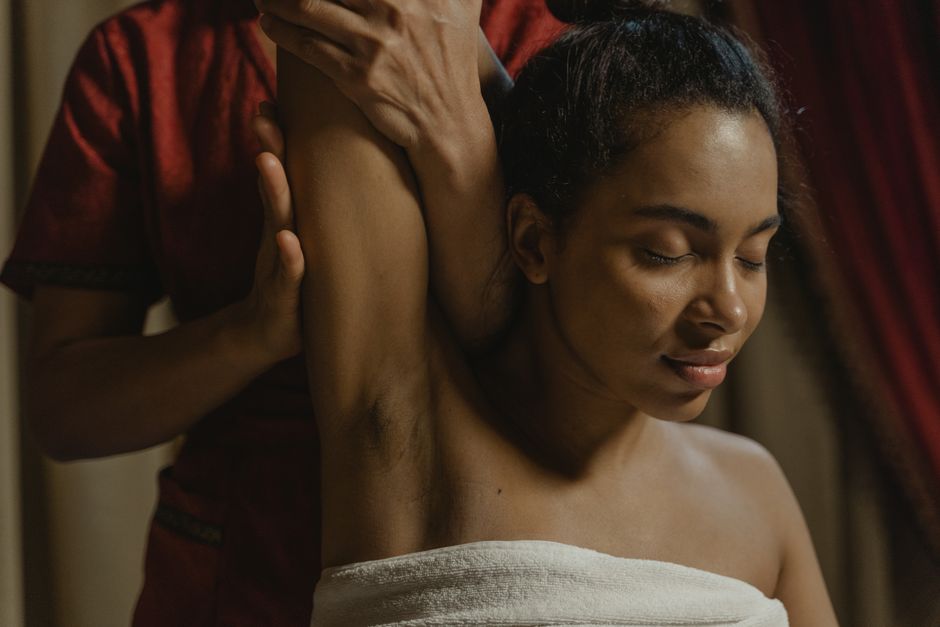
The overhead triceps stretch is a good starting point. Raise one arm overhead, bend the elbow so your hand reaches toward the opposite shoulder blade, and gently pull the elbow with your other hand. You should feel a mild pull along the back of the upper arm. Repeat on both sides.
Another useful stretch is the cross-body triceps stretch. Bring one arm across your chest, keeping it straight, and gently pull it with the opposite hand. This targets the outer part of the triceps. Some people report better results with dynamic stretching, meaning controlled movements rather than holding still. Arm circles and slow triceps extensions without weight can also help.
For recovery, active recovery is better than complete rest. Light activity like walking or gentle arm swings keeps blood moving without stressing the muscle. The American College of Sports Medicine recommends light movement within 24 hours of intense exercise to reduce soreness duration.
| Method | What It Does | Best Timing |
|---|---|---|
| Overhead triceps stretch | Lengthens the long head of the triceps | After activity or when stiff |
| Cross-body stretch | Targets the lateral triceps | Morning or before bed |
| Dynamic arm circles | Increases blood flow without static hold | Before activity or warm-up |
| Self-massage with foam roller | Reduces trigger points and tension | 24-48 hours post-workout |
Does Ice or Heat Work Better for Sore Triceps?
This is one of the most debated questions in recovery research. Ice reduces inflammation and numbs pain. Heat increases blood flow and relaxes tight muscles. For triceps soreness, the best choice depends on timing.
In the first 24 to 48 hours after a workout, ice is more helpful. Apply an ice pack wrapped in a thin towel for 15 to 20 minutes. This can reduce swelling and blunt the pain signals. A 2015 review in the British Journal of Sports Medicine found that cold water immersion reduced muscle soreness more than passive recovery, though the effect was modest.
After 48 hours, heat becomes more useful. A warm towel, heating pad, or warm shower can relax the muscle and improve circulation. Some studies suggest that heat therapy does not speed up muscle repair but does improve perceived comfort. Many athletes report feeling less stiff after heat application.
Contrast therapy, alternating ice and heat, is also widely used though evidence is mixed. Some people report faster recovery with this method. As of 2026, there is no strong clinical evidence that contrast therapy outperforms either method alone for triceps soreness specifically.





What About Massage and Foam Rolling?
Massage can help sore triceps by reducing muscle tension and improving blood flow. A 2017 study in Frontiers in Physiology found that massage reduced DOMS by about 30 percent compared to no treatment. The effect was strongest when massage was performed within two hours after exercise.
Self-massage with a foam roller or lacrosse ball is a practical alternative. Lie on the floor and place the foam roller under your triceps. Roll slowly from the elbow toward the shoulder. Stop on any tender spots and hold for 20 to 30 seconds. This is called trigger point release and can reduce tightness.
Be careful not to press too hard. Deep pressure on a very sore muscle can worsen inflammation. The goal is mild discomfort, not pain. If you feel sharp or shooting pain, stop immediately. Some people report that massage guns work well for triceps soreness, but strong evidence is limited. A 2020 review in the International Journal of Sports Physical Therapy noted that percussion therapy may improve range of motion temporarily but does not significantly speed up muscle repair.
What Common Mistakes Make Triceps Soreness Worse?
Several well-meaning habits can actually delay recovery. Stretching too hard is the most common mistake. Aggressive stretching of a sore muscle can cause more micro-tears and prolong soreness. Stretch only to the point of gentle tension, not pain.
Another mistake is returning to heavy lifting too soon. The triceps need at least 48 hours to repair after intense exercise. Lifting heavy before that window can lead to overuse injuries like tendinitis. The triceps tendon attaches at the elbow, and repetitive strain here can cause pain that lasts weeks.
Ignoring sleep is also a problem. Muscle repair happens mostly during deep sleep. The National Sleep Foundation reports that adults need 7 to 9 hours per night for proper recovery. Skimping on sleep can double the time it takes for soreness to resolve.
Some people also rely too much on anti-inflammatory drugs like ibuprofen. While these can reduce pain, a 2017 study in the American Journal of Sports Medicine found that NSAIDs may interfere with muscle protein synthesis and slow long-term strength gains. Use them sparingly, only when pain interferes with daily function.
What to Eat and Drink for Faster Triceps Recovery
Nutrition plays a role in how quickly muscle soreness fades. Protein is the most important nutrient for muscle repair. The Academy of Nutrition and Dietetics recommends 20 to 30 grams of protein within two hours after exercise. This can come from chicken, eggs, Greek yogurt, or a protein shake.
Carbohydrates are also helpful. They replenish glycogen stores and support the immune system, which is stressed after intense exercise. A mix of protein and carbs, like a turkey sandwich on whole grain bread, is a practical post-workout meal.
Hydration matters more than most people realize. Even mild dehydration can increase perceived muscle soreness. The American Council on Exercise suggests drinking 17 to 20 ounces of water two hours before exercise and continuing to sip during and after. For triceps soreness specifically, staying hydrated helps flush metabolic waste products like lactate from the muscle tissue.
Some supplements are widely claimed to reduce soreness. Tart cherry juice, for example, has shown promise in a few small studies. A 2016 study in the Journal of the International Society of Sports Nutrition found that tart cherry juice reduced DOMS in runners, but the effect on arm muscles is less clear. Omega-3 fatty acids from fish oil may also reduce inflammation, though evidence is modest. As of 2026, no supplement has been proven to eliminate triceps soreness.
Common Misconceptions About Sore Triceps
A persistent myth is that soreness equals a good workout. This is not true. Soreness is a sign of unfamiliar or intense stress on the muscle, not necessarily effective training. Many productive workouts produce little to no soreness. Chasing soreness as a goal can lead to overtraining.
Another misconception is that stretching prevents soreness. Stretching before or after exercise does not prevent DOMS. A 2011 Cochrane review of 12 studies found that stretching had no meaningful effect on muscle soreness prevention. Stretching helps with flexibility and comfort but does not stop the muscle damage process.
Some people also believe that taking a hot bath immediately after exercise helps recovery. Hot water can relax muscles temporarily, but it may increase inflammation if done within the first few hours after a workout. Wait at least two hours after exercise before using heat.
Finally, there is a claim that sore triceps mean you cannot exercise other body parts. This is false. You can train legs, core, or the opposite arm without worsening triceps soreness. In fact, light full-body movement can improve overall circulation and aid recovery.
Frequently Asked Questions
How long does triceps soreness usually last?
Triceps soreness from DOMS typically lasts 2 to 4 days. If soreness persists beyond 5 days, it may indicate an injury rather than normal muscle recovery.
Can I still work out with sore triceps?
You can exercise other muscle groups without issue. Avoid heavy triceps exercises until the soreness drops to a mild level, usually after 48 hours.
Is it better to ice or heat sore triceps?
Ice is better in the first 48 hours to reduce inflammation. Heat is better after 48 hours to relax the muscle and improve blood flow.
What is the fastest way to relieve sore triceps?
Gentle stretching, light activity, and adequate protein intake are the fastest evidence-backed methods. No single method works instantly, but combining them shortens recovery time.
