
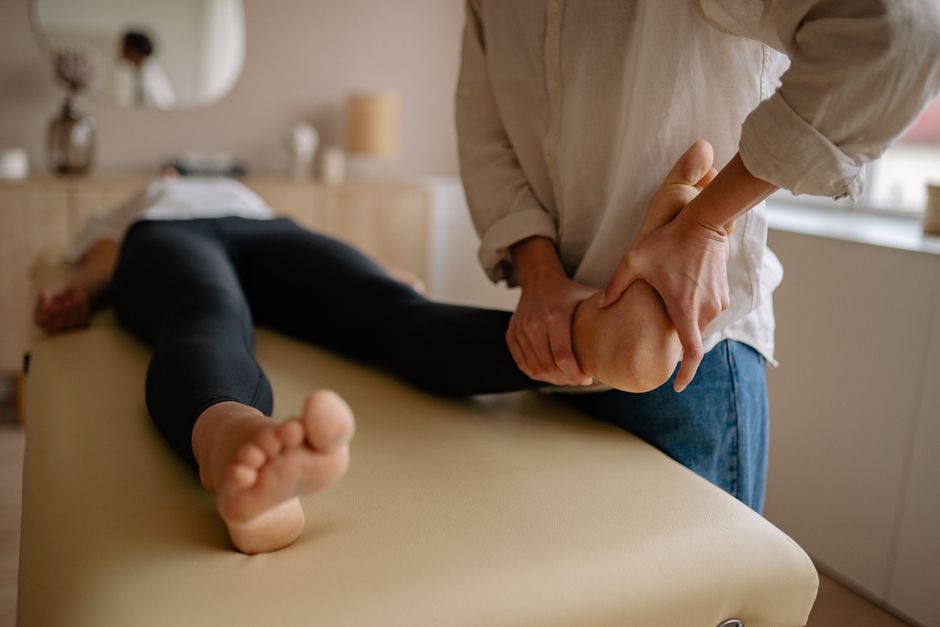
Pain on the top of the foot usually comes from one of three places: the bones and joints of the midfoot, the tendons that run along the top of the foot, or the nerves and blood vessels traveling through that area. The most common causes are extensor tendonitis, a stress fracture of a metatarsal bone, midfoot arthritis, and nerve compression. Less often, the source is a gout flare, a bone spur, or a problem referred from the ankle or lower leg.
The top of the foot is a crowded space. Several tendons, small bones, joints, and nerves all sit within a few millimeters of the skin surface. That is why pain there can be hard to pin down, and why the location and timing of the pain often matter more than how bad it feels.
What Causes Pain On Top Of Foot?
The single most common cause in active adults is extensor tendonitis, an irritation of the tendons that lift the toes and foot upward. These tendons run in a tight bundle across the top of the foot, and they take repeated load every time you walk, run, or stand. When shoes press down on them or training volume rises too fast, they become inflamed.
Stress fractures are the second major category. The metatarsal bones are long and thin, and they absorb a lot of force with every step. A stress fracture develops when bone is loaded beyond its ability to repair itself. It is not the same as a sudden break from a fall. It builds over days or weeks.
Other causes include:
- Midfoot arthritis — cartilage wear in the joints between the small bones of the midfoot
- Gout — crystal deposits in a joint, classically the big toe joint but sometimes the midfoot
- Nerve compression — pressure on a branch of the superficial peroneal nerve
- Bone spurs — bony growths that rub against tendons or soft tissue
- Metatarsalgia — pain in the ball of the foot that can radiate backward
- Poorly fitting shoes — tight laces or a narrow toe box pressing on the top of the foot
The location of the pain is a useful clue. Pain right on top of a specific metatarsal bone points more toward a stress fracture. Pain spread across the whole top of the foot, worse when you first start moving, points more toward tendonitis. Pain that comes in sudden intense attacks with redness and swelling raises the possibility of gout.
Is It Tendonitis Or A Stress Fracture?
These two are the most frequently confused, and they feel different in ways you can usually notice yourself. Tendonitis pain tends to warm up as you move. It may be stiff and sore at the start, then ease as the tendon loosens. A stress fracture does the opposite. It hurts more the longer you stay on your feet and often aches at night.
Swelling behaves differently too. Tendonitis can cause visible puffiness along the line of the tendon. A stress fracture may cause a more localized, pinpoint swelling over the bone itself. Pressing directly on that spot typically reproduces the pain sharply.
| Feature | Extensor Tendonitis | Stress Fracture |
|---|---|---|
| Pain with activity | Eases as you warm up | Worsens with continued activity |
| Pain at rest | Usually mild | Often present, sometimes at night |
| Point tenderness | Along the tendon line | Pinpoint over one bone |
| Swelling | Diffuse along the tendon | Focal over the bone |
| Typical trigger | Increased training, tight shoes | Rapid increase in load or mileage |
A stress fracture cannot be reliably ruled out by how it feels alone. Imaging is the only way to confirm it. Plain X-rays often miss early stress fractures, and an MRI or bone scan may be needed if symptoms persist despite rest. This is one reason a lingering top-of-foot pain that does not improve deserves a medical evaluation rather than more rest and hope.
When Should You See A Doctor?
See a doctor if the pain has lasted more than a week or two without improving, if you cannot bear weight normally, or if there is visible swelling, redness, or warmth. Those signs can point to a fracture, an infection, or gout, and all three need proper assessment.
Certain situations warrant faster attention:
- Sudden severe pain with redness and swelling, especially at night — possible gout
- Numbness, tingling, or burning on the top of the foot — possible nerve involvement
- Pain after a fall, twist, or direct impact — possible fracture
- Fever with a red, hot, swollen foot — possible infection
- Diabetes with any new foot pain or wound — always needs prompt review
People with diabetes should treat any new foot symptom seriously. Reduced sensation can mask injuries, and small problems can escalate faster in feet with impaired circulation or nerve function.





How Is Top-Of-Foot Pain Treated?
Treatment depends entirely on the cause, which is why getting a diagnosis matters more than trying remedies at random. For extensor tendonitis, the main steps are reducing the load, adjusting footwear, and allowing the tendon to calm down. Shoes with a roomier toe box and looser laces often help because pressure from the shoe is a common trigger.
For a stress fracture, the priority is offloading the bone. That usually means a period of reduced weight-bearing, sometimes with a stiff-soled shoe or a walking boot. Some fractures in certain locations heal poorly without protection and may need more support. Recovery timelines vary widely by location and individual, so a clinician should guide this rather than a general rule.
For gout, treatment targets the underlying crystal problem and is managed with prescription medication. For arthritis, management focuses on activity modification, supportive footwear, and sometimes orthotics. For nerve compression, treatment depends on what is pressing on the nerve and where.
What most of these have in common is that rest alone is rarely a complete answer. Rest reduces symptoms but does not fix the underlying cause. If pain returns every time you resume activity, the cause has not been addressed.
What Makes Top-Of-Foot Pain Worse?
Tight shoes are the most overlooked factor. Laces pulled too tight across the instep press directly on the extensor tendons and the nerves beneath them. A shoe that fits well everywhere else can still cause top-of-foot pain if the lacing is too snug or the tongue is thin.
Training errors are the next big contributor. Increasing mileage, speed, or hill work too quickly overloads bone and tendon before they adapt. Bone and tendon both need time to respond to new load. Going from little activity to a lot in a short window is a common pattern behind stress fractures and tendonitis in the same area.
Hard surfaces, worn-out shoes, and a sudden change in footwear can all add stress. So can carrying extra body weight, which increases the force through the foot with every step. None of these cause pain on their own, but they stack.
Can Top-Of-Foot Pain Be Prevented?
Some causes can be reduced, and some cannot. You cannot prevent gout or arthritis through footwear alone. But you can lower the risk of the most common overuse causes.
- Loosen laces across the top of the foot, especially over the instep
- Choose shoes with enough depth and width in the toe box
- Increase training load gradually rather than in jumps
- Replace shoes when the midsole breaks down, not just when the tread wears
- Vary running surfaces to reduce repetitive stress on the same structures
The clearest prevention principle is load management. Bone and tendon adapt to stress when that stress is applied gradually and allowed to recover. They break down when load rises faster than recovery can keep up. That single idea explains most overuse injuries on the top of the foot.
Frequently Asked Questions
What is the most common cause of pain on top of the foot?
Extensor tendonitis is the most common cause in active people. It involves irritation of the tendons that lift the toes and foot, often triggered by tight shoes or a rapid increase in activity.
How do I know if it is a stress fracture or tendonitis?
Tendonitis usually eases as you warm up, while a stress fracture tends to hurt more the longer you stay on your feet. Only imaging can confirm a stress fracture, since the two can feel similar.
Can tight shoes cause pain on top of the foot?
Yes. Laces pulled too tight across the instep press directly on the extensor tendons and nerves, which is a common and easily fixed trigger. Loosening the lacing often reduces symptoms.
When should I worry about top-of-foot pain?
Seek medical care if pain lasts more than a week or two, if you cannot bear weight normally, or if there is swelling, redness, or warmth. Those signs can point to a fracture, gout, or infection.
