
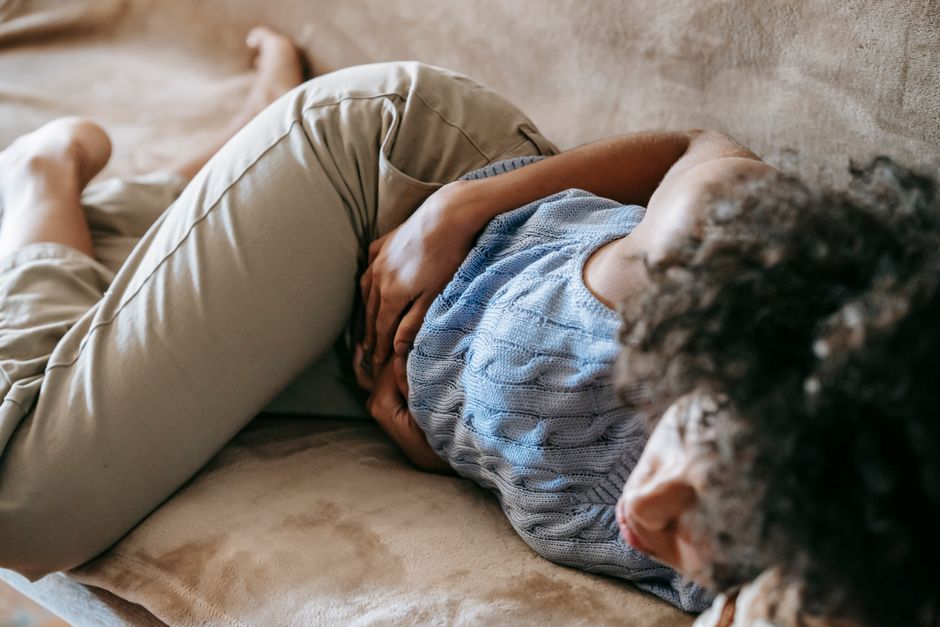
Groin pain while running is common and often misunderstood. The pulling sensation or sharp ache in your inner thigh or hip crease usually comes from overworked muscles, joint stress, or referred pain from your lower back. Most cases are not serious, but knowing the exact cause matters because treatment changes completely depending on what is actually wrong.
What Causes Pain In The Groin When Running?
The groin area is a crowded space. Muscles, tendons, ligaments, joints, and nerves all sit close together. When you run, your adductor muscles on the inner thigh work hard to stabilize your leg during each stride. If those muscles are weak, tight, or suddenly asked to do more than they are ready for, they can strain.
A groin strain is the most common cause of running-related groin pain. Research published in the British Journal of Sports Medicine found that adductor strains account for about 10 percent of all running injuries. The strain happens when the muscle fibers tear, usually near the tendon attachment at the pubic bone.
But muscles are not the only culprit. Hip joint problems like femoroacetabular impingement — a bone shape issue where the ball of the hip pinches the socket — can cause deep groin pain during running. This condition is more common than most runners realize. A study in Clinical Orthopaedics and Related Research found that 37 percent of asymptomatic adults had imaging signs of impingement, meaning the condition is often present long before pain starts.
Sports hernia is another possibility. Despite the name, it is not a hernia. It is a strain or tear of the abdominal wall muscles near the groin. The pain is usually felt in the lower abdomen and groin and gets worse with twisting or sprinting motions. It is most common in soccer and hockey players but also affects runners who do speed work.
| Condition | Typical Location of Pain | When It Hurts Most |
|---|---|---|
| Adductor strain | Inner thigh near pubic bone | Pushing off or changing direction |
| Hip impingement | Deep in the hip crease | After running, especially with hills |
| Sports hernia | Lower abdomen and groin | Sprinting, twisting, sit-ups |
| Osteitis pubis | Pubic bone area | Kicking, running, walking stairs |
| Referred back pain | Groin with or without back pain | After prolonged sitting or running |
How to Tell If Your Groin Pain Is a Muscle Strain or Something Else
The first step is locating the pain precisely. A muscle strain usually hurts when you press directly on the inner thigh muscle or when you bring your leg toward the midline against resistance. If you can reproduce the pain by squeezing a pillow between your knees, the adductors are likely involved.
Hip joint pain behaves differently. It is felt deep in the front of the hip, not on the inner thigh. You may feel it when you bring your knee toward your chest or when you rotate your leg inward. Runners with hip impingement often describe a dull ache that starts after 10 to 15 minutes of running and gets worse with hills.
Osteitis pubis is inflammation of the pubic symphysis — the joint where your two pelvic bones meet in the front. The pain is centered right over the pubic bone and can spread into the groin. It is common in runners who increase mileage too quickly. The hallmark sign is pain when you press on the pubic bone directly.
Referred pain from the lower back is trickier. The L1 and L2 nerve roots send branches to the groin area. A disc problem or joint irritation in the lower back can cause groin pain without any back pain at all. If your groin pain does not reproduce with hip or groin muscle testing, your back is worth checking.
A simple self-check: Lie on your back. Bring one knee to your chest. If that reproduces your groin pain, the hip joint or lower back is more likely involved than the adductor muscles.
What the Research Actually Shows About Groin Pain in Runners
The evidence on groin pain in runners is surprisingly limited compared to other running injuries like runner’s knee or shin splints. Most studies focus on athletes in sports with cutting and kicking motions. But the available research does point to clear patterns.
A systematic review in Sports Medicine looked at risk factors for groin injuries in athletes. The strongest predictor was a previous groin injury. If you have had groin pain before, your risk of having it again is roughly four times higher than someone who has never had it. Weak hip adductor strength and reduced hip range of motion were also significant factors.
Another study tracked runners specifically and found that those who developed groin pain had significantly weaker hip adductor muscles compared to pain-free runners. The strength difference was about 20 percent on average. This suggests that targeted strengthening may prevent many cases.
The research is less clear on running form. Some experts believe that overstriding — landing with your foot too far in front of your body — increases the load on the groin muscles. But no high-quality study has confirmed this in runners. It is a reasonable theory based on biomechanics, but it is not proven.
One thing the evidence consistently shows is that rest alone is not enough for most groin injuries. A study in the American Journal of Sports Medicine found that athletes who returned to sport based on time alone — waiting for pain to go away — had a much higher reinjury rate than those who completed a structured rehabilitation program. The reinjury rate was 54 percent in the rest-only group compared to 10 percent in the rehab group.





What Actually Helps: Evidence-Based Steps for Groin Pain
If your groin pain is mild and started recently, the first step is reducing the load. Cut your running volume by half for one week. Avoid sprinting and hill work. If the pain does not improve within a week, see a healthcare provider.
Strengthening the adductors is the most evidence-backed approach for prevention and recovery. The Copenhagen adductor exercise is one of the most studied exercises for groin injuries. A 2022 randomized trial in the British Journal of Sports Medicine found that soccer players who did this exercise twice weekly had a 41 percent lower risk of groin injuries.
The exercise is simple but hard. Lie on your side with your top leg resting on a bench or sturdy chair. Your bottom leg is the one working. Lift your bottom leg up toward the bench without moving your torso. Do three sets of 8 to 12 reps on each side. Start with the bench low and raise it as you get stronger.
Hip mobility matters too. Tight hip flexors can change how your pelvis moves during running and put extra stress on the groin. A simple hip flexor stretch — kneeling lunge position, tucking your pelvis under, holding for 30 seconds — can help if tightness is part of your problem.
Practical steps to try now:
Common Misconceptions About Groin Pain While Running
One of the most persistent myths is that groin pain always means a hernia. True hernias are relatively rare in runners. What most people call a sports hernia is actually a soft tissue injury to the abdominal wall or adductor tendons. The treatment is completely different — surgery is rarely needed for the muscle injury but is standard for a true hernia.
Another misconception is that stretching alone fixes groin pain. Many runners respond to groin pain by stretching the inner thigh aggressively. But if the problem is weakness, stretching can actually make things worse by further destabilizing the joint. The research consistently shows that strengthening is more important than stretching for groin injuries.
Some people believe that groin pain is just a normal part of getting older or running more miles. It is not. Pain is a signal that something is wrong. Ignoring groin pain and running through it often leads to compensatory movement patterns that cause secondary injuries in the hip, knee, or lower back.
A final myth is that you need an MRI for every groin injury. Most groin strains can be diagnosed with a physical exam. Imaging is helpful when the exam is unclear or when the pain does not improve after several weeks of conservative treatment. Jumping straight to an MRI without a proper exam wastes time and money.
When to See a Doctor for Groin Pain
Most groin pain from running improves with activity modification and strengthening. But some situations need medical attention. If you have sudden sharp pain during a run and cannot bear weight on that leg, stop immediately and seek evaluation. A complete muscle tear or stress fracture is possible.
See a doctor if the pain does not improve after two weeks of reduced running and basic exercises. Also seek care if you have numbness or tingling in the groin or inner thigh, or if you feel a lump in the groin area that was not there before.
For women, groin pain that comes with a fever or feels different from typical muscle soreness should be checked promptly. Ovarian cysts and other gynecologic conditions can cause referred pain to the groin. The same applies to men — testicular issues can present as groin pain.
A physical therapist who works with runners is often the best first stop. They can perform a thorough exam, identify the exact source of the pain, and prescribe specific exercises. Many runners with groin pain improve significantly within four to six weeks of guided rehab.
If you have a history of low back problems and develop groin pain, mention it to your provider. The connection between back and groin is real and often missed. A simple back exam can save weeks of treating the wrong area.
Frequently Asked Questions
Can running form cause groin pain?
Yes, overstriding and poor pelvic control can increase stress on the groin muscles. Shortening your stride and landing with your foot under your body may help.
How long does a groin strain take to heal?
Mild strains heal in two to four weeks with proper rest and strengthening. More severe strains can take up to eight weeks.
Should I run through groin pain?
No, running through groin pain usually makes it worse and can lead to a chronic problem. Reduce your running until the pain is gone.
Does groin pain mean I have a hernia?
Not usually. True hernias are uncommon in runners. Most groin pain is from muscle strains or hip joint issues.
