
You stand up from a chair, and for a moment the room tilts. Your vision dims at the edges. You reach for the wall until it passes. That feeling has a name: orthostatic hypotension. It happens when blood pressure drops sharply within a few seconds to a few minutes of standing. In older adults, it is not just a passing nuisance. It is one of the most common reasons for falls, fractures, and hospital visits in people over 65.
What causes orthostatic hypotension in the elderly? The short answer is that aging makes blood pressure harder to regulate. The reflexes that normally tighten blood vessels and speed the heart when you stand become slower and less sensitive with age. On top of that, many older adults take medications, have chronic conditions, or have nervous system changes that interfere with those same reflexes. Often it is several causes stacked together, not one single trigger.
What Causes Orthostatic Hypotension In The Elderly?
When you stand, gravity pulls roughly a quarter of your blood volume down into your legs and abdomen. In a healthy young body, pressure sensors in the neck and chest detect the drop within seconds. They send signals that tighten blood vessels and nudge the heart rate up. Blood pressure stabilizes. You feel nothing.
With age, that chain of events becomes less reliable. Baroreceptors — the pressure sensors themselves — become less sensitive. The heart’s response to nerve signals slows. Blood vessel walls stiffen, so they cannot squeeze as effectively. The result is that blood pressure dips on standing and stays low long enough to cause symptoms.
Age alone rarely tells the whole story. In most older adults, orthostatic hypotension is the product of age-related changes plus one or more of the following:
- Medications that lower blood pressure, relax blood vessels, or affect nerve signaling
- Dehydration or low blood volume from poor fluid intake, illness, or diuretics
- Nervous system conditions that damage the nerves controlling blood pressure
- Heart conditions that limit how well the heart can compensate
- Endocrine problems such as adrenal insufficiency or diabetes-related nerve damage
- Prolonged bed rest, which deconditions the reflexes that normally respond to standing
Clinicians define orthostatic hypotension as a drop of at least 20 mmHg in systolic blood pressure or at least 10 mmHg in diastolic blood pressure within three minutes of standing. That definition comes from consensus guidelines and is used consistently in clinical practice. Some people meet the number without symptoms. Others feel dizzy with a smaller drop.
Why Does Aging Make Blood Pressure Regulation Harder?
Aging changes the hardware of blood pressure control. The arteries lose elastin and gain stiffness. The left ventricle of the heart thickens and fills more slowly. The baroreceptor reflex — the body’s rapid-response system for standing — becomes blunted.
One consequence is that older adults rely more on blood volume and less on fast reflex adjustments. When volume is low, there is less reserve to draw on. Another consequence is that the heart rate response to standing is often weaker. A young person might see a heart rate jump of 15 to 20 beats per minute on standing. An older person may see much less, especially if they take a beta-blocker or have a pacemaker.
This matters because the heart rate increase is one of the main ways the body defends blood pressure during the first few seconds of standing. When that response is muted, the pressure drop lasts longer and symptoms are more likely.
There is also a less obvious factor: the veins. Older veins are less able to constrict and push blood back toward the heart. Blood pools in the legs. Less blood returns to the heart, so less is pumped out, and blood pressure falls.
Which Medications Commonly Trigger It?
Medication is one of the most common and most reversible causes. The list is long, but several categories show up again and again.
- Diuretics — reduce blood volume, sometimes more than intended
- Alpha-blockers — used for prostate enlargement or blood pressure; can cause a sharp drop on standing
- Beta-blockers — blunt the heart rate response to standing
- Calcium channel blockers — relax blood vessels
- ACE inhibitors and ARBs — lower blood pressure overall
- Nitrates — dilate veins and reduce return of blood to the heart
- Tricyclic antidepressants and some antipsychotics — affect nerve signaling
- Levodopa and other Parkinson’s medications — can lower blood pressure
The risk climbs with each additional medication. A person on three or four blood pressure–lowering drugs has a much higher chance of orthostatic hypotension than someone on one. This is why clinicians often review the full medication list before adding a new diagnosis.
Timing matters too. A dose taken at bedtime may cause a drop during the night or on getting up to use the bathroom. A dose taken in the morning may cause symptoms within an hour. Some people notice symptoms mainly after meals — a related pattern called postprandial hypotension.




What Underlying Conditions Are Linked to It?
When medications and dehydration are ruled out, clinicians look for conditions that damage the nerves or hormones controlling blood pressure.
Diabetes is one of the most common. High blood sugar over years can damage the autonomic nerves that signal blood vessels to tighten. This is called autonomic neuropathy. It often coexists with other diabetes complications.
Parkinson’s disease and related disorders can affect the autonomic nervous system directly. Orthostatic hypotension is common in these conditions and may appear before movement symptoms in some cases.
Multiple system atrophy and pure autonomic failure are rarer neurodegenerative conditions that primarily affect blood pressure regulation. They are diagnosed by specialists, often after other causes are excluded.
Heart failure and arrhythmias reduce the heart’s ability to compensate when standing. A stiff, thickened heart may not fill quickly enough to maintain output.
Adrenal insufficiency reduces the hormones that help retain salt and water, lowering blood volume and blood pressure.
Anemia reduces oxygen-carrying capacity and can worsen symptoms, though it is not a direct cause of the pressure drop itself.
In many older adults, no single cause is found. The pattern is multifactorial — mild age-related changes plus mild dehydration plus two medications plus a chronic condition. Each factor alone might not be enough. Together they are.
What Triggers Symptoms in Daily Life?
Symptoms usually follow a pattern. They happen when blood pressure drops faster than the body can compensate. Common triggers include:
- Standing up quickly after sitting or lying down
- Standing still for a long time, especially in a warm room
- Getting up at night to use the bathroom
- After a large meal, especially one high in carbohydrates
- After hot showers, baths, or time in a hot tub
- During or after exercise, particularly in heat
- When dehydrated from illness, poor intake, or diuretics
The symptoms themselves vary. Some people feel lightheaded or dizzy. Others notice blurred vision, weakness, or a sense of impending faintness. Some have no warning at all and simply fall. That last pattern is the most dangerous, because there is no time to sit down or grab support.
Falls in older adults are not a minor event. They are a leading cause of hip fracture, head injury, and loss of independence. Orthostatic hypotension is one of the few fall risks that can be measured and, in many cases, improved.
How Is It Evaluated?
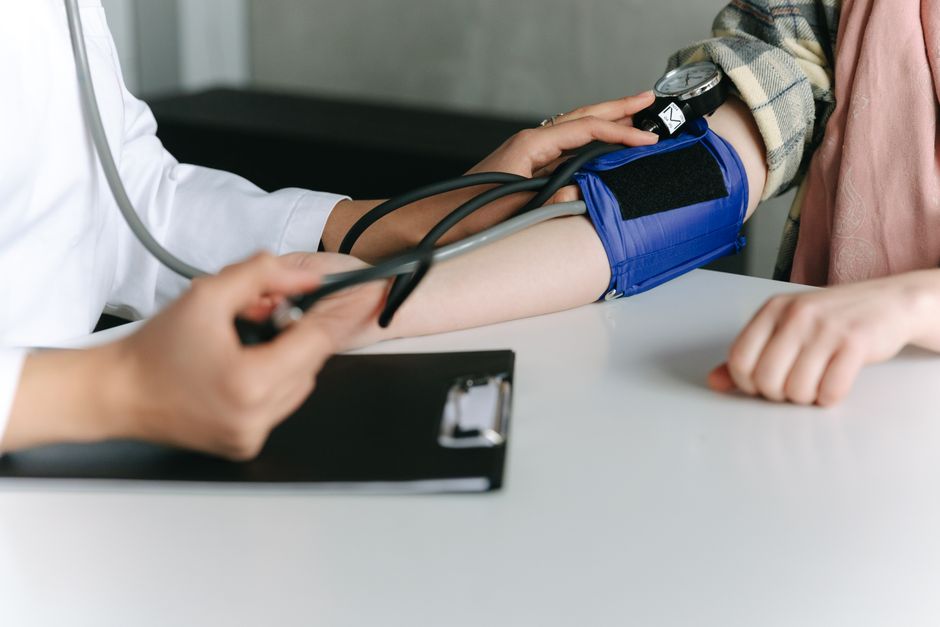
The basic test is simple. Blood pressure is measured while lying down, then again after standing for one and three minutes. A drop of at least 20 mmHg systolic or 10 mmHg diastolic within three minutes meets the definition. Some clinicians also measure after a meal or after exercise if those are suspected triggers.
Because the drop can be intermittent, a single normal reading does not rule it out. Some people need home monitoring or a longer recording. In selected cases, a tilt-table test or autonomic function testing is used.
Blood tests may check for anemia, diabetes, adrenal problems, and electrolyte imbalances. An ECG looks at heart rhythm and structure. The medication list is reviewed carefully — often the most productive part of the evaluation.
What Helps Reduce Episodes?
Treatment depends on the cause, but several general measures are widely used. They are not cures. They reduce the frequency and severity of episodes for many people.
- Rise slowly. Sit on the edge of the bed for a minute before standing. Flex your ankles and hands before getting up.
- Stay hydrated. Drink enough fluid unless a doctor has restricted it for heart or kidney reasons.
- Review medications. A clinician may adjust doses or timing. Never stop a prescribed drug on your own.
- Eat smaller, more frequent meals if symptoms follow eating.
- Avoid prolonged standing in heat. Move your legs if you must stand still.
- Wear compression stockings if recommended. They help blood return from the legs.
- Elevate the head of the bed slightly if advised. This can reduce nighttime blood pressure swings.
Some people need medication to raise blood pressure. Several drugs are used, but they are generally reserved for cases that do not respond to the measures above. They require careful monitoring because raising blood pressure when lying down can cause its own problems.
No single approach works for everyone. What helps one person may not help another. The goal is not to eliminate every drop in pressure. It is to reduce falls and keep daily function.
Frequently Asked Questions
What is the most common cause of orthostatic hypotension in older adults?
Medications that lower blood pressure or affect nerve signaling are the most common reversible cause. Age-related changes in the baroreceptor reflex and blood vessels make older adults more sensitive to those effects.
Can orthostatic hypotension be cured?
It depends on the cause. When a medication or dehydration is the trigger, correcting it often resolves the problem. When it comes from nerve damage or a chronic condition, it is usually managed rather than cured.
Is orthostatic hypotension a sign of something serious?
It can be. In some people it reflects a medication effect or mild dehydration. In others it points to diabetes-related nerve damage, Parkinson’s disease, or a heart condition. It also raises the risk of falls, which is serious on its own.
When should someone see a doctor about dizziness on standing?
Anyone who has fainted, fallen, or had repeated episodes of dizziness on standing should be evaluated. A single mild episode after illness or dehydration is less urgent, but recurrent symptoms deserve a medical review.
