
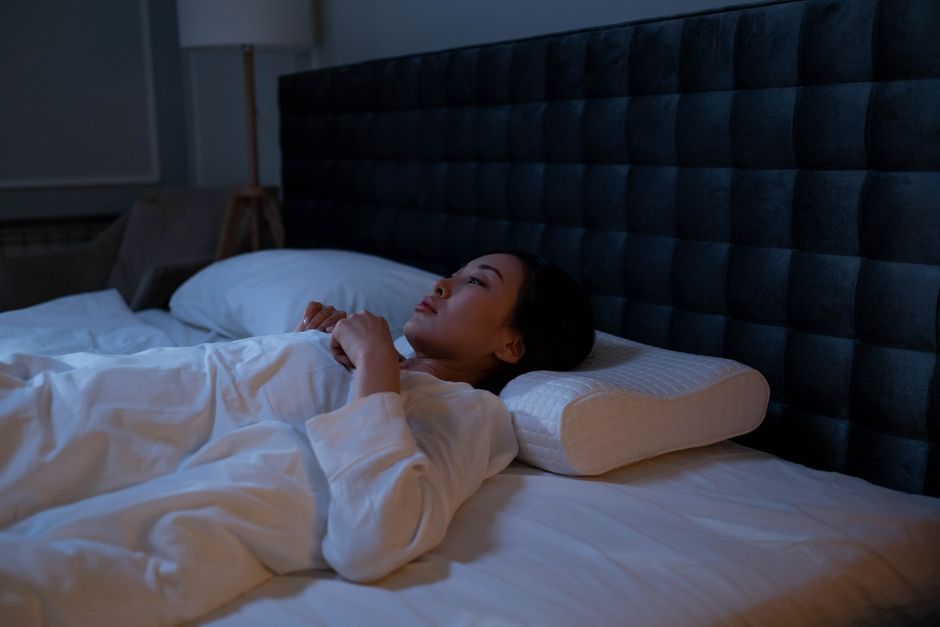
Night terrors are not nightmares. They are a different brain state where a person appears awake and terrified but is actually still asleep. In both children and adults, the root cause is an over-arousal of the central nervous system during the transition from deep sleep to lighter sleep stages. This sudden jolt can trigger intense fear, screaming, and thrashing even though the person’s conscious mind is completely offline.
What Exactly Happens in the Brain During a Night Terror?
Night terrors occur during non-REM sleep, specifically stage 3 deep sleep. This is the deepest, most restorative sleep phase. Normally, the brain transitions smoothly from deep sleep into lighter sleep or REM. In people who have night terrors, that transition misfires.
The brain partially wakes up. The parts that control movement and emotion turn on. But the parts that control conscious awareness and memory stay off. This is why a person having a night terror may sit up, scream, or run but cannot recognize you or respond to comfort. They are not dreaming in the normal sense. They are stuck between two sleep states.
Research published in Sleep Medicine Reviews describes night terrors as a “disorder of arousal.” The brain is not fully asleep and not fully awake. This state is driven by the brainstem and limbic system, not the higher thinking parts of the brain. That is why logic and reassurance do not reach the person during an episode.
What Causes Night Terrors in Children?
In children, the most common root cause is an immature central nervous system. The brain is still learning how to regulate sleep cycles properly. Most children grow out of night terrors by adolescence as their nervous system matures.
Triggers that increase the risk in children include fever, sleep deprivation, irregular sleep schedules, and an overfull bladder. Stress at home or school can also play a role. The American Academy of Sleep Medicine notes that children with a family history of sleepwalking or night terrors are much more likely to experience them. If a parent had night terrors, a child has roughly a 50 percent chance of having them as well.
One non-obvious insight: putting a child to bed too early or too late can backfire. The timing of deep sleep shifts based on bedtime. A mismatch between the child’s natural sleep rhythm and their actual bedtime can increase the chance of an arousal disorder. Consistency in bedtime matters more than the exact hour.
What Causes Night Terrors in Adults?
Adult night terrors are less common but more complex. Unlike children, adults do not typically outgrow them. When night terrors start in adulthood, the root cause is often something specific and treatable.
Common causes in adults include post-traumatic stress disorder, anxiety disorders, and alcohol use. Alcohol suppresses deep sleep initially but causes a rebound effect later in the night. That rebound can trigger a night terror. The same is true for certain medications, especially those that affect the central nervous system like sedatives or antidepressants.
Sleep apnea is another major cause in adults. When breathing stops during sleep, the brain briefly wakes up to restart breathing. In someone prone to night terrors, these micro-arousals can trigger a full episode. The CDC reports that roughly 26 percent of adults have some form of sleep apnea, and many do not know it. Treating the apnea often resolves the night terrors.
Other triggers in adults include sleep deprivation, irregular shift work, and metabolic conditions like hypoglycemia. If an adult develops night terrors without a childhood history, a medical evaluation is warranted. The cause is rarely just “bad sleep.”





How Are Night Terrors Different from Nightmares?
This confusion is common and understandable. Both involve fear during sleep. But they are fundamentally different events with different brain states.
| Feature | Night Terror | Nightmare |
|---|---|---|
| Sleep stage | Deep sleep (non-REM stage 3) | REM sleep |
| Timing | First third of the night | Last third of the night |
| Awareness | Unaware of surroundings | Fully aware upon waking |
| Memory | No memory of the event | Vivid recall of the dream |
| Response to comfort | Cannot be soothed | Can be comforted |
| Physical activity | Thrashing, screaming, running | Minimal movement |
If a child wakes up crying and can tell you what they dreamed about, it was a nightmare. If they scream with eyes open but do not recognize you and have no memory in the morning, it was a night terror. The distinction matters because the response is different. Nightmares need comfort. Night terrors need safety and patience.
What Are the Known Triggers for Night Terrors?
While the underlying cause is a nervous system that overreacts to sleep transitions, specific triggers can set off an episode. Identifying these triggers is the most practical step for reducing frequency.
- Sleep deprivation: The number one trigger. Missing even one hour of sleep increases deep sleep pressure, which makes the transition out of deep sleep more abrupt.
- Fever or illness: Any condition that raises body temperature can disrupt sleep architecture and trigger an arousal disorder.
- Stress and anxiety: Emotional stress raises baseline arousal levels. This makes the nervous system more reactive during sleep transitions.
- Alcohol and sedatives: These suppress deep sleep early and cause a rebound later. The rebound is a common trigger in adults.
- Bladder fullness: A full bladder can create a partial arousal that triggers a night terror, especially in children.
- Sleep schedule changes: Travel, daylight saving time, or late nights all shift when deep sleep occurs. This mismatch increases risk.
Some people report that certain foods, especially sugary snacks before bed, trigger episodes. Strong evidence is limited here. But anything that causes a blood sugar drop during the night could theoretically contribute. If a pattern is clear, it is worth adjusting.
When Should You See a Doctor About Night Terrors?
Most night terrors in children do not require medical treatment. They are a developmental phase. But there are clear signs that warrant a professional evaluation.
See a doctor if the night terrors happen multiple times per week, last longer than 30 minutes, or involve dangerous behavior like leaving the house or jumping out of bed. In adults, any new onset of night terrors should be evaluated. The cause may be sleep apnea, a seizure disorder, or a side effect of medication.
A sleep study is sometimes needed. This involves spending a night in a lab where brain waves, breathing, and heart rate are monitored. The study can confirm whether the episodes are truly night terrors or something else like REM sleep behavior disorder or nocturnal seizures. These conditions look similar but have different causes and treatments.
The National Institutes of Health recommends a thorough history first. A doctor will ask about family history, sleep schedule, medication use, and any recent stress. Blood work may be done to check for thyroid issues or blood sugar problems. Treatment targets the underlying cause, not the night terror itself.
What to Avoid When Someone Is Having a Night Terror
This is one area where well-meaning actions can make things worse. Waking someone during a night terror is not helpful. It can prolong the episode and cause confusion or aggression.
Do not shake them, yell at them, or try to hold them down. They are not conscious and cannot control their movements. The safest approach is to stay nearby, remove any dangerous objects from the area, and wait for the episode to pass. Most night terrors last between 5 and 15 minutes.
Do not bring up the episode the next morning. The person has no memory of it. Hearing about it can create anxiety about going to sleep, which can actually make the problem worse. This is especially true for children. If they ask about it, give a simple, calm explanation and move on.
Frequently Asked Questions
Can night terrors be prevented?
Yes, in many cases. The most effective prevention is maintaining a consistent sleep schedule and getting enough total sleep. Identifying and removing specific triggers like stress or alcohol also helps.
Are night terrors dangerous?
They are not dangerous in themselves, but the physical actions during an episode can be. A person may fall, run into furniture, or leave the house. Making the sleep environment safe is the priority.
Do night terrors mean a person has a mental health condition?
Not usually. In children, night terrors are a normal developmental phase. In adults, they can be linked to stress or PTSD, but they are not a mental illness on their own. A doctor can help determine if an underlying condition is present.
Can adults grow out of night terrors?
Most adults do not outgrow them without addressing the underlying cause. Unlike children, adult night terrors are usually triggered by a specific condition like sleep apnea, anxiety, or medication side effects. Treating the cause often stops the episodes.
