
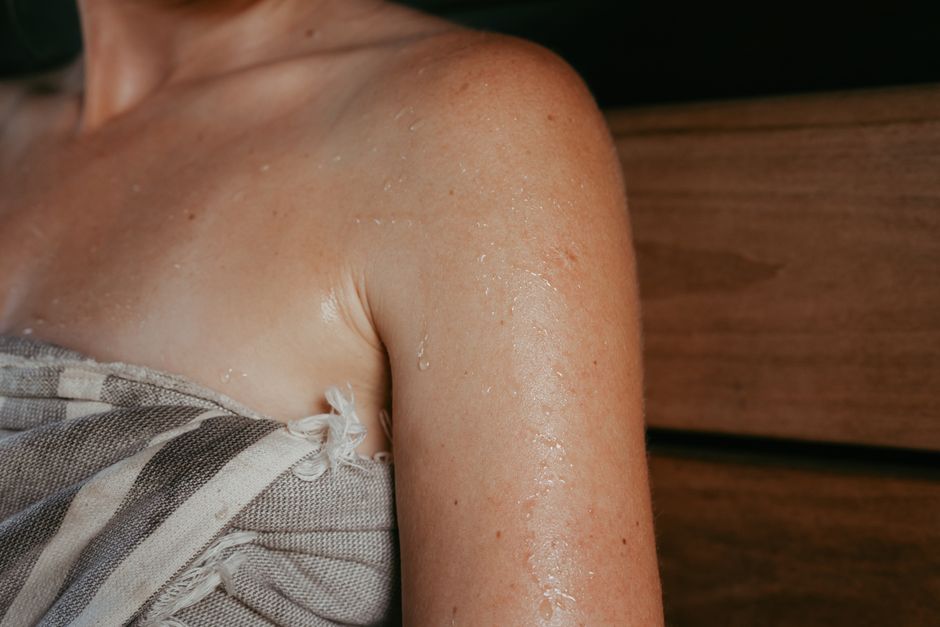
Night sweats in menopause happen because falling estrogen levels change how your brain controls body temperature. The hypothalamus — the part of your brain that acts like a thermostat — becomes more sensitive to small temperature shifts and starts triggering cooling responses even when your core temperature is normal. That response includes flushing, sweating, and a rapid heartbeat, which is why a night sweat can wake you drenched even in a cool room.
What Causes Night Sweats In Menopause?
Estrogen withdrawal is the root cause. As the ovaries wind down egg production, estrogen and progesterone levels swing and then fall. The hypothalamus depends on stable estrogen signaling to keep the body’s temperature set point steady. When that signal drops, the set point narrows.
The result is a smaller “thermoneutral zone” — the range of core body temperature where your body is comfortable and does not need to sweat or shiver. In a narrower zone, ordinary fluctuations that used to pass unnoticed now cross the threshold and trigger a heat-loss response. Blood vessels near the skin widen, heart rate rises, and sweat glands activate. At night, that sequence often ends with soaked sheets and a jolt awake.
This is why night sweats and hot flashes are considered the same event, just at different times of day. Some clinicians use the term “vasomotor symptoms” for both. The trigger is internal, not the room temperature, though a warm bedroom can make an episode worse.
Why Do They Happen Mostly At Night?
They do not only happen at night — but they often feel worse then. Several things stack up after dark.
Body temperature naturally dips in the early morning hours as part of the circadian rhythm. In a narrowed thermoneutral zone, that normal dip can be enough to trigger a sweat response. Bedding, pajamas, and a partner’s body heat add insulation. And during sleep you are not consciously adjusting blankets or moving to a cooler spot the way you would while awake.
There is also a perception factor. A hot flash during a meeting is uncomfortable. The same event at 3 a.m. wakes you up, interrupts sleep, and leaves you lying in wet sheets. The physical event may be identical, but the disruption is larger.
What Do Menopause Night Sweats Feel Like?
Most people describe a sudden wave of heat starting in the chest, neck, or face, followed by sweating. Some feel their heart pound or race. Some feel anxious or chilled right after the sweat passes.
An episode typically lasts a few minutes, though duration varies widely from person to person. Night sweats can happen several times a night or a few times a month.
The pattern is different for everyone. Some people have mainly hot flashes during the day. Others have mainly night sweats. Some have both. Frequency and intensity do not follow a predictable schedule, and there is no reliable way to know in advance how long the pattern will last for any one person.




How Long Do Menopause Night Sweats Last?
For many people, vasomotor symptoms last several years around the transition. The exact duration varies a lot.
Some people have symptoms for a short time and they fade. Others have them for many years. Research on symptom duration has produced a wide range of estimates, and the average does not predict what will happen for you. Factors that some studies associate with longer or more severe symptoms include earlier age at menopause, smoking, higher body mass index, and Black race — but these are associations, not guarantees.
If symptoms are mild, they often do not need treatment. If they disrupt sleep, mood, or daily function, that is a reasonable point to talk with a clinician about options.
What Else Can Cause Night Sweats?
Menopause is a common cause, but it is not the only one. Night sweats are a symptom, not a diagnosis, and several other conditions can produce them.
Worth ruling out with a clinician:
- Infections — including tuberculosis and some other chronic infections
- Certain cancers — lymphoma is the classic example, often alongside unexplained weight loss and fever
- Medication side effects — some antidepressants, diabetes medications, and hormone therapies
- Thyroid problems — an overactive thyroid can raise body temperature and sweating
- Low blood sugar — especially in people with diabetes, particularly at night
- Anxiety and panic — can trigger sweating episodes
- Alcohol and spicy food — can trigger episodes in people who are already prone
If night sweats come with unexplained weight loss, fever, or drenching sweats that soak through clothing and bedding most nights, that pattern deserves medical evaluation. It is not automatically something serious, but it should not be assumed to be menopause without a conversation.
Are There Triggers You Can Avoid?
You cannot stop the hormonal changes driving night sweats. But you can reduce how often they fire.
Common triggers reported by people in the menopause transition include hot drinks, spicy food, alcohol, caffeine, and a warm bedroom. Stress and anxiety also appear to make episodes more frequent for some people. None of these cause menopause night sweats — the estrogen drop does — but they can tip an already sensitive thermostat over the threshold.
Practical adjustments that many people find helpful:
- Keep the bedroom cooler than the rest of the home
- Use layered bedding you can peel off without fully waking
- Choose moisture-wicking sleepwear over heavy cotton or synthetics
- Limit alcohol and caffeine in the evening
- Keep a change of pajamas and a towel within reach
These steps do not treat the underlying cause. They reduce how disruptive an episode is when it happens.
What Treatments Are Available?
For moderate to severe symptoms, systemic estrogen therapy is the most effective treatment supported by evidence. It is not appropriate for everyone. Estrogen therapy carries risks that depend on your personal health history, and the decision to use it is one to make with a clinician who knows your situation.
For people who cannot or prefer not to use estrogen, options include:
- Low-dose paroxetine — an antidepressant that has been studied specifically for vasomotor symptoms
- Venlafaxine and other SSRIs/SNRIs — commonly used, with mixed evidence depending on the specific drug
- Gabapentin — sometimes used, particularly when night sweats disrupt sleep
- Oxybutynin — an option some clinicians recommend
- Cognitive behavioral therapy — evidence supports it for reducing how bothersome symptoms feel, though it does not reduce how often they occur
- Clinical hypnosis — some trials suggest benefit for hot flash frequency and severity
Non-hormonal options generally reduce symptoms less than estrogen does. Many people find partial relief is still worth having. Others find nothing works well and rely on trigger management and sleep strategies.
What does not have strong evidence behind it: most over-the-counter “menopause supplements,” including black cohosh and red clover in most trials, and soy isoflavones show inconsistent results. Some people report benefit. The trials have not consistently confirmed it. That is an honest description of where the evidence sits, not a claim that they cannot work for you.
When Should You See A Doctor?
See a clinician if night sweats are frequent enough to disrupt sleep most nights, if they interfere with work or mood, or if you want to discuss treatment options.
See a clinician sooner if night sweats come with any of the following:
- Unexplained weight loss
- Fever
- Drenching sweats that soak through clothing and bedding
- Sweats that started suddenly and are not explained by menopause
- Swollen lymph nodes
- Persistent fatigue that is new for you
These signs do not mean something serious is present. They mean the symptom pattern should be evaluated rather than assumed to be hormonal. Menopause is common. So are other causes, and a clinician can help sort out which is more likely in your case.
Frequently Asked Questions
What causes night sweats in menopause?
Falling estrogen levels make the hypothalamus more sensitive to small changes in body temperature, triggering sweating and flushing. This is the same mechanism behind hot flashes during the day.
How long do menopause night sweats usually last?
Duration varies widely, with many people having symptoms for several years around the transition and some having them much longer. There is no reliable way to predict how long they will last for any one person.
Are menopause night sweats dangerous?
Night sweats themselves are not dangerous, but they can disrupt sleep and quality of life. Sweats with unexplained weight loss, fever, or drenching that soaks through bedding should be evaluated by a clinician.
Can I stop menopause night sweats without hormones?
Some people get relief from non-hormonal prescription options such as low-dose paroxetine, gabapentin, or certain other medications, though these generally reduce symptoms less than estrogen. Avoiding triggers like alcohol, caffeine, and a warm bedroom can also help.
