
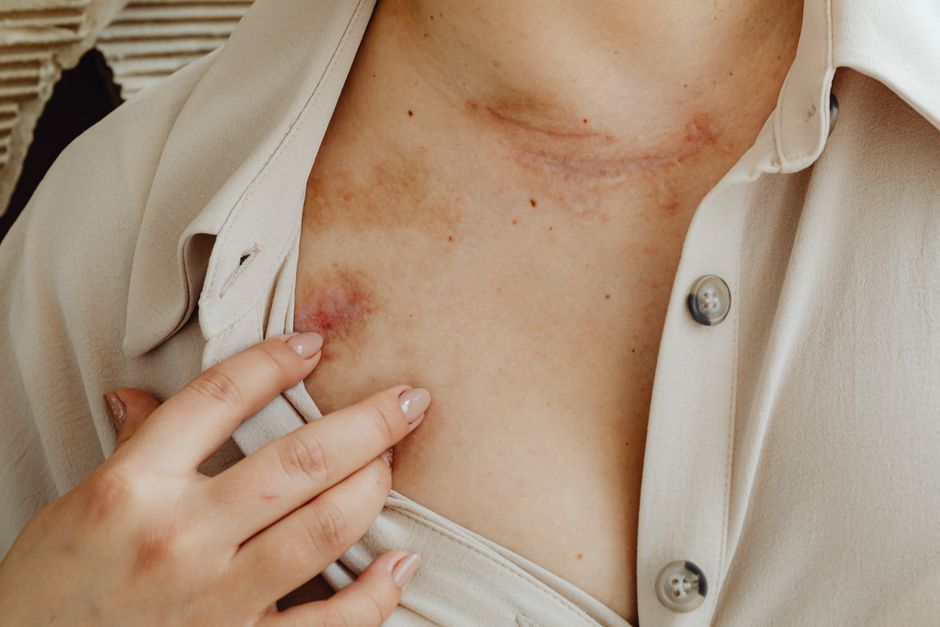
Itchy welts on skin are most often hives, which doctors call urticaria. They appear when your immune system releases histamine and other chemicals that make small blood vessels leak fluid into the skin. That fluid buildup creates the raised, pale or red bumps that itch intensely. Most welts fade within 24 hours, but new ones can keep appearing for days or even weeks.
What Causes Itchy Welts On Skin?
Hives are the most common cause of itchy welts. The welts form when mast cells in your skin release histamine. Histamine makes tiny blood vessels widen and leak fluid. That fluid collects in the upper layer of skin and creates a raised bump.
Many things can trigger this reaction. Foods like nuts, eggs, shellfish, and milk are common triggers. Medications such as antibiotics and pain relievers can cause hives too. Insect stings and bites are another frequent cause. Viral infections, especially in children, often produce hives that last a few days.
Physical triggers matter as well. Pressure on the skin, cold air, heat, sunlight, exercise, and even water can cause welts in some people. These are called physical urticarias. The welts usually appear where the skin was exposed to the trigger and fade within an hour or two.
In many cases, no specific cause is found. Doctors call this idiopathic urticaria. It does not mean the hives are imaginary. It simply means the trigger is not identifiable with current testing.
How Do I Know If My Welts Are Hives or Something Else?
Hives have a distinct look. Each welt is raised, pale in the center, and surrounded by redness. They come in many shapes and sizes. Some are as small as a pencil eraser. Others merge into large patches that can cover wide areas of skin.
The key feature of hives is that they move. A single welt usually fades within 24 hours, but new welts can appear in other places. If an individual welt stays in the same spot for more than 24 to 48 hours, it may not be a simple hive. It could be a different condition.
Other conditions can look like hives but are not. Insect bites stay in one place for days. Contact dermatitis from poison ivy or skin care products produces a rash that lasts longer and often blisters. Autoimmune conditions can cause persistent welts that leave bruising or scaling.
Some skin conditions produce welts that are not itchy. If your welts do not itch, or if they hurt, burn, or leave marks, see a doctor for an accurate diagnosis.
How Long Do Hives Last?
Most cases of hives are acute, meaning they last less than six weeks. Acute hives often resolve within a few days. When a specific trigger is identified and removed, the welts usually fade quickly. When the cause is an infection, the hives clear as the infection resolves.
Chronic hives last longer than six weeks. They can persist for months or even years. Chronic hives are rarely caused by allergies. In most cases, the immune system is overactive for reasons that are not fully understood. The condition is not dangerous, but it can be very disruptive to daily life.
For most people, individual welts do not last long. If you have a welt that stays in the exact same spot for more than two days, mention it to your doctor. That pattern is not typical of ordinary hives.





What Treatments Help Stop the Itching?
Antihistamines are the first-line treatment for hives. These medications block histamine receptors and reduce both the itching and the formation of new welts. Many antihistamines are available over the counter. Second-generation antihistamines like cetirizine, loratadine, and fexofenadine cause less drowsiness than older options.
For mild hives, a single daily dose of an antihistamine often controls symptoms. For more stubborn cases, doctors may recommend higher doses or a combination of different antihistamines. Always follow the dosing instructions on the label or your doctor’s guidance.
Cool compresses and lukewarm baths can soothe the skin. Loose clothing reduces friction. Avoiding hot showers, tight clothing, and vigorous exercise can prevent additional welts from forming while your skin is sensitive.
For severe hives that do not respond to antihistamines, a doctor may prescribe other medications. These can include oral corticosteroids for short-term use, or newer biologic medications for chronic cases. These options require a prescription and a discussion of risks and benefits.
No topical cream reliably stops hive itching. Calamine lotion and menthol creams provide temporary cooling relief for some people, but they do not treat the underlying histamine release. The most effective approach is an oral antihistamine taken consistently.
When Should I Seek Emergency Care?
Most hives are uncomfortable but not dangerous. However, hives can be part of a severe allergic reaction called anaphylaxis. This is a medical emergency that requires immediate treatment.
Seek emergency care if hives appear along with any of these symptoms:
- Swelling of the lips, tongue, or throat
- Difficulty breathing or wheezing
- Tightness in the chest or throat
- Dizziness, fainting, or a racing heartbeat
- Nausea, vomiting, or abdominal cramping
These symptoms suggest the allergic reaction is affecting more than just your skin. Anaphylaxis can progress quickly. Do not wait to see if symptoms improve on their own. Call emergency services or go to the nearest emergency department.
If you have been prescribed an epinephrine auto-injector for a known allergy, use it immediately if these symptoms develop, even if you are not sure the trigger was something you are allergic to.
Can I Prevent Hives From Coming Back?
If you identify a specific trigger, avoiding it prevents future outbreaks. This is most reliable for medication allergies and physical triggers. If a certain food causes hives, eliminating that food should stop the welts. Food triggers are usually clear because hives appear within minutes to a couple of hours after eating.
For physical triggers, prevention is about adjusting your environment. If cold air triggers your welts, dress warmly and limit time outdoors in winter. If pressure triggers them, wear loose clothing and avoid tight straps or waistbands. If exercise triggers them, talk to your doctor about whether you need guidance before continuing your workout routine.
For chronic hives with no identified trigger, prevention is less straightforward. Daily antihistamines can keep symptoms suppressed. Some people find that their hives go into remission on their own after months or years. There is no reliable way to predict when this will happen.
Avoid unproven “detox” diets and supplements that claim to cure hives. No clinical evidence supports these approaches. Focus on proven treatments and trigger avoidance instead.
Are Hives a Sign of a More Serious Condition?
In most cases, no. Acute hives are a temporary immune reaction. Chronic hives are also not a sign of cancer or a serious autoimmune disease in the vast majority of cases. This is a common worry, but the evidence does not support it.
However, hives can occasionally be a symptom of an underlying condition. Some autoimmune diseases, thyroid disorders, and rare conditions like mastocytosis can cause hives. These are uncommon. Your doctor may order blood tests if your hives are chronic, severe, or accompanied by other symptoms like joint pain, fever, or weight loss.
Hives that leave bruises or brown marks, or hives that last longer than 24 hours in one spot, warrant a dermatology evaluation. These features suggest a different condition that may need specific treatment.
If your hives are accompanied by other unexplained symptoms, tell your doctor. Do not assume the hives are the whole story. A thorough history and examination are the best tools for sorting this out.
What Should I Do If Over-the-Counter Medications Do Not Work?
If you have been taking a daily antihistamine for several weeks and your hives are not controlled, see a doctor. There are effective options beyond over-the-counter medications.
A doctor can adjust your antihistamine dose or switch you to a different one. Some people respond better to one antihistamine than another. Doctors may also combine antihistamines with other medications that target different parts of the allergic response.
For chronic hives that resist standard treatment, specialists have additional tools. Omalizumab is an injectable medication approved for chronic hives. It works by blocking the immune protein IgE. It is not a first-line treatment, but it helps many people whose hives do not respond to antihistamines.
Do not stop taking prescribed medications without talking to your doctor. Some treatments need to be tapered rather than stopped suddenly. Your doctor can guide you through the process safely.
Frequently Asked Questions
Can stress cause itchy welts on skin?
Stress can worsen existing hives and may trigger outbreaks in some people. It is rarely the sole cause, but managing stress can help reduce the frequency and severity of flare-ups.
Are itchy welts contagious?
No, hives are not contagious. You cannot spread them to another person through touch. If the welts are caused by an infection, the infection itself may be contagious, but the skin reaction is not.
How long does it take for hives to go away?
Individual welts usually fade within 24 hours. Acute hives typically resolve within a few days to six weeks. Chronic hives can last longer than six weeks and may persist for months or years.
What is the fastest way to get rid of hives?
An oral antihistamine is the fastest effective treatment for reducing itching and stopping new welts from forming. A cool compress can provide immediate temporary relief while the medication takes effect.
