
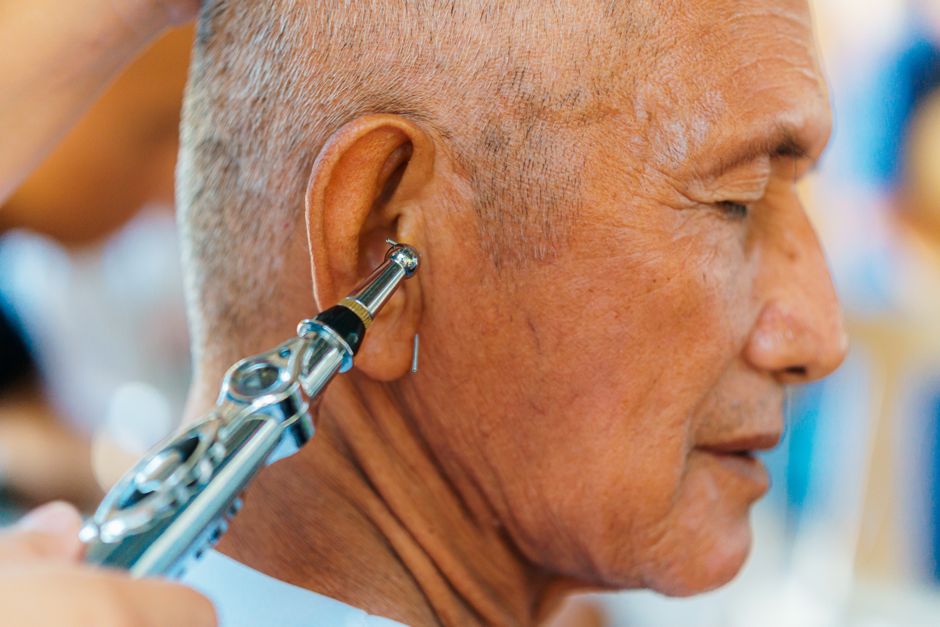
Hair in your ears is normal. Every healthy ear canal contains fine hairs, and for most of human history that hair served a clear purpose. The question of what causes hairy ears and how to remove ear hair gets complicated because two very different things share the same name: the tiny hairs inside the canal that you should generally leave alone, and the visible hair on the outer ear that some people want gone. Genetics drive most of it. Age and hormones drive the rest. Removal is possible, but the method matters more than most people realize.
What Causes Hairy Ears?
Genetics is the single biggest factor. If your parents or grandparents had noticeable hair on their ears, you are more likely to have it too. Hair density, color, and where it grows on the body all have a strong inherited component.
Hormones explain most of the rest. Androgens — testosterone and related hormones — influence hair growth on the ears, nose, and eyebrows. This is why ear hair tends to become more visible with age in men. Testosterone levels do not necessarily rise with age, but the hair follicles themselves become more sensitive to androgens over time. The result is coarser, longer, more visible hair in areas that previously had only fine, light hair.
Women also grow ear hair. It is usually finer and less noticeable, but hormonal shifts — particularly around menopause — can make it more apparent. In rare cases, a sudden increase in facial or ear hair in women can signal a hormonal condition, and that warrants a conversation with a doctor rather than a pair of tweezers.
There is also a persistent myth that ear hair signals a longer life or better health. Some observational research has noted an association between certain patterns of ear hair and longevity in specific populations, but association is not causation. No mechanism has been established, and no clinical guideline treats ear hair as a health marker. Treat that claim with skepticism.
What Are the Hairs Inside the Ear Canal Actually For?
The fine hairs inside your ear canal are not the same as the hair on your earlobe. They serve a real function. Along with earwax, they help trap dust, debris, and small insects before those things reach the eardrum.
These canal hairs also assist with the natural migration of earwax out of the ear. Earwax is produced in the outer part of the canal and gradually moves outward, carrying trapped particles with it. The hairs help that process along. This is a self-cleaning system, and it works well for most people.
This is why clinicians generally advise against inserting anything into the ear canal to remove hair or wax. Cotton swabs, hairpins, and similar objects can push wax deeper, scratch the delicate skin of the canal, or injure the eardrum. The canal hairs you cannot see are doing a job. Removing them offers no health benefit and carries real risk.
Why Does Ear Hair Get Thicker With Age?
Hair follicles change as you get older. The growth phase of individual hairs lengthens, and the hairs themselves become coarser. On the ears and in the nose, this shift is more noticeable because the hairs are already terminal hairs — the thick, pigmented kind — rather than the fine vellus hairs that cover most of the body.
Blood flow to the area also matters. Some researchers have looked at whether improved circulation to the ears contributes to hair growth in older adults, though the evidence is not strong enough to call it a confirmed cause. The hormonal sensitivity explanation is better supported.
Age-related hair changes are not limited to the ears. Many people notice the same pattern in the eyebrows and nose. It is a normal part of aging for a large share of the population, not a sign that something is wrong.





How Do You Remove Ear Hair Safely?
For hair on the outer ear — the visible part — several removal methods work. Each has trade-offs worth knowing before you pick one.
- Trimming with small scissors or an electric trimmer designed for ears and nose is the lowest-risk option. It shortens hair without pulling it out, so irritation is minimal.
- Shaving with a razor works on flat surfaces of the outer ear but is awkward in the curves and folds. Nicks are common.
- Plucking or tweezing removes hair at the root and lasts longer, but it can be painful and may cause ingrown hairs or folliculitis — inflammation of the hair follicle. It also does nothing to stop hair from growing back.
- Waxing removes many hairs at once and lasts longer than shaving. It is painful and can irritate sensitive ear skin.
- Laser hair removal can reduce hair growth over time by damaging the follicle. It requires multiple sessions and works best on dark hair against lighter skin. It is a medical procedure and should be done by a qualified provider.
- Electrolysis destroys the follicle with a tiny electrical current. It is the only method that can permanently stop hair growth, but it is slow, requires multiple sessions, and costs more than other options.
No method is permanent except electrolysis, and even that requires repeated treatment to catch all follicles. Hair growth is cyclical, so any method that removes hair without destroying the follicle will need to be repeated.
What Should You Never Put Inside Your Ear Canal?
Nothing. That is the short answer, and it applies to hair removal as much as to cleaning.
Do not insert tweezers, scissors, trimmer blades, cotton swabs, or any other object into the ear canal. The canal is narrow and angled, and you cannot see what you are doing. The skin lining it is thin and easily torn. The eardrum sits at the end of that canal, and a slip can perforate it.
If you have hair growing deep in the canal that bothers you, see a clinician. An ear, nose, and throat specialist can remove it safely under direct visualization. This is not a common need, but it is the right approach if the hair is genuinely causing problems.
Signs that you should see a doctor rather than manage ear hair at home include pain, drainage, hearing changes, a feeling of fullness that does not resolve, or bleeding after any removal attempt. These can indicate infection or injury.
Does Removing Ear Hair Cause Any Problems?
Removing hair from the outer ear is generally low-risk. Removing hair from inside the canal is a different story.
The canal hairs contribute to the ear’s self-cleaning mechanism. Disturbing them repeatedly — through plucking, waxing, or aggressive cleaning — can lead to irritation, infection, or impacted earwax. Some clinicians report that people who frequently remove canal hair are more prone to outer ear infections, though this is based on clinical observation rather than large trials.
Plucking hair from the outer ear can also cause folliculitis, especially if the skin is not clean or if you have diabetes or a weakened immune system. If you notice redness, swelling, or pus around a hair follicle after removal, keep the area clean and see a doctor if it does not improve.
One more point worth making: ear hair is not a medical problem in itself. It is a cosmetic concern for most people. If removal is causing you more trouble than the hair did, trimming is the simplest path back to comfort.
Is Ear Hair Ever a Sign of a Health Problem?
In most cases, no. Ear hair is a normal variation in human hair growth.
There are exceptions. In women, a rapid increase in facial or body hair — including ear hair — can be a sign of elevated androgen levels. Conditions such as polycystic ovary syndrome and certain adrenal disorders can cause this pattern. This is not something to self-diagnose, but it is worth mentioning to a doctor if the change is sudden or accompanied by other symptoms like acne, irregular periods, or voice changes.
In men, ear hair is not typically a sign of any underlying condition. It is simply a reflection of genetics and age-related hormonal sensitivity.
Frequently Asked Questions
Does ear hair mean you will live longer?
No. Some observational studies have noted an association between ear hair and longevity in certain groups, but no cause-and-effect relationship has been established. Ear hair is a normal trait influenced by genetics and hormones, not a health indicator.
Can I safely pluck hair from inside my ear canal?
No. Inserting tweezers into the ear canal risks scratching the skin, pushing debris toward the eardrum, or perforating the eardrum. See a clinician if canal hair is causing discomfort.
Does shaving ear hair make it grow back thicker?
No. Shaving cuts hair at the surface and does not change the follicle. Regrowth may feel coarser because the blunt tip is thicker than a natural tapered end, but the hair itself is not thicker.
What is the most permanent way to remove ear hair?
Electrolysis is the only method that can permanently destroy hair follicles, though it requires multiple sessions. Laser hair removal can significantly reduce growth but usually does not eliminate it completely.
