
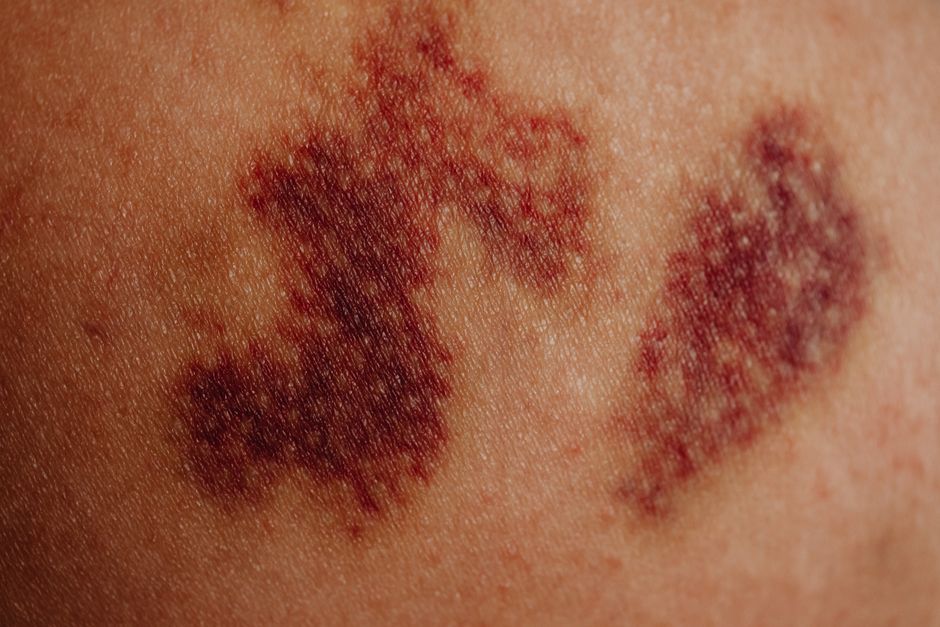
Black marks on the face are most often caused by a condition called post-inflammatory hyperpigmentation (PIH). This happens when the skin produces extra melanin to heal an area after inflammation, such as a pimple, cut, rash, or burn. Other common causes include sun damage, hormonal changes, and certain medications. The exact color and shape of the mark often give clues about which of these is responsible.
What Are the Main Types of Black Marks on the Skin?
Not every dark spot on the face is the same. Dermatologists group them into a few main categories based on how they form and what they look like under a special light called a Wood’s lamp.
Post-inflammatory hyperpigmentation is flat and can range from light brown to almost black. It appears where the skin previously had acne, eczema, or an injury. The mark is essentially leftover pigment from the healing process.
Melasma appears as larger, patchy areas of brown or gray-brown color, usually on the cheeks, forehead, or upper lip. It is strongly linked to hormones and sun exposure. It is not caused by inflammation.
Solar lentigines, often called sun spots or liver spots, are flat brown or black spots that develop after years of sun exposure. They are common on the face, hands, and shoulders in people over 40.
Seborrheic keratoses are wart-like growths that can be brown, black, or tan. They feel slightly raised and have a waxy, stuck-on appearance. They are benign and very common in older adults.
Some dark marks are not pigment at all. Tiny blood vessels that have broken under the skin can leave dark red or purple marks. These are called cherry angiomas or petechiae, depending on their size and cause.
What Causes Black Marks On Face After Acne?
Acne is the single most common trigger for black marks on the face, especially in younger adults and people with darker skin tones. When a pimple becomes inflamed, the body sends melanocytes — the cells that make pigment — to the area. The result is a flat dark spot that lingers long after the pimple itself has healed.
The medical term for this is post-inflammatory hyperpigmentation. It is not a scar in the traditional sense. It is an overproduction of pigment. The mark will often fade on its own over several months, but the process can take a year or longer if the spot is very dark.
Picking at a pimple makes it significantly worse. Squeezing increases inflammation, which tells the skin to produce even more melanin. The darker and longer-lasting the inflammation, the darker and longer-lasting the resulting mark.
People with darker skin tones, including Fitzpatrick skin types IV through VI, are at higher risk. Their melanocytes are simply more reactive. Even a minor pimple can leave a mark that takes months to fade.
How Does Sun Exposure Cause Dark Spots?
The sun is the most preventable cause of black marks on the face. Ultraviolet (UV) radiation damages skin cells and triggers melanin production as a defense mechanism. Over time, this produces persistent dark spots.
Sun damage also darkens existing marks. A spot caused by acne or injury will fade faster and more completely if the skin is protected from the sun. UV exposure stimulates the same melanocytes that created the original mark, reactivating them before they have finished fading.
This is why dermatologists consistently recommend daily sunscreen use for anyone concerned about dark spots. A broad-spectrum sunscreen with an SPF of 30 or higher applied every morning is the standard advice. Reapplication every two hours during direct sun exposure is also recommended.
Sunscreen does not remove existing spots. It prevents new ones and stops current ones from getting darker. It is a prevention tool, not a treatment.





What Role Do Hormones Play in Facial Darkening?
Hormonal changes are a leading cause of melasma, a condition that produces symmetrical brown or gray patches on the face. It is most common in women, particularly during pregnancy or while taking oral contraceptives.
During pregnancy, estrogen and progesterone levels rise sharply. These hormones can stimulate melanocytes to produce excess pigment. The result is often called the “mask of pregnancy.” It typically appears on the cheeks, forehead, nose, and upper lip.
Melasma is not the same as post-inflammatory hyperpigmentation. It is not caused by injury or inflammation. It is driven by hormones combined with sun exposure. Even minimal UV exposure can trigger or worsen it.
Melasma can be stubborn. It often improves after pregnancy or when stopping hormonal birth control, but it may not fully disappear. Sun protection is the single most important factor in managing it.
Can Medications or Medical Conditions Cause Black Marks?
Yes. Certain medications can cause the skin to darken in specific patterns. This is called drug-induced hyperpigmentation.
Nonsteroidal anti-inflammatory drugs (NSAIDs), certain antibiotics, and some chemotherapy agents are known to cause dark marks in some people. Antimalarial drugs and amiodarone, a heart medication, can also cause skin discoloration. The color and pattern vary depending on the drug and the person.
Some medical conditions also cause facial darkening. Addison’s disease, a disorder of the adrenal glands, can cause darkening of the skin, especially in creases and on the gums. Hemochromatosis, a condition of excess iron absorption, can cause a bronze or gray-brown skin tone.
If dark marks appear suddenly, spread quickly, or come with other symptoms like fatigue or weight loss, a medical evaluation is warranted. These conditions are rare, but they are real.
How Are Black Marks Diagnosed and Treated?
A dermatologist can usually identify the type of dark mark by examining it. A Wood’s lamp, which emits ultraviolet light, helps distinguish between pigment in the top layer of skin (epidermis) and pigment deeper in the skin (dermis).
Treatment depends on the cause. For post-inflammatory hyperpigmentation, the first step is stopping the source of inflammation. That means treating active acne or avoiding further injury to the skin.
Topical treatments are the first-line approach. Hydroquinone, a skin-lightening agent, is available by prescription. Over-the-counter options include azelaic acid, kojic acid, and vitamin C. These work by inhibiting the enzyme that produces melanin.
Retinoids, such as tretinoin, speed up cell turnover. This helps shed pigmented cells more quickly. They are often combined with hydroquinone for better results.
Chemical peels and laser treatments are options for stubborn spots. Glycolic acid peels and certain lasers target pigment in the skin. These treatments carry risks, including temporary redness, swelling, and in rare cases, worsening of the pigmentation. They should only be performed by a qualified dermatologist.
There is no single treatment that works for everyone. Results depend on the type of mark, the depth of the pigment, and how consistently the treatment is applied.
What Can You Do to Prevent New Black Marks?
Sun protection is the most effective prevention strategy. Daily use of a broad-spectrum sunscreen with SPF 30 or higher is the clinical standard. Wide-brimmed hats and seeking shade during peak sun hours add meaningful protection.
Do not pick at or squeeze pimples. This is the most common avoidable cause of post-inflammatory hyperpigmentation. Let acne lesions heal naturally or seek treatment from a dermatologist.
Treat acne early. The longer inflammation lasts, the higher the risk of a dark mark. Over-the-counter benzoyl peroxide or salicylic acid can help with mild acne. Persistent acne warrants a medical evaluation.
Be patient with fading. Even with proper treatment, dark marks take time to resolve. Epidermal pigment may fade in weeks to months. Deeper dermal pigment may take much longer or may not fully fade.
When Should You See a Doctor About a Dark Mark?
Most black marks on the face are benign and cosmetic. But some require medical attention.
See a doctor if a mark changes in size, shape, or color. See a doctor if a mark bleeds, itches, or becomes painful. See a doctor if a new mark appears suddenly without any obvious cause.
These features can be signs of skin cancer, including melanoma. Melanoma can present as a dark spot that looks similar to a mole or a bruise that does not heal. The ABCDE rule — asymmetry, irregular border, uneven color, diameter larger than a pencil eraser, and evolving — is a useful screening tool, but it is not a substitute for a professional exam.
Skin cancer is highly treatable when caught early. Any concerning mark should be evaluated promptly.
Frequently Asked Questions
Can black marks on the face be removed completely?
Most can be significantly lightened, but complete removal is not guaranteed. Superficial marks respond well to treatment, while deeper pigment may persist.
How long does it take for dark spots to fade?
Epidermal spots can fade in weeks to months with consistent treatment. Deeper spots may take a year or more and may never fully disappear.
Does skin lightening cream work for all types of dark spots?
No. Creams work best for post-inflammatory hyperpigmentation and sun spots. They are less effective for melasma and do not work on seborrheic keratoses.
Is it safe to use lemon juice on dark spots?
No. Lemon juice is acidic and can irritate the skin, which can worsen hyperpigmentation. It also increases sun sensitivity and has no proven benefit.
