
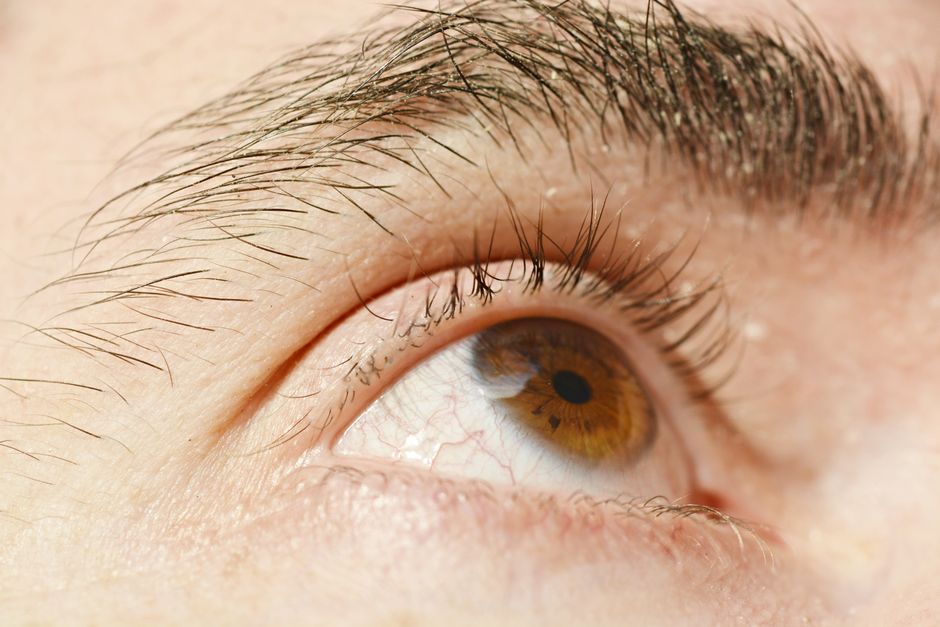
Bad eyesight usually comes down to one of two things: the shape of your eye doesn’t focus light correctly on the retina, or something inside the eye or the visual pathway is damaged or blocked. The first group is called refractive errors, and it includes nearsightedness, farsightedness, and astigmatism. The second group includes conditions like cataracts, glaucoma, and macular degeneration, which are diseases rather than simple focusing problems.
Those two categories are not the same thing, even though people often talk about “bad eyesight” as if it were one condition. One is mostly about physics and eye length. The other is about disease. Knowing which one you’re dealing with changes everything about what can be done.
What Causes Bad Eyesight?
The most common cause is a mismatch between the length of your eye and the focusing power of your cornea and lens. In a normal eye, light lands precisely on the retina at the back. When the eye is slightly too long, light lands in front of the retina and distant objects look blurry. That is myopia, or nearsightedness. When the eye is slightly too short, light would land behind the retina, and near objects look blurry. That is hyperopia, or farsightedness.
Astigmatism works differently. It happens when the cornea is curved more like a football than a basketball, so light focuses at two points instead of one. This blurs vision at all distances, not just near or far.
These refractive errors are largely inherited. If one or both parents are nearsighted, a child’s risk rises. But genetics is not the whole story. The sharp increase in myopia rates in many countries over recent decades is too fast to be explained by genes alone, which points to environmental factors.
Research published in ophthalmology journals has consistently linked more time spent outdoors in childhood to lower rates of myopia progression. The leading explanation involves light intensity. Outdoor light is far brighter than indoor light, and bright light appears to influence how the eye grows during development. Time spent on close work — reading, screens, studying — has also been studied as a possible factor, though the evidence there is more mixed than the outdoor-light findings.
How Does the Eye Focus Light?
To understand what goes wrong, it helps to know what normally happens. Light enters through the cornea, the clear front surface of the eye. The cornea does most of the focusing. Then the lens, just behind the pupil, fine-tunes the focus so you can shift between near and far objects. This adjustment is called accommodation.
The light then passes through the vitreous, a gel-like substance filling the center of the eye, and lands on the retina. The retina is a thin layer of light-sensitive tissue at the back. It converts light into electrical signals. Those signals travel through the optic nerve to the brain, which interprets them as images.
Bad eyesight can originate at any point along this chain. A problem with the cornea or lens shape causes a refractive error. A clouded lens causes cataracts. Damage to the retina causes vision loss that glasses cannot fix. Damage to the optic nerve or the visual cortex of the brain causes another distinct pattern of loss. This is why two people with “bad eyesight” can have completely different conditions and completely different outcomes.
What Eye Diseases Cause Vision Loss?
Beyond refractive errors, several diseases cause vision loss, and they tend to affect different age groups.
- Cataracts — the lens becomes cloudy, usually with age. It is the leading cause of reversible blindness worldwide. Surgery to replace the lens is common and generally effective.
- Glaucoma — damage to the optic nerve, often associated with elevated pressure inside the eye. It usually develops slowly and can destroy peripheral vision before a person notices. Because early glaucoma often has no symptoms, it is sometimes called the “silent thief of sight.”
- Age-related macular degeneration — damage to the macula, the central part of the retina responsible for sharp, detailed vision. It affects central vision while peripheral vision often remains.
- Diabetic retinopathy — damage to retinal blood vessels from long-term high blood sugar. It is a leading cause of vision loss in working-age adults.
These conditions are not caused by eye shape. They are caused by disease processes, and they generally cannot be corrected with glasses. This distinction matters because it changes what treatment is possible.




Does Screen Time Cause Bad Eyesight?
Screen time causes eye strain, but the evidence that it permanently damages vision is weak. The strain is real — dry eyes, headaches, blurry vision that clears when you look away, and difficulty focusing after long screen sessions. This is called digital eye strain or computer vision syndrome. It is uncomfortable, but it is generally temporary.
The reason it happens is straightforward. When you stare at a screen, you blink less often. Blinking spreads tears across the eye surface. Blink less, and your eyes dry out. You also hold your focus at one distance for a long time, which tires the focusing muscles.
The link between near work and myopia progression is where things get murky. Some studies suggest that children who do more close work develop more myopia. Other studies find the effect disappears once outdoor time is accounted for. The evidence is mixed, and researchers still debate whether near work is a cause or just a marker for something else.
What is clearer is the outdoor light finding. Children who spend more time outside tend to develop less myopia, and this has been shown across multiple studies in different countries. The effect appears to be about light exposure, not about exercise or looking at distant objects.
Can Bad Eyesight Be Inherited?
Genetics plays a major role in refractive errors. Nearsightedness and farsightedness both run in families. If both parents are nearsighted, a child’s likelihood of also being nearsighted is substantially higher than if neither parent is.
But inheritance is not destiny. Identical twins, who share the same genes, can have different prescriptions. That tells us environment matters too. The genes set the tendency. What happens during childhood development — how much time outdoors, how much close work, and other factors not fully understood — influences how that tendency plays out.
Some serious eye diseases also have genetic components. Retinitis pigmentosa, a group of inherited conditions that damage the retina, runs in families. A family history of glaucoma or macular degeneration raises risk as well. This is one reason regular eye exams matter, especially if a close relative has one of these conditions.
What Raises Your Risk of Vision Loss?
Age is the strongest risk factor for most serious eye diseases. Cataracts, glaucoma, and macular degeneration all become more common as people get older. This is not because aging causes bad eyesight directly, but because the tissues of the eye accumulate damage over decades.
Other established risk factors include:
- Diabetes — long-term high blood sugar damages retinal blood vessels. Better blood sugar control is associated with lower risk of diabetic retinopathy.
- High blood pressure — can damage blood vessels in the retina and is linked to several eye conditions.
- Smoking — associated with higher risk of cataracts and macular degeneration. This is one of the more consistent findings in eye research.
- Family history — a close relative with glaucoma or macular degeneration raises your risk.
- Prolonged UV exposure — linked to cataracts and some eye surface conditions.
Some of these are within your control. Some are not. The honest position is that risk factors raise probability, not certainty, and many people with multiple risk factors never develop serious eye disease.
When Should You Get Your Eyes Checked?
Regular eye exams catch problems before they cause noticeable vision loss. This is especially true for glaucoma, which can progress silently for years. By the time a person notices peripheral vision loss, significant optic nerve damage may already have occurred, and that damage cannot be reversed.
For adults without risk factors, many eye care professionals recommend a comprehensive exam every few years, with frequency increasing after age 40 and again after 60. People with diabetes, a family history of eye disease, or other risk factors are generally advised to be seen more often. Specific intervals vary by individual and by the guidance of the examining professional.
Seek care promptly if you notice sudden vision changes, flashes of light, a curtain-like shadow across your vision, or a sudden increase in floaters. These can signal a retinal detachment, which is a medical emergency. Fast treatment improves the chance of preserving vision.
Can Bad Eyesight Be Prevented?
Refractive errors largely cannot be prevented. You cannot change the shape of your eye through behavior. But some causes of vision loss can be reduced in risk.
For children, encouraging more time outdoors is supported by evidence as a way to reduce myopia progression, though it does not eliminate it. For adults, managing blood sugar and blood pressure, not smoking, and protecting eyes from UV light are all associated with lower risk of several eye diseases. None of these guarantees healthy vision. They shift the odds.
It is worth being clear about what does not work. There is no diet, supplement, or eye exercise program with strong evidence that reverses refractive errors or restores lost vision from disease. Marketing for such products often outruns the science. Some nutrients, such as certain antioxidants, have been studied for specific conditions like macular degeneration, but the findings are specific to those conditions and do not generalize to eyesight overall.
The most reliable thing you can do is get regular exams. Many serious eye diseases are treatable when caught early and much harder to manage when caught late. That gap is where most preventable vision loss happens.
Frequently Asked Questions
What is the main cause of bad eyesight?
The most common cause is a refractive error, where the shape of the eye does not focus light correctly on the retina. This includes nearsightedness, farsightedness, and astigmatism, and it is usually corrected with glasses or contacts.
Can bad eyesight be cured?
Refractive errors can be corrected with glasses, contact lenses, or surgery, but the underlying eye shape is not changed by glasses. Diseases like glaucoma and macular degeneration can be managed or slowed but generally not cured.
Does using your phone too much damage your eyes?
Screen use causes temporary eye strain and dryness, but there is no strong evidence it permanently damages vision. The link between near work and myopia progression remains debated among researchers.
Is bad eyesight genetic?
Genetics plays a major role, and nearsightedness often runs in families. However, identical twins can have different prescriptions, which shows environment also matters.
