
Female pattern hair loss is far more common than most people think. It affects millions of women, and it is not the same condition as male pattern baldness. The medical name is androgenetic alopecia, and it has specific causes rooted in genetics and hormones. Understanding why it happens is the first step toward realistic expectations about treatment and progression.
What Causes Androgenetic Alopecia In Females?
Androgenetic alopecia in females is caused by a combination of genetic predisposition and the effect of androgens — male hormones that women also produce — on hair follicles. These hormones, particularly dihydrotestosterone (DHT), bind to receptors in the scalp and gradually shrink hair follicles over time. This process is genetically programmed and typically begins after menopause, though it can start earlier.
The result is a predictable pattern of thinning. Women typically lose hair on the top of the scalp and along the part line, while the front hairline usually stays intact. This differs from men, who often experience receding hairlines and bald spots at the crown.
How the Hair Growth Cycle Changes
Hair grows in cycles. Each follicle has a growth phase, a transition phase, and a resting phase. In androgenetic alopecia, DHT shortens the growth phase and lengthens the resting phase. Over time, the follicle produces thinner, shorter, and less pigmented hairs.
This process does not kill the follicle. The follicle remains alive but produces increasingly fine hairs until it becomes dormant. This is why treatment can sometimes revive hair growth — the follicle has not been destroyed, just miniaturized.
The miniaturization process is gradual. Many women notice the change over years rather than months. It is common to see more hair in the brush or shower drain, but the most reliable sign is a widening part line or overall thinning at the crown.
The Role of Genetics
Genetics play a major role in female androgenetic alopecia, but the inheritance pattern is not simple. The condition is polygenic, meaning multiple genes contribute. It is not inherited exclusively from the mother’s side, as a common myth suggests. Both parents contribute genetic risk.
Researchers have identified several gene variants associated with hair loss. The androgen receptor gene is one of the most studied, but it is not the only one. The genetic picture is complex, and having a family history of hair loss on either side increases risk.
It is important to note that genetics do not guarantee hair loss. They set the stage, but hormones and age determine whether the condition actually develops. Some women with a strong family history never experience significant thinning, while others with no known family history do.





Hormones and Their Effect on Hair Follicles
Androgens are present in both men and women, but at different levels. In women, the ovaries and adrenal glands produce testosterone and other androgens. An enzyme called 5-alpha-reductase converts testosterone into DHT, the more potent form that affects hair follicles.
Women with androgenetic alopecia do not necessarily have abnormal hormone levels. Many have normal blood testosterone and DHT levels. The issue is often increased sensitivity of the hair follicle to normal levels of androgens. This sensitivity is genetically determined.
Hormonal changes throughout life can influence the condition. Pregnancy, menopause, and stopping birth control pills can all affect hair shedding temporarily. However, these events do not cause androgenetic alopecia. They may unmask or accelerate a genetic predisposition that was already present.
Why Menopause Triggers Hair Loss
Menopause is the most common time for women to notice androgenetic alopecia. The reason is estrogen decline. Estrogen has a protective effect on hair follicles. It prolongs the growth phase and counteracts some of the effects of androgens.
When estrogen levels drop after menopause, the balance shifts. Androgens, even at normal levels, have a relatively stronger effect on the follicle. This is why many women first notice thinning in their late 40s or 50s.
This hormonal shift does not cause hair loss by itself. It reveals a genetic tendency that was always present but was partially suppressed by estrogen. This explains why not all women lose hair after menopause, even though all women experience estrogen decline.
Medical Conditions That Mimic Female Pattern Hair Loss
Not all thinning hair in women is androgenetic alopecia. Several other conditions produce similar symptoms, and it is important to distinguish them because treatments differ.
Telogen effluvium is a common cause of sudden, diffuse shedding. It occurs after a stressful event, major surgery, rapid weight loss, or a high fever. The hair thins all over the scalp, not just at the crown. This condition usually resolves within six months once the trigger is removed.
Thyroid disorders, particularly hypothyroidism, can cause diffuse hair thinning. Iron deficiency anemia is another common cause, especially in women with heavy menstrual periods. Vitamin D deficiency has also been linked to hair shedding in some studies.
Polycystic ovary syndrome (PCOS) causes elevated androgen levels and can produce a pattern of hair loss similar to androgenetic alopecia. Women with PCOS often have other signs, including irregular periods, acne, and excess facial hair.
How Doctors Diagnose Androgenetic Alopecia
A dermatologist typically diagnoses female pattern hair loss through a clinical examination. The characteristic pattern — thinning at the crown with a widened part line and preserved frontal hairline — is often enough to make the diagnosis.
Doctors may also perform a hair pull test. This involves gently tugging on a small group of hairs to see how many come out. A positive test suggests active shedding, which is more common in telogen effluvium than in androgenetic alopecia.
Blood tests are sometimes ordered to rule out other causes. These may include thyroid function tests, iron studies, and hormone panels. A scalp biopsy is rarely needed but can confirm the diagnosis if there is uncertainty.
Treatment Options and What to Expect
Treatment for female androgenetic alopecia focuses on slowing progression and stimulating regrowth. Complete restoration of pre-loss density is not realistic for most women. The goal is to maintain existing hair and improve thickness where possible.
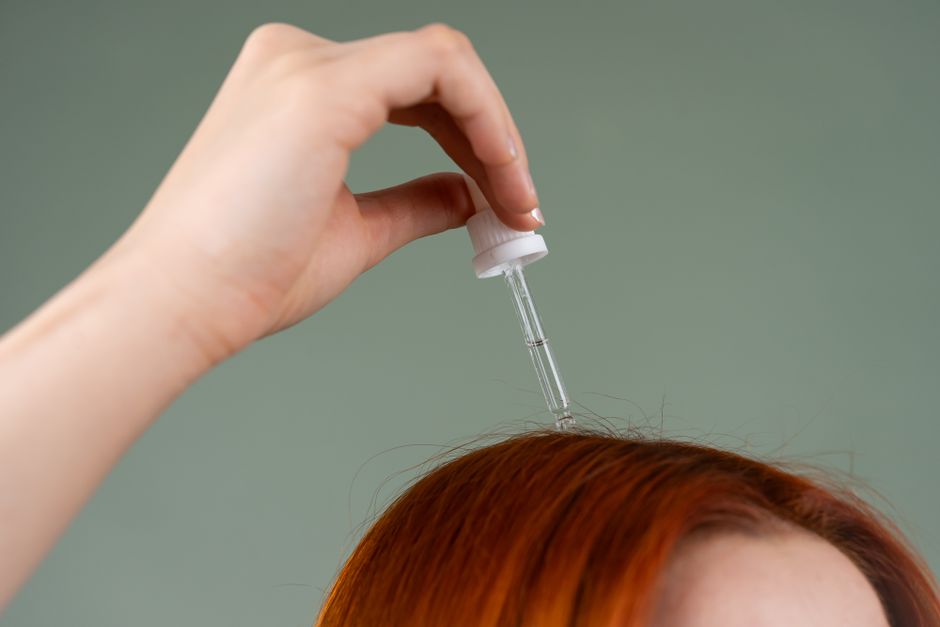
Topical minoxidil is the most established treatment for women. It is available over the counter in a 2% and 5% solution. The 5% strength is now commonly recommended for women, though it was historically used mainly in men. Minoxidil works by prolonging the growth phase and enlarging miniaturized follicles. Results take at least three to six months to become visible.
Spironolactone is an oral medication that blocks androgen receptors. It is prescribed off-label for female hair loss. Some clinical evidence supports its use, but it is not FDA-approved specifically for this condition. Women who may become pregnant should not take spironolactone due to risk of birth defects.
Low-level laser therapy is another option. Devices such as laser combs and helmets emit red light that may stimulate hair follicles. Some studies show modest benefit, but results vary. It is a reasonable adjunct, not a replacement for proven treatments.
Platelet-rich plasma (PRP) injections are increasingly offered by dermatologists. The procedure involves drawing blood, concentrating platelets, and injecting them into the scalp. Early evidence is promising, but large controlled trials are still limited. This treatment is not covered by most insurance plans.
Lifestyle Factors That Matter
Nutrition plays a supporting role in hair health. Iron deficiency should be corrected if present. A balanced diet with adequate protein is important because hair is made of protein. However, no supplement can cure androgenetic alopecia.
Biotin supplements are widely marketed for hair loss, but the evidence is weak. Biotin deficiency is rare, and supplementation does not affect androgenetic alopecia in people with normal levels. Save your money unless a doctor confirms a deficiency.
Stress management is worth considering. Stress does not cause androgenetic alopecia, but it can trigger telogen effluvium on top of it. Reducing stress may help overall hair density, but it will not reverse genetic hair loss.
When to See a Doctor
Sudden hair loss or rapid thinning warrants a medical evaluation. This is especially true if you notice patchy hair loss, redness, scaling, or pain on the scalp. These signs point to conditions other than androgenetic alopecia.
Gradual thinning over years is more consistent with female pattern hair loss, but a doctor should still confirm the diagnosis. Early treatment produces better results. Waiting allows more follicles to miniaturize, and while dormant follicles can sometimes be revived, the process becomes harder over time.
Hair loss can be emotionally distressing. It is a legitimate medical concern, not a vanity issue. A dermatologist can provide an accurate diagnosis and discuss realistic treatment options based on your specific situation.
Frequently Asked Questions
Is female pattern hair loss reversible?
It is treatable but not fully reversible. Treatment can slow progression and improve density, but it will not restore hair to its original state.
Can stress cause female pattern hair loss?
Stress does not cause androgenetic alopecia. It can trigger telogen effluvium, a temporary shedding condition that resolves once stress decreases.
Does wearing hats or tight hairstyles cause hair loss?
Hats do not cause hair loss. Very tight hairstyles can cause traction alopecia, a different condition caused by pulling on the hair roots.
Will hair loss stop after menopause?
Hair loss may stabilize but typically does not stop completely. The rate of progression varies widely among women.
