
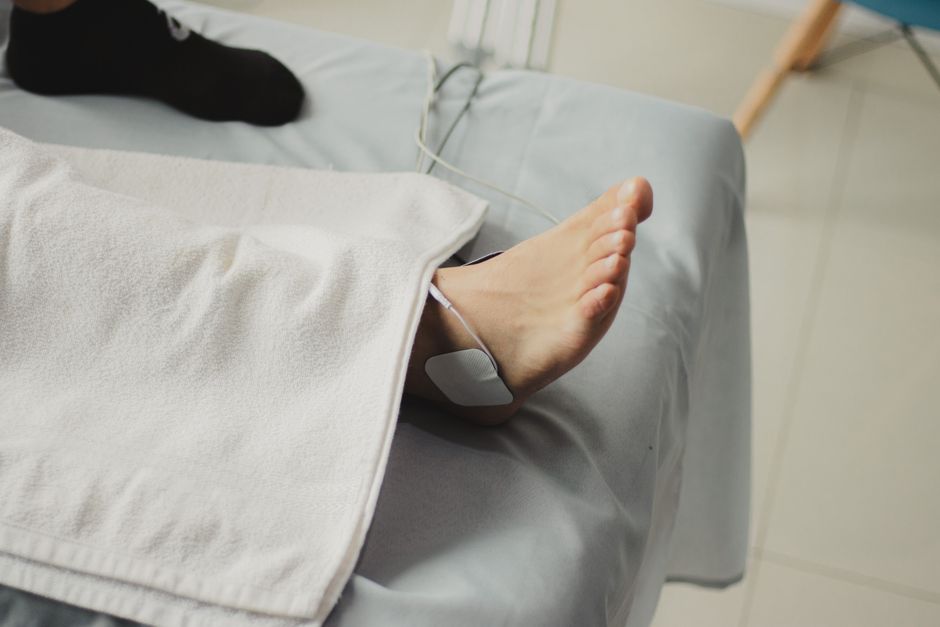
A torn Achilles tendon happens when the strong band of tissue connecting your calf muscles to your heel bone stretches too far or snaps. Most tears occur suddenly during activity that involves pushing off or jumping, and many people describe hearing a pop at the moment of injury. The tendon is the largest in the body, but it has a limited blood supply in its middle section, which is one reason it can tear and why healing takes time.
What Causes A Torn Achilles Risks And Symptoms?
The cause is mechanical overload. The Achilles tendon transmits the force your calf muscles generate into every step, jump, and push-off. When that force exceeds what the tendon can handle, fibers tear. This can happen in one explosive moment or build up over months of repetitive stress that weakens the tendon until a minor movement finishes the job.
Doctors sometimes call this a rupture rather than a tear. Both words describe the same injury, though rupture usually refers to a complete break and tear can mean a partial one. The distinction matters for treatment.
Sudden Tears
Most complete ruptures happen during sports that require quick acceleration or jumping. Basketball, tennis, soccer, and squash are common settings. The typical mechanism is a forceful push-off with the foot pointed down, or a sudden change of direction that loads the tendon beyond its limit.
A less obvious cause is a direct blow or a fall. Landing awkwardly from a height can also do it. In these cases the force comes from outside the body rather than from muscle contraction.
Overuse and Degeneration
Many tears are not purely sudden. Research consistently shows that most ruptured Achilles tendons already had degenerative changes before they broke. Years of repetitive loading cause small areas of breakdown in the tendon tissue. The tendon loses some of its normal structure and becomes less able to absorb force.
This is why a rupture can happen during a movement the person has done thousands of times without issue. The tendon was already weakened. The final step was just the last straw.
Who Is at Higher Risk?
Risk rises with age. Achilles ruptures are most common in people between 30 and 50, particularly those who play sports part-time rather than training consistently. The classic picture is a weekend athlete who pushes hard after a week at a desk.
Sex matters too. Men rupture their Achilles tendon several times more often than women. The reason is not fully understood, but differences in tendon size, hormones, and activity patterns likely all play a role.
Several other factors are linked to higher risk:
- Certain antibiotics in the fluoroquinolone class carry a warning about tendon injury, including the Achilles. The risk is higher in older adults and people taking steroids.
- Corticosteroid use, whether oral or injected near the tendon, is associated with tendon weakening and rupture.
- Some chronic conditions, including diabetes and inflammatory arthritis, are linked to tendon problems.
- Obesity increases load on the tendon with every step.
- Training errors such as sudden increases in intensity or volume.
- Poor calf strength or flexibility, though the evidence here is less clear than for the factors above.
One clarification worth making: stretching before activity does not reliably prevent Achilles tears. The evidence for pre-exercise stretching as a prevention method is weak. Progressive strengthening of the calf and a gradual build in training load have better support.
What Does a Torn Achilles Feel Like?
The most common description is a sudden sharp pain in the back of the ankle or lower calf, often with a popping or snapping sensation. Some people say it felt like being kicked or hit from behind, even though no one was there.
After the initial moment, pain may actually decrease. This surprises people. The tendon has torn, so the tissue that was being stretched is no longer under tension. Pain fading does not mean the injury is minor.
Other signs include:
- An inability to push off the injured foot or rise onto the toes
- A gap or dent you can feel in the tendon about two inches above the heel
- Swelling and bruising in the ankle and calf
- Weakness when trying to point the foot downward
- A sensation that the foot is unstable or does not respond normally
Partial tears can be harder to spot. The tendon is still intact, so some pushing strength remains. Pain and swelling may be the main clues. This is one reason partial tears are sometimes mistaken for a bad ankle sprain.




How Is a Torn Achilles Diagnosed?
A doctor can often diagnose a complete rupture with a physical exam alone. The most reliable test is the Thompson test. The patient lies face down with the foot hanging off the edge of the table. The examiner squeezes the calf muscle. If the foot does not point downward, the tendon is likely completely torn.
Other exam findings include a palpable gap in the tendon and weakness with pushing off. Partial tears are trickier, and imaging may be needed.
Ultrasound is commonly used because it is quick and can show the tendon in motion. MRI gives more detail and can help distinguish a partial tear from a complete one, or show how much tendon tissue remains intact. Not everyone needs imaging, but it can change the treatment plan.
What Are the Treatment Options?
Treatment falls into two broad paths: surgery and nonsurgical management. Both have a role, and the best choice depends on the type of tear, the person’s age, activity level, and general health.
Nonsurgical treatment usually involves immobilizing the foot in a cast or boot, often with the toes pointed down at first to take tension off the tendon. Over weeks, the foot is gradually brought back to a neutral position. This approach avoids surgery and its risks, but the rate of re-rupture has historically been higher than with surgery.
Surgical repair reconnects the torn ends of the tendon. It can be done through a standard open incision or a smaller minimally invasive approach. Surgery is often recommended for younger, active people and for complete tears, though practice varies.
A newer middle path uses functional rehabilitation with early controlled movement rather than long immobilization. Some studies suggest this can produce good outcomes with either surgical or nonsurgical treatment when the protocol is followed carefully. The evidence is still developing, and not every clinic offers it.
What is well established: rehabilitation matters as much as the initial treatment choice. Physical therapy to restore calf strength, ankle motion, and gait is a standard part of recovery regardless of which path is taken.
How Long Does Recovery Take?
Full recovery is measured in months, not weeks. Most people are in a boot or cast for several weeks. Return to walking typically happens within the first few months. Return to running and jumping usually takes longer, often six months or more.
Strength and function can continue to improve for up to a year after injury. Some people never regain full calf strength on the injured side, even with good rehabilitation. This is a realistic expectation to set early.
The timeline varies widely based on the severity of the tear, the treatment chosen, age, and how consistently rehabilitation is followed. A doctor or physical therapist can give a more specific estimate for an individual case.
Can a Torn Achilles Be Prevented?
Not every rupture is preventable, especially when degeneration has already occurred. But some risk factors can be addressed.
Building calf strength gradually and maintaining it year-round has better evidence than stretching alone. Sudden spikes in training volume or intensity are a common thread in overuse injuries. Warming up before intense activity and allowing recovery between hard sessions are reasonable steps.
If you take a fluoroquinolone antibiotic or use corticosteroids, talk with your doctor about tendon symptoms. Pain, swelling, or a new weakness in the calf or ankle during or after these treatments deserves medical attention.
Anyone who feels a pop in the back of the ankle should stop activity and seek evaluation rather than trying to walk it off. Early diagnosis gives more treatment options.
Frequently Asked Questions
Can you walk with a torn Achilles tendon?
Some people can still walk with a partial tear, but a complete rupture usually makes pushing off the foot impossible. Walking ability alone does not rule out a serious tear, so medical evaluation is needed.
What does a torn Achilles feel like when it happens?
Most people describe a sudden pop or snap in the back of the ankle, sometimes feeling like a kick from behind. Pain may lessen shortly after, but weakness and swelling typically remain.
Is a torn Achilles tendon serious?
Yes. A complete rupture prevents normal pushing off and requires medical treatment, either surgery or a structured nonsurgical program. Without treatment, function often does not fully return.
How long does it take to recover from a torn Achilles?
Recovery usually takes several months, with return to running or jumping often taking six months or longer. Strength can keep improving for up to a year after the injury.
