

An enlarged prostate is one of the most common health conditions affecting men as they age. The medical term is benign prostatic hyperplasia, or BPH. It means the prostate gland has grown larger than usual, and it is not cancer. The primary cause is simply getting older, combined with the effects of male hormones on prostate tissue over time. While the exact trigger is complex, the condition is a normal part of aging for many men, and understanding the risk factors and symptoms is the first step in managing it effectively.
What Is the Prostate and What Does It Do?
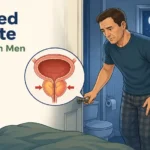
The prostate is a walnut-sized gland located just below the bladder and in front of the rectum. It wraps around the upper part of the urethra, the tube that carries urine out of the body. The gland’s main job is to produce fluid that nourishes and transports sperm.
Because the prostate surrounds the urethra, any growth in the gland can squeeze the tube. This physical pressure is what leads to the urinary symptoms most men notice. The gland tends to grow in two distinct phases: an early phase during puberty and a second phase starting around age 25 that continues for most of a man’s life.
What Causes the Prostate to Enlarge?
Age is the single biggest risk factor for an enlarged prostate. The condition is rare in men under 40. By age 60, about half of men have some degree of BPH, and by age 85, that number climbs to roughly 90 percent.
Hormones play the central role in this growth. Testosterone, the primary male hormone, is converted in the prostate into a more potent form called dihydrotestosterone, or DHT. DHT signals prostate cells to multiply. Over decades, this constant low-level stimulation causes the gland to grow larger. Even as total testosterone levels decline with age, the prostate remains sensitive to DHT, and the growth continues.
There is also a genetic component. Men with a family history of BPH are more likely to develop it themselves. The condition tends to run in families, and research suggests that inherited factors influence both whether a man gets BPH and how severe it becomes.
What Are the Main Risk Factors for BPH?
Beyond age and hormones, several other factors increase the likelihood of developing an enlarged prostate. These are not direct causes, but they are strongly associated with the condition.
- Family history: Having a father or brother with BPH raises your risk.
- Obesity: Excess body weight is linked to a higher risk of BPH and more severe symptoms.
- Metabolic conditions: Diabetes, heart disease, and high blood pressure are all associated with an increased chance of BPH.
- Lifestyle factors: Lack of physical activity may contribute to worse symptoms, while regular exercise appears to lower risk.
Some research suggests that diet plays a role, though the evidence is less certain. Diets high in red meat and fat may be linked to a higher risk, while diets rich in vegetables and fruits appear protective. These findings are observational, meaning they show an association but do not prove cause and effect.
-
 How to Fix an Enlarged Prostate: Causes, Treatments, and What Actually Works
 -
Enlarged Prostate Symptoms Men: Know Everything About BPH
-
Can an Enlarged Prostate Cause Back Pain? What Science Says
-
What Causes Enlarged Prostate? What Research Shows
-
ProstaVive Reviews 2025. Analyzed Complaints & Scam Reports!



What Are the Symptoms of an Enlarged Prostate?
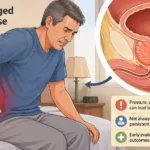
The symptoms of BPH stem from the prostate pressing on the urethra and bladder. They can range from mild to severe, and they often worsen slowly over time. Not every man with an enlarged prostate has symptoms, but when they occur, they typically include:
- Weak or interrupted urine stream
- A feeling that the bladder is not completely empty
- Difficulty starting urination or straining to urinate
- Frequent urination, especially at night
- Urgency, or a sudden strong need to urinate
- Dribbling after urination
These symptoms occur because the bladder must work harder to push urine past the enlarged gland. Over time, the bladder muscle can thicken and become irritable, which causes the frequent and urgent need to urinate. If left untreated, BPH can lead to complications such as urinary tract infections, bladder stones, or even kidney damage in severe cases.
Symptom severity does not always match prostate size. Some men with a mildly enlarged prostate have severe symptoms, while others with a significantly enlarged gland have none. The location of the growth matters as much as the size.
How Is an Enlarged Prostate Diagnosed?
Doctors use several tools to diagnose BPH. The process usually begins with a detailed discussion of your symptoms and medical history. Your doctor will likely ask you to complete a symptom questionnaire that scores the severity of your urinary issues.
A digital rectal exam is a standard part of the evaluation. The doctor inserts a gloved finger into the rectum to feel the back of the prostate. This exam can reveal whether the gland is enlarged and whether it feels normal or has suspicious hard areas that might suggest cancer.
Other tests may include a urine test to rule out infection, a blood test to check kidney function, and a PSA blood test. PSA stands for prostate-specific antigen, a protein produced by the prostate. Elevated PSA levels can indicate BPH, inflammation, or prostate cancer, so the test helps guide further evaluation.
In some cases, doctors use a flow rate test to measure how fast urine empties from the bladder, or an ultrasound to measure residual urine left after urination. These tests help determine how much the enlarged prostate is affecting bladder function.
Can an Enlarged Prostate Be Prevented?
There is no guaranteed way to prevent BPH, since age and genetics are beyond your control. However, lifestyle choices may reduce your risk or slow the progression of symptoms.
Maintaining a healthy weight is one of the most supported steps. Studies consistently show that men with a higher body mass index have a greater risk of BPH and more severe urinary symptoms. Regular physical activity is also associated with a lower risk, and even moderate exercise like brisk walking appears to help.
Some research has examined whether certain medications can prevent BPH. Drugs called 5-alpha reductase inhibitors, which block the conversion of testosterone to DHT, are used to treat BPH and can shrink the gland over time. Some doctors have considered whether they could prevent BPH in men at high risk, but they are not currently recommended for prevention in men without symptoms.
What Treatment Options Are Available?
Treatment for BPH depends on symptom severity and how much the condition affects your quality of life. Men with mild symptoms may only need regular monitoring and lifestyle adjustments. These include limiting fluid intake before bed, reducing caffeine and alcohol, and avoiding medications that can worsen symptoms, such as some decongestants.
For men with moderate symptoms, medications are the most common first-line treatment. Two main classes of drugs are used. Alpha-blockers relax the muscle fibers in the prostate and bladder neck, making it easier to urinate. They work quickly, often within days. 5-alpha reductase inhibitors shrink the prostate by blocking DHT production. They take longer to work, usually several months, but they address the underlying growth.
For men with severe symptoms or those who do not respond to medication, surgical options exist. Minimally invasive procedures use heat, laser, or radio waves to remove excess prostate tissue. More invasive surgery, such as transurethral resection of the prostate, or TURP, remains the gold standard for severe cases. Each option has different risks and recovery times, and the choice depends on prostate size, overall health, and patient preference.
It is important to note that BPH and prostate cancer are separate conditions. Having BPH does not increase your risk of developing prostate cancer, though the two can coexist. The PSA test is used to screen for cancer, but an elevated level does not mean cancer is present.
Frequently Asked Questions
Does an enlarged prostate always mean cancer?
No. An enlarged prostate is most often benign prostatic hyperplasia, or BPH, which is not cancer.
Prostate cancer and BPH are separate conditions, though both can occur in the same man.
What age do men typically get an enlarged prostate?
BPH is rare before age 40 and becomes increasingly common with age.
About half of men over 60 and up to 90 percent of men over 85 have some degree of prostate enlargement.
Can lifestyle changes shrink an enlarged prostate?
No lifestyle change has been proven to shrink an enlarged prostate.
However, maintaining a healthy weight and staying physically active may reduce symptom severity and lower your overall risk.
Is an enlarged prostate a normal part of aging?
Yes, for most men, prostate growth is a normal part of the aging process.
It is so common that many doctors consider it a natural condition rather than a disease, though symptoms can still require treatment.
