
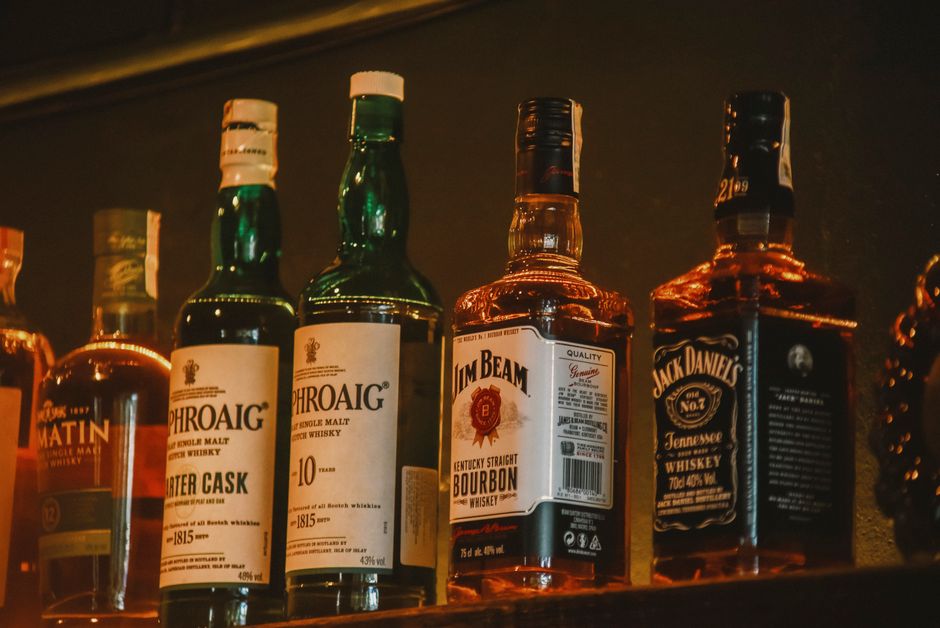
Bourbon whiskey is primarily made from corn. By law, the mash bill — the mix of grains that gets fermented — must be at least 51 percent corn. The remaining 49 percent can include other grains like rye, wheat, or malted barley. Corn is what makes bourbon sweet and full-bodied, and it is the defining ingredient that separates bourbon from other American whiskeys.
That single rule sits at the center of everything else about bourbon. Where it is made, how it is distilled, and what kind of barrel it ages in all flow from the grain at the base. Understanding corn’s role explains why bourbon tastes the way it does and why so many bottles differ from one another despite sharing the same basic recipe.
What Grains Go Into Bourbon?
Corn is the dominant grain, but it is rarely the only one. Distillers blend in smaller amounts of other grains to shape flavor, texture, and how the whiskey ferments.
The three most common secondary grains are rye, wheat, and malted barley. Rye adds spice and a peppery edge. Wheat softens the whiskey and lends a bread-like sweetness. Malted barley brings enzymes that help convert starches into fermentable sugars during the mash.
A typical mash bill might read as 70 percent corn, 15 percent rye, and 15 percent barley. Another might be 75 percent corn and 25 percent wheat, with a small amount of barley. These ratios are not random. They are the distiller’s main tool for controlling flavor.
Here is the part many people miss. The 51 percent corn requirement is a legal floor, not a target. Most bourbons contain far more corn than that. A bottle labeled simply “bourbon” could be 51 percent corn or 80 percent corn, and the two will taste very different even if everything else about production is identical.
Some distilleries disclose their exact mash bills. Many do not, treating them as trade secrets. When a label says “high-rye” or “wheated,” it is telling you which secondary grain dominates the remaining portion.
What Bourbon Whiskey Is Primarily Made From and How the Law Defines It
Bourbon is a legally defined product in the United States. The rules are specific, and they are enforced. A whiskey cannot carry the name unless it meets every requirement.
The core standards are well established in federal regulations:
- The mash must be at least 51 percent corn.
- It must be distilled to no more than 160 proof, which is 80 percent alcohol by volume.
- It must enter the barrel at no more than 125 proof, or 62.5 percent alcohol by volume.
- It must be aged in new, charred oak containers.
- Nothing may be added except water to reduce the proof.
- It must be bottled at 80 proof or higher.
One detail surprises people. Bourbon does not have to be made in Kentucky. It can be produced anywhere in the United States. Kentucky makes the vast majority of it, and the state’s climate and water are often cited as reasons for its character, but the name is not tied to a location.
The “new, charred oak” rule matters more than most drinkers realize. Bourbon barrels can only be used once for bourbon. After that, they are typically sold to other industries, including Scotch and rum producers, who reuse them. This one-use rule is a major reason bourbon tends to pick up so much color and flavor from the wood.
Why Corn Is the Base Grain
Corn was the practical choice when American distillers began making whiskey. It grew well in the climate and soil of the early United States, especially in the regions that became Kentucky and Tennessee. It was abundant, cheap, and available in quantities that other grains were not.
Corn also behaves well in fermentation. It is high in starch, which yeast converts into alcohol. That starch content supports a strong, efficient fermentation and a relatively high yield of alcohol from each batch of grain.
Flavor is the other reason. Corn brings a natural sweetness and a round, full mouthfeel. Whiskeys made mostly from rye or barley taste leaner and sharper by comparison. The sweetness of corn is not added sugar — it comes from the grain itself and from compounds created during fermentation and aging.
There is a limit to how much of the story corn explains. The grain sets the foundation, but barrel char, aging time, warehouse placement, and the distiller’s choices all shape the final product. Two bourbons with identical mash bills can taste quite different if they age for different lengths of time or sit on different floors of the same rickhouse. Temperature swings during aging push whiskey in and out of the wood, and that movement pulls in flavor compounds from the charred oak.





How Bourbon Is Made From Grain to Bottle
The process follows a consistent sequence, though every distillery applies its own judgment at each step.
Milling and mashing. The grains are ground into meal and combined with water. The mixture is heated, which breaks down starches and prepares them for conversion. Malted barley plays a key role here because it supplies enzymes that turn starch into sugar.
Fermentation. Yeast is added, and the sugary liquid — now called mash — ferments for several days. Yeast consumes sugar and produces alcohol along with a range of flavor compounds. Distilleries guard their yeast strains closely because they influence the final taste.
Distillation. The fermented liquid is heated so alcohol vaporizes and is collected. Most bourbon is distilled twice, first in a column still and then in a pot still, though methods vary. Distillation concentrates the alcohol and separates out unwanted compounds.
Aging. The clear distillate, called white dog, goes into new charred oak barrels. It rests there for at least two years to be labeled “straight bourbon,” though many brands age longer. During this time the whiskey takes on amber color and flavors of vanilla, caramel, and wood.
Bottling. Before bottling, the whiskey is usually filtered and diluted with water to reach the desired proof. Some bottles are released at barrel strength, meaning no water is added.
Does the Mash Bill Tell You How Bourbon Will Taste?
The mash bill is a strong clue, not a guarantee. It tells you what went in, but not what came out.
A high-corn bourbon tends to taste sweet and smooth. A high-rye bourbon tends to taste spicier and drier. A wheated bourbon, where wheat replaces rye, tends to taste softer and sweeter. These patterns hold up across many bottles and are widely observed by distillers and tasters.
But the same mash bill can produce different results depending on yeast, distillation cuts, barrel char level, aging duration, and where the barrel sat during aging. A distiller’s yeast strain alone can shift the flavor profile noticeably. Barrel char — the layer of burnt wood inside the cask — also varies in how deeply it is toasted, and that changes which compounds the whiskey draws out.
This is why two bourbons with nearly identical grain recipes can taste like different drinks. The mash bill is the starting point. Everything after it is a series of choices that add up.
For a shopper, the practical takeaway is simple. If you know you like sweeter whiskey, look for high-corn or wheated labels. If you prefer something with more bite, look for high-rye. Beyond that, the label rarely tells you enough to predict the taste with confidence.
What Bourbon Is Not Made From
Bourbon is sometimes confused with other spirits, and clearing that up helps explain what makes it distinct.
It is not made from a majority of rye. That would be rye whiskey, which has its own rules and a sharper flavor. It is not made from barley the way Scotch is, where malted barley is the base grain. And it is not made from agave, sugarcane, or fruit, which belong to tequila, rum, and brandy respectively.
Bourbon is also not the same as Tennessee whiskey, though the two are closely related. Tennessee whiskey meets the same basic requirements as bourbon and then goes through an additional step called the Lincoln County Process, where the whiskey is filtered through charcoal before aging. Whether that makes it a separate category or a type of bourbon is a matter of labeling and law rather than chemistry, and the distinction is not always clean.
One more point worth stating plainly. No flavorings, colorings, or sweeteners may be added to bourbon. If a bottle contains added sugar, honey, or fruit, it is a flavored whiskey, not bourbon. The sweetness people taste in bourbon comes from corn, fermentation, and the barrel — not from anything poured in afterward.
Frequently Asked Questions
What is bourbon whiskey primarily made from?
Bourbon is primarily made from corn, which must make up at least 51 percent of the mash. The rest is typically rye, wheat, or malted barley.
Does bourbon have to be made in Kentucky?
No. Bourbon can be produced anywhere in the United States, though Kentucky makes the large majority of it. The name is defined by production rules, not by location.
What is the difference between bourbon and whiskey?
Bourbon is a specific type of whiskey with its own legal requirements, including a mash of at least 51 percent corn and aging in new charred oak barrels. All bourbon is whiskey, but not all whiskey is bourbon.
Why does bourbon taste sweet?
The sweetness comes from corn and from compounds drawn out of the charred oak barrel during aging. No sugar is added to bourbon at any point.
