
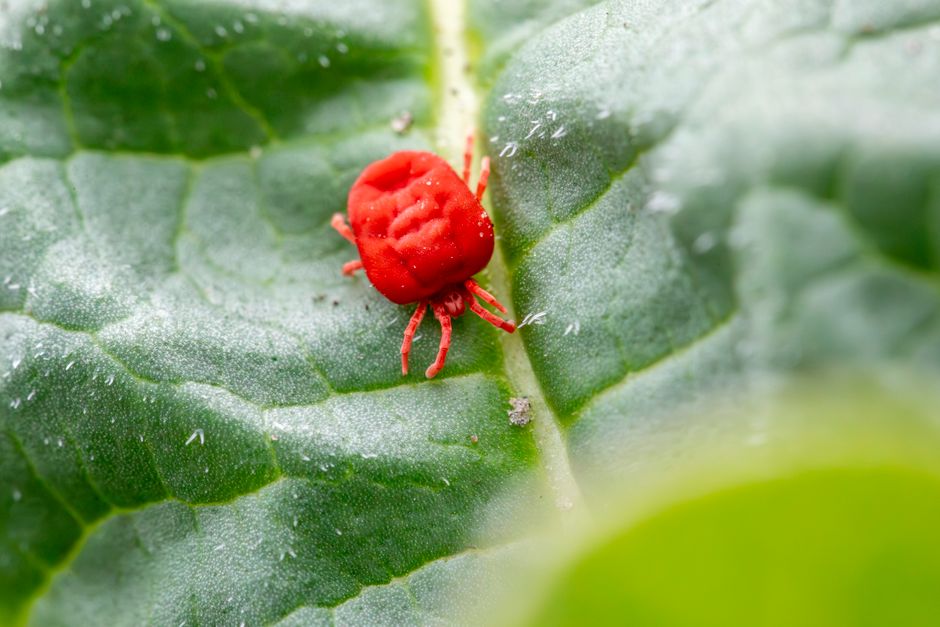
Mites are tiny arachnids, relatives of ticks and spiders, that are often invisible to the naked eye. The most common signs of a mite problem include intense itching, red bumps or a rash on the skin, and sometimes visible burrows or tracks. Because mites are so small, most people never see the actual pest, so recognizing the physical signs on your body or in your home is the first step to identifying the problem.
What Are The Signs Of Mites On Your Skin?
The skin is the primary battleground for most mite encounters. The reaction you get depends entirely on the species of mite and how your immune system responds to its saliva, feces, or eggs. Itching is the hallmark symptom, but the specific pattern of the rash offers clues.
Scabies is caused by the human itch mite, Sarcoptes scabiei. The female mite burrows into the upper layer of the skin to lay eggs. The most telling sign is the burrow itself: a thin, wavy, grayish or skin-colored line, usually a few millimeters to a centimeter long. These tracks are often found in the webbing between the fingers, on the wrists, elbows, armpits, and waistline. The itching is severe and typically worsens at night.
Chiggers, the larval stage of certain mites found in grassy or wooded areas, do not burrow. They attach to the skin, inject digestive enzymes, and feed on skin cells. The resulting rash appears as clusters of intensely itchy red welts or pimples, often on the ankles, waist, or behind the knees. Unlike scabies, chiggers do not leave visible tracks.
Dust mites are a different story. They do not bite. Their signs are allergic reactions to their microscopic fecal particles and body fragments. Symptoms include sneezing, a runny or stuffy nose, itchy or watery eyes, and asthma flares. Skin reactions are less common but can include eczema flare-ups, particularly in children.
How To Tell Mite Bites From Other Insect Bites
Mite bites are frequently misdiagnosed as bed bug bites, mosquito bites, or even a heat rash. There are a few distinguishing features, but they are not always definitive. Bed bug bites often appear in a straight line or zigzag pattern, while mite bites are more commonly scattered or clustered. Mosquito bites are usually isolated and larger. Mite bites are typically small, red, and intensely itchy, often with a pinpoint center. The location matters. Chigger bites are almost always below the waist or in areas where clothing is tight. Scabies burrows are unique and not produced by any other common pest. If you see those thin, wavy lines, scabies is the most likely cause. If you are uncertain, a doctor can examine the area with a dermatoscope or perform a skin scraping to look for mites, eggs, or fecal matter under a microscope.
Signs Of Mites In Your Home
Some mites are not just a skin issue; they are a household infestation. Bird mites and rodent mites are the most common indoor invaders. They typically enter homes after their natural host, such as a bird nest on the eaves or a rodent in the attic, dies or leaves the nest. These mites then wander indoors looking for a new blood meal. Signs include tiny, moving specks on window sills, curtains, or bedding. The bites are similar to other mite bites—small, red, and itchy—and often occur in clusters on the arms and neck. The mites are visible to the naked eye as tiny, moving dots, though they are very small. A key clue is the timing. If you suddenly develop bites after birds vacate a nest near your home, bird mites are a strong possibility.
Dust mites leave no visible signs in the home. They are microscopic and live in bedding, upholstered furniture, and carpets. The only signs are the allergic symptoms they trigger. There is no visible rash, no bites, and no crawling sensation. The presence of dust mites is inferred from the allergic response, not from seeing the mites themselves.





What Does A Mite Rash Actually Look Like?
A mite rash is not a single, uniform thing. It varies by species and by individual sensitivity. Some people develop only a few small red bumps. Others develop a widespread rash with intense inflammation. The rash is a hypersensitivity reaction, which means it takes time to develop. After a first exposure, it can take several days for symptoms to appear. On subsequent exposures, the reaction can occur within hours. The rash itself is typically papular, meaning it consists of small, solid, raised bumps. In severe cases, these can develop into blisters or pustules. Scratching can break the skin, leading to secondary bacterial infections. If the bites become infected, they may ooze, crust over, or become increasingly painful. That requires medical attention.
How To Confirm It Is Mites
The only way to definitively confirm mites is to find the mite itself or its eggs. For scabies, a doctor scrapes the skin and examines it under a microscope. For chiggers, the mite usually drops off after feeding, so the diagnosis is based on the rash and the history of being outdoors in grassy areas. For bird or rodent mites, you may be able to collect a sample using clear tape pressed against the skin or a window sill. Place the tape on a white piece of paper and look with a magnifying glass. If you see tiny, moving specks, you have mites. If you cannot find the mite, the diagnosis is based on symptoms and the elimination of other causes. Over-the-counter anti-itch creams may help with symptoms, but they will not eliminate an active scabies infestation.
Effective Treatment For Mite Infestations
Treatment depends on the type of mite. Scabies requires a prescription medication, typically a topical scabicide like permethrin cream. It must be applied from the neck down to the soles of the feet, left on for the recommended time, and washed off. All close contacts should be treated at the same time, even if they have no symptoms. Bedding, clothing, and towels used in the previous days must be washed in hot water and dried on high heat. The itching can persist for weeks after the mites are gone because the allergic reaction continues. That does not mean the treatment failed.
Chigger bites do not require killing the mites because they are already gone. Treatment focuses on relieving itching with oral antihistamines, calamine lotion, or hydrocortisone cream. The bites heal on their own within one to two weeks.
For bird or rodent mites, the source must be removed. Find and remove the bird nest or address the rodent problem. Vacuum thoroughly, wash bedding, and seal entry points. In severe cases, an exterminator may be needed. Dust mite control focuses on reducing humidity, washing bedding weekly in hot water, and using allergen-proof mattress and pillow covers.
How To Prevent Mite Bites
Prevention is straightforward for most mites. When walking in tall grass or wooded areas, tuck pants into socks and use an insect repellent containing DEET or permethrin-treated clothing. Shower and change clothes immediately after returning indoors. For scabies, avoid direct, prolonged skin-to-skin contact with an infected person and do not share bedding or clothing. For bird mites, keep birds from nesting on your home by sealing eaves and vents. For dust mites, maintain indoor humidity below 50 percent and regularly wash bedding in hot water.
When To See A Doctor
See a doctor if the itching is severe, if the rash spreads rapidly, or if you see signs of infection such as increasing redness, warmth, pain, or pus. Scabies will not go away without prescription treatment. If you have a rash that looks like mite bites and you cannot identify the source, a doctor can help determine the cause. Do not assume a rash is harmless if it persists for more than a few weeks or if it interferes with sleep.
Frequently Asked Questions
Can you see mites with the naked eye?
Most mites are barely visible to the naked eye, appearing as tiny moving specks. Scabies mites and dust mites are microscopic and cannot be seen without magnification.
How long does a mite rash last?
The rash from chiggers usually heals within one to two weeks. The itching from scabies can last for several weeks after treatment because the body continues reacting to dead mites.
Do mite bites spread from person to person?
Scabies can spread through prolonged skin-to-skin contact. Chigger bites, dust mite reactions, and bird mite bites cannot spread between people.
What kills mites on your skin?
Prescription scabicides like permethrin cream kill scabies mites. Chiggers do not stay on the skin, so washing with soap and water is enough to remove them.
