
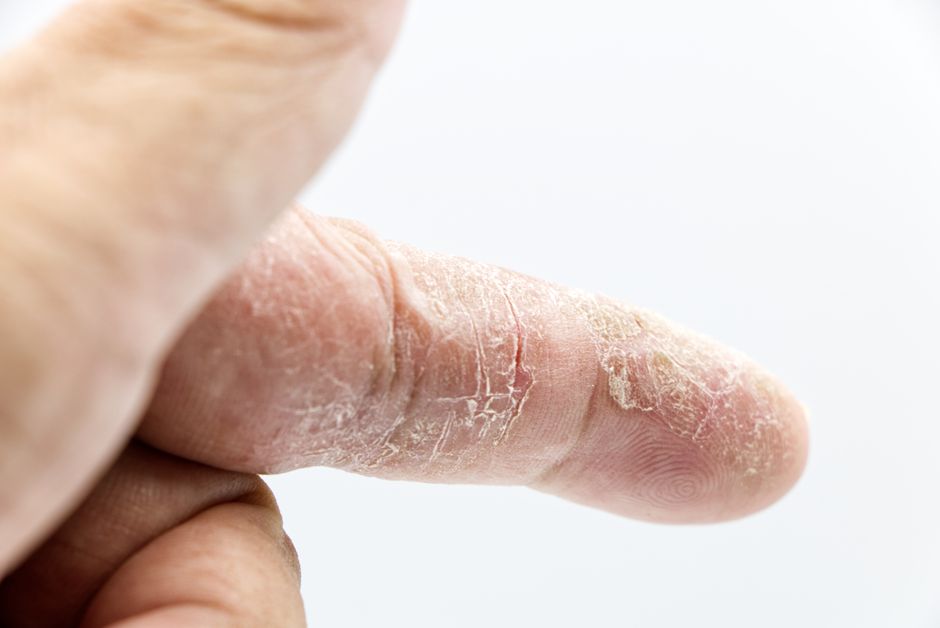
Fungal infections on the hands and fingers are common and treatable. They typically start with itching, peeling, or a change in the look of your nails or skin. Treatment depends on the type of fungus and how severe the infection is, ranging from over-the-counter creams to prescription oral medication. Recognizing the early signs is the key to clearing the infection before it spreads or becomes stubborn.
What Does a Fungal Infection on the Fingers and Hands Look Like?
The appearance of a fungal infection depends on whether it affects the skin or the nails. These are two different conditions, and they require different treatments.
When fungus infects the skin of the hand, it often causes tinea manuum. This typically starts with a dry, scaly patch on the palm. You might notice mild itching or a burning sensation. Sometimes the skin thickens and cracks, especially along the lines of the palm. A classic pattern is having dry, scaly skin on one hand while the feet show signs of athlete’s foot. This is a common clue because the fungus often spreads from the feet.
When fungus infects the fingernails, it is called onychomycosis. The nail may turn white, yellow, or brown. It can become thick, brittle, or crumbly at the edge. Debris may collect under the nail tip. You might notice the nail lifting away from the nail bed. In advanced cases, the nail can become misshapen or completely detach.
Another form of hand fungus is a yeast infection, often caused by Candida species. This usually appears in moist areas like between the fingers. It causes redness, itching, and sometimes small pustules or blisters. This is more common in people whose hands are frequently wet, such as healthcare workers or dishwashers.
How Do You Get Fungus on Your Hands?
Fungi thrive in warm, moist environments. You can pick up the infection through direct contact with an infected person, animal, or contaminated surface. Shared gym mats, towels, and locker room floors are common sources. The fungus enters through small breaks in the skin or around the nail edge.
Some people are more prone to hand fungus than others. People with diabetes, weakened immune systems, or poor circulation face higher risk. Frequent hand washing or prolonged water exposure can strip the skin’s protective oils, making it easier for fungus to take hold. Wearing occlusive gloves for long periods traps sweat and creates the damp environment fungus needs to grow.
It is important to note that not every rash on the hand is fungal. Eczema, contact dermatitis, and psoriasis can look similar. A dry, scaly patch on the palm could be eczema, which requires a completely different treatment. If you are unsure what you are dealing with, a doctor can scrape a small sample of skin or nail and examine it under a microscope. This is the only way to confirm a fungal infection with certainty.
What Are The Signs And Treatments For Finger Hand Fungus?
The signs of hand fungus include persistent itching, peeling skin, cracked skin, and changes in nail color or thickness. Treatment falls into two categories: topical for skin infections and oral for nail infections.
For skin infections, over-the-counter antifungal creams containing clotrimazole, miconazole, or terbinafine are usually effective. You apply the cream to the affected area and a small margin of healthy skin around it. Treatment typically continues for two to four weeks after symptoms disappear to prevent recurrence. Consistency matters more than the specific brand.
For nail infections, topical creams are rarely effective. The nail plate is too thick for the medication to penetrate. Oral prescription medications such as terbinafine or itraconazole are the standard treatment. These are taken daily for six to twelve weeks. The infection clears only as the nail grows out, so visible improvement may take several months. Oral antifungals require a doctor’s prescription and periodic liver function monitoring because of potential side effects.
Newer topical treatments for nail fungus are available by prescription. These medicated nail lacquers can be effective for mild to moderate infections, but they require daily application for up to a year. They work best when the infection is limited to less than half of the nail surface.





What Is the Fastest Way to Get Rid of Hand Fungus?
There is no instant cure for fungal infections. The fastest path to clearing the infection is early treatment with the correct medication. If the skin is affected, a terbinafine cream applied twice daily is among the fastest-acting options. Visible improvement usually appears within one to two weeks.
For nail infections, oral terbinafine is the fastest option, though it still takes months because the medication works as the nail grows. No home remedy has been proven to cure nail fungus faster than prescription medication.
You can support treatment by keeping the area dry. Dry the skin thoroughly after washing, especially between the fingers. Change socks daily and alternate shoes to prevent re-infection from the feet. Wash towels and bedding in hot water. Avoid sharing personal items like nail clippers or files.
Be wary of products claiming to cure fungus overnight. No study has confirmed that vinegar soaks, tea tree oil, or garlic cure nail fungus. These may have mild antifungal properties, but they are not reliable treatments for an established infection. Relying on them while the infection spreads only delays effective treatment.
When Should You See a Doctor?
You should see a doctor if the infection does not improve after two weeks of consistent over-the-counter treatment. You should also seek medical advice if the area becomes painful, swollen, or starts draining fluid. These signs can indicate a bacterial infection on top of the fungal one.
Anyone with diabetes or a weakened immune system should see a doctor at the first sign of a fungal infection. What looks like a minor fungal infection can become a serious problem in these populations. The same applies if you have poor circulation in your hands or feet.
If the infection involves the nails, a doctor visit is recommended because prescription treatment is usually required. The doctor can confirm the diagnosis with a nail scraping and culture, which is important because other conditions like psoriasis can mimic nail fungus.
How to Prevent Hand Fungus From Coming Back
Fungal infections have a high recurrence rate. Prevention is as important as treatment. Keep your hands dry throughout the day. If your work requires frequent hand washing or glove use, apply an antifungal powder after drying. This helps absorb moisture and creates an environment where fungus cannot easily grow.
Treat all infected areas at the same time. If you have athlete’s foot, treat it while treating your hands. Otherwise, the feet will re-infect the hands. Wash your hands after touching your feet or shoes.
Do not pick at or peel the affected skin. This spreads fungal spores to other parts of your body. It also creates open wounds that can become infected with bacteria.
Replace or disinfect items that touched the infected area. Nail clippers, files, towels, and gloves can harbor fungal spores. Soak metal tools in rubbing alcohol or boiling water. Wash towels in hot water with bleach if the fabric allows it.
Can Hand Fungus Spread to Other Parts of the Body?
Yes. Hand fungus can spread to any part of the body, including the groin, face, and other hand. It spreads through direct contact and through contaminated objects. Scratching the infected hand and then touching another area can transfer the fungus.
The fungus can also spread to other people through shared items or direct skin contact. This is why it is important to avoid sharing towels, razors, or nail care tools while infected. The infection is not dangerous to healthy people, but it is highly contagious and uncomfortable.
Frequently Asked Questions
Can hand fungus go away on its own?
It is unlikely. Mild skin infections may improve temporarily, but fungal organisms rarely die without treatment. Nail infections almost never resolve without medication.
Is hand fungus the same as ringworm?
Yes. Ringworm is a common name for fungal skin infections, not a worm. The medical term is tinea, and when it affects the hands it is called tinea manuum.
What kills fungus on hands naturally?
Some natural substances like tea tree oil have mild antifungal properties, but no natural remedy has been proven to cure an established fungal infection. Over-the-counter antifungal creams are more reliable and are the first-line treatment.
How long does it take for hand fungus to clear up?
Skin infections typically clear within two to four weeks of consistent treatment. Nail infections take three to six months because the medication works only as the nail grows out.
