
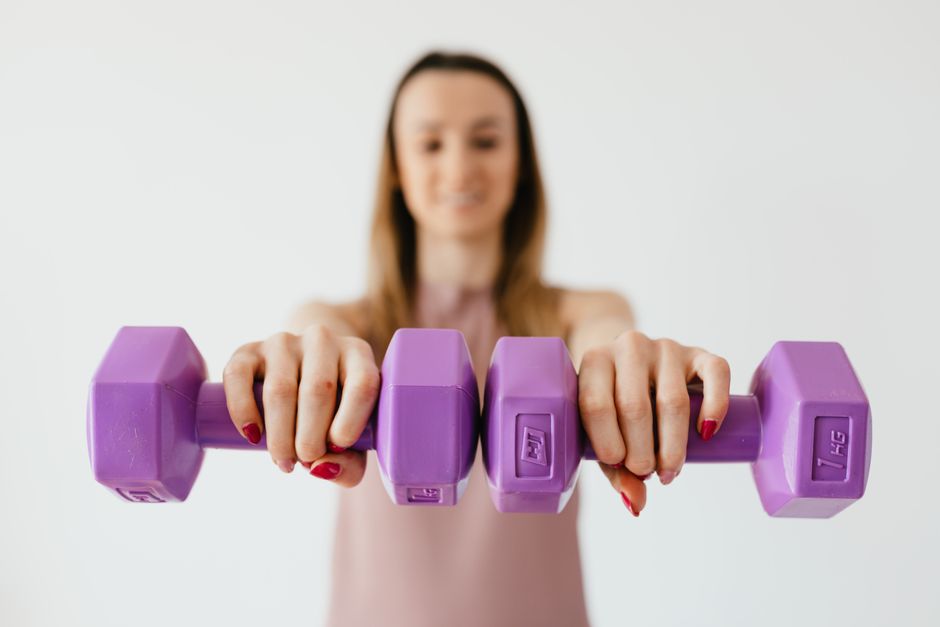
The muscular system does far more than help you lift weights or run. It is the tissue that moves your body, but it also keeps your heart beating, moves food through your digestive tract, and maintains your posture. The main functions of the muscular system are movement, posture, joint stability, heat production, and circulation. Each of these jobs is carried out by specific types of muscle tissue working in coordinated ways.
What Are The Main Functions Of Muscular System?
The muscular system has five primary jobs. Movement is the most obvious, covering everything from walking to blinking. Posture and joint stability keep your skeleton aligned and protect your joints from injury. Heat production keeps your body temperature stable, and circulation is driven by the heart, which is itself a muscle.
These functions are not optional extras. They are continuous, life-sustaining processes. Even when you sit perfectly still, your muscles are working to keep you upright and your organs functioning.
How Many Types of Muscle Tissue Are There?
There are three types of muscle tissue, and each has a distinct structure and role. Skeletal muscle attaches to bones and powers voluntary movement. Smooth muscle lines hollow organs like the stomach, bladder, and blood vessels. Cardiac muscle forms the walls of the heart.
Each type is built differently to match its job. Skeletal muscle is striated, meaning it has a striped appearance under a microscope. Smooth muscle has no striations and works automatically. Cardiac muscle is striated like skeletal muscle but functions involuntarily like smooth muscle.
How Does Skeletal Muscle Produce Movement?
Skeletal muscle produces movement by contracting and pulling on bones. Muscles attach to bones through tendons, which are tough bands of connective tissue. When a muscle shortens, it pulls the bone closer to the joint, causing movement.
Muscles cannot push. They can only pull. This means most joints require at least two muscles working in opposition. The biceps bends the elbow, and the triceps straightens it. This pairing is called an antagonistic pair, and it is the basic design of the entire musculoskeletal system.
The brain coordinates these contractions through motor neurons. Each motor neuron connects to several muscle fibers, and together they form a motor unit. When the brain sends a signal, the entire motor unit contracts. The force of a contraction depends on how many motor units are activated at once.

What Role Do Muscles Play in Posture and Joint Stability?
Posture is not a passive state. It requires constant, low-level muscle activity. Muscles in your neck, back, and abdomen work continuously to keep your spine aligned against gravity. Even when you think you are completely relaxed, these muscles are actively firing.
Joint stability works the same way. Muscles surrounding a joint act as dynamic stabilizers. The rotator cuff muscles in the shoulder, for example, hold the head of the upper arm bone firmly in the shoulder socket. Strong muscles around the knee protect the ligaments from excessive strain.
This is why strength training is often recommended for joint health. Stronger muscles take pressure off ligaments and cartilage. Weak muscles force the passive structures of the joint to absorb forces they were not designed to handle.
How Does Muscle Generate Body Heat?
Muscle contraction produces heat as a byproduct. This is a fundamental rule of biology. When muscle fibers shorten, they burn energy, and a significant portion of that energy is released as heat rather than mechanical work.
Shivering is the clearest example of this function. When your core temperature drops, your brain triggers rapid, involuntary muscle contractions. These contractions generate heat to warm the body back to its normal range.
Even normal daily activity contributes to temperature regulation. This is why you feel warm during exercise and cold when you are sedentary. Muscle mass is metabolically active tissue, and people with more muscle mass tend to produce more heat at rest.
How Does the Muscular System Support Circulation and Digestion?
The heart is a muscle, and it is the center of the circulatory system. Cardiac muscle contracts about 60 to 100 times per minute at rest, pumping blood through the body. Unlike skeletal muscle, cardiac muscle never rests completely. It has its own electrical system that keeps it beating rhythmically without conscious input.
Smooth muscle handles the internal movements you never think about. It lines the walls of blood vessels, where it regulates blood pressure by constricting or relaxing. It also moves food through the digestive tract in a process called peristalsis. Waves of smooth muscle contraction push food from the esophagus to the stomach and through the intestines.
Smooth muscle also controls the bladder, the uterus, and the airways of the lungs. These are all involuntary functions. You cannot consciously control them, and they continue working whether you are awake or asleep.
What Happens When Muscles Lose Function?
Muscle loss affects every function of the muscular system. Sarcopenia, the age-related loss of muscle mass, is a well-documented condition. It typically begins around age 30 and accelerates after age 60. Loss of muscle mass leads to weakness, poor balance, and a higher risk of falls.
Muscle loss also affects metabolism. Muscle tissue is metabolically active, meaning it burns calories even at rest. Less muscle mass means a lower resting metabolic rate, which makes weight management harder.
Neurological conditions can also disrupt muscle function. When nerves are damaged, muscles lose their signal to contract. This can lead to weakness, paralysis, or uncontrolled spasms depending on which nerves are affected.
How Can You Keep Your Muscular System Healthy?
Regular physical activity is the most effective way to maintain muscle health. Resistance training, in particular, stimulates muscle growth and strength. This includes weightlifting, bodyweight exercises, and resistance band work.
Protein intake matters for muscle maintenance. The body uses protein to repair and rebuild muscle fibers after exercise. Most healthy adults need a consistent intake of protein throughout the day, not just in one large meal.
Hydration also plays a role. Muscle tissue is roughly 75 percent water. Dehydration impairs muscle function and increases the risk of cramping. Electrolytes like sodium and potassium help muscles contract properly, and they are lost through sweat.
Sleep is often overlooked but essential. Growth hormone, which supports muscle repair, is released primarily during deep sleep. Chronic sleep deprivation impairs recovery and can lead to muscle loss over time.
Does Muscle Memory Actually Exist?
Muscle memory is a real phenomenon, but it is not stored in the muscle itself. It is stored in the nervous system. When you practice a movement repeatedly, your brain builds stronger neural pathways that make the movement smoother and more automatic.
This explains why skills like riding a bike or playing an instrument come back quickly after years of not practicing. The muscle fibers do not remember the movement. The brain remembers the pattern of activation.
There is also a cellular form of muscle memory. Research suggests that muscle nuclei gained through training may persist even after muscle size decreases. This may explain why previously trained individuals regain muscle mass faster than beginners.
Frequently Asked Questions
What is the difference between voluntary and involuntary muscles?
Voluntary muscles are skeletal muscles that you control consciously. Involuntary muscles are smooth and cardiac muscles that work automatically without conscious thought.
How many muscles are in the human body?
The human body has about 600 skeletal muscles. This number varies slightly between individuals, but it is the standard estimate used in anatomy.
Can you build muscle after age 50?
Yes, muscle growth is possible at any age with resistance training. The rate of growth may be slower than in younger adults, but consistent training and adequate protein intake still produce measurable strength gains.
Why do muscles get sore after exercise?
Delayed onset muscle soreness, or DOMS, results from microscopic damage to muscle fibers during unfamiliar or intense exercise. The soreness typically peaks 24 to 72 hours after exercise and resolves on its own.
