
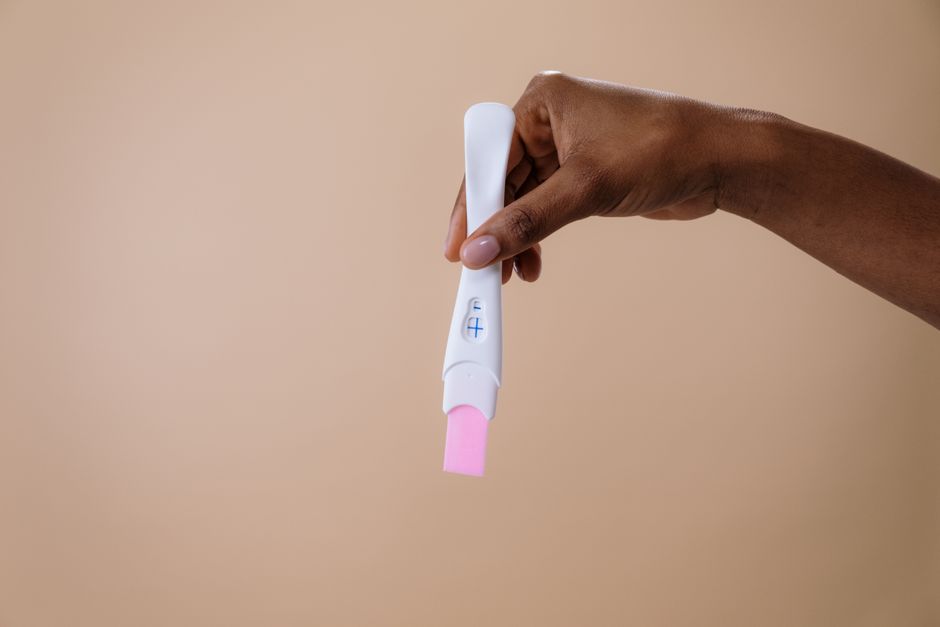
The first few weeks of pregnancy are the ones most people know least about — often because they happen before anyone knows a pregnancy exists. The early stages run from week 1 through about week 12. During that window a single fertilized cell becomes an embryo with a beating heart, a brain, and the beginnings of every major organ system. Most of this happens before a missed period, and many of the changes a person notices are driven by hormones rather than by the growing embryo itself.
How Is Pregnancy Counted, and Why Does Week 1 Start Before Conception?
Clinical pregnancy dating starts on the first day of your last menstrual period, not on the day of conception. That single convention explains most of the confusion around early pregnancy weeks.
This means that during “week 1” and most of “week 2,” you are not actually pregnant. Your body is in the follicular phase of the menstrual cycle, preparing an egg for release. Ovulation typically occurs around two weeks after the start of your last period, though cycle length varies — a woman with a 35-day cycle ovulates later than one with a 28-day cycle, and her pregnancy will still be dated from her last period.
Conception happens at ovulation, which is roughly “week 2” by this counting system. So when a test says you are 4 weeks pregnant, the embryo is really only about two weeks old. This gap matters because every milestone your doctor mentions — heartbeat, due date, screening windows — uses gestational age, not embryonic age.
Because dating depends on the last period, it assumes a regular cycle. If your cycles are irregular, an early ultrasound is often used to establish a more accurate due date.
What Are The Early Stages Of Pregnancy Week By Week?
Development in the first trimester follows a fairly predictable sequence, though the exact timing shifts a little from person to person. Here is what is generally happening.
Weeks 1–2
No pregnancy yet. The uterine lining thickens, an egg matures in the ovary, and ovulation approaches. If sperm meets the egg, fertilization occurs in the fallopian tube, not the uterus.
Week 3
Fertilization and implantation. The fertilized egg, now called a zygote, divides rapidly as it travels toward the uterus. It becomes a blastocyst and burrows into the uterine lining — a process called implantation. Some people notice light spotting at this point, though many notice nothing.
Week 4
This is often when a missed period prompts a test. The embryo is a tiny ball of cells, and the amniotic sac and placenta are beginning to form. The hormone hCG (human chorionic gonadotropin) is rising, which is what a home pregnancy test detects. Early symptoms — breast tenderness, fatigue, mild cramping — often start here, driven by hormones.
Week 5
The neural tube, which will become the brain and spinal cord, begins to form. The heart starts to develop as a simple tube. hCG levels are climbing quickly, which is why nausea sometimes begins around this time.
Week 6
A heartbeat can often be seen on a transvaginal ultrasound, usually between 6 and 7 weeks. The embryo’s head and facial features begin to take shape. Morning sickness is often at its most noticeable in the coming weeks.
Week 7
The brain grows rapidly. Arm and leg buds appear. The umbilical cord is now established, carrying oxygen and nutrients from the placenta.
Week 8
All major organs have begun to form. Fingers and toes are starting to emerge. The embryo is roughly the size of a kidney bean. This is the point where it is technically called a fetus rather than an embryo, though many sources use the terms loosely.
Weeks 9–12
The fetus grows quickly. Facial features become more defined, and the external genitals begin to develop. By the end of week 12, most organ systems are formed, though they continue to mature. The risk of miscarriage drops after this point, though it does not disappear.
What Symptoms Are Normal in Early Pregnancy?
Early pregnancy symptoms are largely caused by rising hormones, especially hCG and progesterone, not by the embryo’s size. This is why symptoms can show up before a positive test — and why they vary so much from person to person.
Common early symptoms include:
- Missed period
- Breast tenderness or swelling
- Fatigue
- Nausea, sometimes with vomiting
- Frequent urination
- Mild cramping or spotting
- Food aversions or cravings
- Mood changes
Not everyone gets these. Some people have no symptoms at all in the first weeks and only find out later. The absence of symptoms is not a reliable sign that something is wrong — and the presence of symptoms is not proof of a healthy pregnancy either.
One clarification worth making: implantation bleeding is usually light and brief, often pink or brown. Heavier bleeding with cramping can have several causes, including a normal variation, and should be checked by a clinician rather than assumed to be benign or assumed to be a problem.



When Can You Test, and How Accurate Are Early Tests?
Home pregnancy tests detect hCG in urine. Most become reliable around the first day of a missed period, though some advertise earlier detection.
Testing too early is the most common reason for a false negative. hCG needs time to build up after implantation, which happens roughly 6 to 12 days after ovulation. If you test before implantation or in the first day or two after, the hormone level may be too low to detect.
If a test is negative but your period still has not come, waiting a few days and testing again is reasonable. A blood test at a clinic can detect hCG earlier and measure the exact level, which is why clinicians sometimes use it when dating or viability is unclear.
No home test can tell you how far along you are or whether the pregnancy is progressing normally. That requires follow-up.
What Happens at Early Prenatal Appointments?
The first prenatal visit usually happens between weeks 6 and 8, though timing varies by practice. It typically includes a medical history, a physical exam, blood tests, and often an ultrasound.
Early tests commonly check blood type and Rh factor, hemoglobin, immunity to certain infections, and screening for conditions such as gestational diabetes risk. An early ultrasound can confirm the pregnancy is in the uterus, check for a heartbeat, and help date the pregnancy.
This is also when many clinicians discuss prenatal vitamins — particularly folic acid, which is recommended before and during early pregnancy to reduce the risk of neural tube defects. The general guidance is well established: folic acid supplementation lowers the risk of these defects, and it matters most in the earliest weeks, often before a pregnancy is confirmed.
Your clinician may also talk about what to avoid — certain medications, alcohol, and other exposures — and what is safe to continue. This is a conversation to have with your own provider rather than to guess at.
What Should You Know About Miscarriage in Early Pregnancy?
Miscarriage is common in the first trimester, and it is not caused by exercise, sex, or most everyday activities. Most early miscarriages result from chromosomal abnormalities in the developing embryo that are incompatible with continued development.
Bleeding and cramping are the most common signs, but many miscarriages are found on ultrasound without warning symptoms. If you have bleeding in early pregnancy, contact your clinician — not every instance means a miscarriage, but it needs evaluation.
The emotional weight of early pregnancy loss is real and often underestimated, partly because it frequently happens before anyone else knows about the pregnancy. Support is available, and it is reasonable to ask for it.
What Lifestyle Factors Matter Most in Early Pregnancy?
The earliest weeks are when some of the most important development happens, which is why certain habits matter even before a positive test.
Folic acid is the clearest example. Because the neural tube forms very early — often before a person knows they are pregnant — supplementation is recommended for anyone who could become pregnant, not only after a positive test.
Alcohol is another. No safe amount of alcohol in pregnancy has been established, and guidance generally advises avoiding it entirely. Smoking and recreational drug use are also associated with increased risks. For medications, including common over-the-counter ones, checking with a clinician is the safer route because some are not recommended in pregnancy.
Beyond that, the basics hold: eat reasonably, stay active as tolerated, and get rest. Extreme changes are not required, and most everyday activity is fine unless a clinician advises otherwise.
Frequently Asked Questions
How soon can you tell you are pregnant?
A home urine test is usually reliable around the first day of a missed period, though some detect hCG a few days earlier. Testing too early is the most common cause of a false negative.
Can you have a positive test with no symptoms?
Yes. Some people have no noticeable symptoms in early pregnancy and only find out from a test. The absence of symptoms is not a reliable sign that something is wrong.
When does the heartbeat start in early pregnancy?
A heartbeat can often be seen on a transvaginal ultrasound between about 6 and 7 weeks of gestational age. Timing can vary, so an early scan without a visible heartbeat is not always conclusive.
Is spotting normal in early pregnancy?
Light spotting can happen, including around implantation, but any bleeding in early pregnancy should be evaluated by a clinician. It does not automatically mean a miscarriage, but it is not something to self-diagnose.
