
Hiccups are not a recognized early sign or symptom of pregnancy. No clinical guideline lists them among the typical early pregnancy symptoms, and the evidence linking hiccups to early pregnancy is essentially absent. What people often notice is that hiccups can become more frequent later in pregnancy — but that is a different question, and even then the link is more about mechanics than hormones.
That distinction matters. Early pregnancy symptoms are driven by rising hormones and early physical changes. Hiccups are driven by a nerve reflex involving the diaphragm. Those are two separate systems, and conflating them leads to a lot of unnecessary symptom-checking.
What Actually Causes Hiccups?
A hiccup is a sudden, involuntary contraction of the diaphragm, followed almost immediately by closure of the vocal cords. That closure is what produces the characteristic “hic” sound.
The reflex runs through the phrenic nerve, which controls the diaphragm, and the vagus nerve, which connects the brain to organs in the chest and abdomen. Anything that irritates either nerve — or the brain centers that coordinate them — can trigger a bout.
Common triggers include:
- Eating too quickly or too much
- Carbonated drinks
- Sudden temperature changes
- Alcohol
- Swallowing air
- Emotional stress or excitement
Most hiccups last a few minutes and stop on their own. A hiccup bout lasting longer than 48 hours is considered persistent, and one lasting more than a month is classified as intractable. Those longer cases are uncommon and can point to an underlying issue, which is why doctors take them seriously when they occur.
Here is something many people do not realize: hiccups are not fully understood. Researchers still debate the exact purpose of the reflex, and some evidence points to a role in early infancy related to feeding and gut development. In adults, it appears to be a leftover reflex with no clear function. That uncertainty is worth keeping in mind when anyone claims a specific meaning behind your hiccups.
Are Hiccups An Early Sign Or Symptom Of Pregnancy?
No. Hiccups do not appear on lists of early pregnancy symptoms from major medical sources, and there is no established physiological reason they would.
Early pregnancy symptoms are largely driven by hormonal shifts, particularly rising levels of human chorionic gonadotropin (hCG) and progesterone. The symptoms that reliably show up in early pregnancy include:
- Missed period
- Breast tenderness or swelling
- Fatigue
- Nausea, sometimes with vomiting
- Frequent urination
- Food aversions or cravings
- Mild cramping
Hiccups are not on this list, and no mechanism connects early hormonal changes to the hiccup reflex. If you are hiccuping more than usual and wondering whether you might be pregnant, the hiccups themselves are not telling you anything. A missed period and a pregnancy test are.
One clarification worth making: people sometimes confuse hiccups with other abdominal sensations in early pregnancy. Mild cramping, bloating, and gas are common as the uterus begins to change. Those sensations can feel unusual, but they are not hiccups, and they are not caused by the same reflex.
Can Hiccups Happen Later In Pregnancy?
Yes, and this is where the confusion usually starts. Hiccups can become more noticeable in the second and third trimesters, though even here the evidence is more about plausible mechanics than formal study data.
As the uterus grows, it pushes upward against the diaphragm. That upward pressure reduces the space the diaphragm has to move, and it can irritate the phrenic nerve. The result is that some pregnant women report more frequent or more noticeable hiccups as pregnancy progresses.
Progesterone also relaxes smooth muscle throughout the body, including in the digestive tract. Slower digestion and increased reflux are common in later pregnancy, and both can contribute to hiccup triggers. This is a reasonable explanation, but it is not the same as saying hiccups are a sign of pregnancy. They are a possible side effect of advanced pregnancy, not an indicator of it.
There is also a well-documented phenomenon of fetal hiccups — rhythmic movements a pregnant woman may feel starting in the second or third trimester. These are the fetus’s own hiccups, not the mother’s. They are considered normal and are not a sign of anything wrong. Some clinicians ask patients to track fetal movement patterns, and fetal hiccups are usually easy to distinguish from kicks because of their regular, rhythmic quality.




Why Do People Think Hiccups Mean Pregnancy?
The idea circulates mainly through online forums, symptom-checking apps, and anecdotal stories. Someone notices they are hiccuping more than usual, searches for a cause, and finds a thread where others report the same thing alongside a positive pregnancy test.
This is a classic case of correlation without causation. Early pregnancy is a time when people pay close attention to their bodies. Every twinge, every hiccup, every odd sensation gets logged. When a pregnancy is later confirmed, those observations get retroactively linked to it — even when they were unrelated.
There is also a statistical issue. Hiccups are extremely common in the general population. If you survey a group of people who just found out they are pregnant, a certain number will have had hiccups recently simply because most people do at some point. That does not make hiccups a symptom.
What Are The Actual Early Signs Of Pregnancy?
The most reliable early sign is a missed period. For people with regular cycles, a period that is more than a few days late is the strongest single indicator.
Other early signs, which typically appear within the first few weeks after conception, include breast tenderness, fatigue, and nausea. These are driven by hormonal changes and are widely recognized in clinical practice.
Implantation bleeding is sometimes mentioned as an early sign. It can occur when the fertilized egg attaches to the uterine lining, usually around 10 to 14 days after conception. But it is light, brief, and easily confused with a normal period, so it is not a dependable indicator on its own.
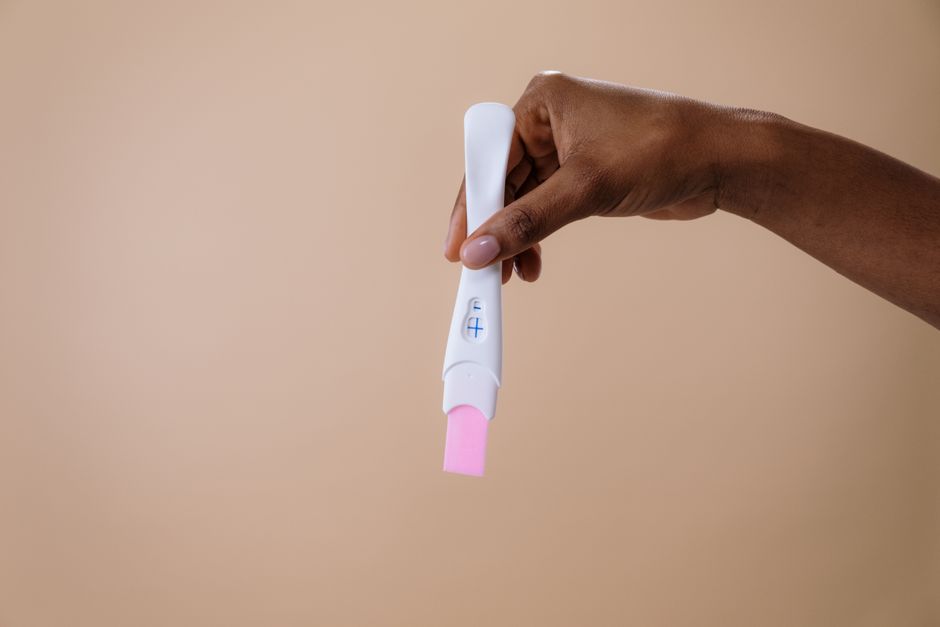
If you suspect you might be pregnant, the most accurate step is a home pregnancy test. These tests detect hCG in urine and are generally reliable when taken after a missed period. A blood test at a doctor’s office can detect pregnancy earlier and is more sensitive.
When Should You Take Hiccups Seriously?
Persistent or intractable hiccups — lasting more than 48 hours or recurring frequently — are worth a medical evaluation, regardless of pregnancy status. They can sometimes signal an underlying issue involving the diaphragm, the vagus or phrenic nerve, the esophagus, or the central nervous system.
Conditions that have been associated with persistent hiccups include gastroesophageal reflux, hiatal hernia, and certain neurological or metabolic disorders. This does not mean hiccups usually indicate something serious. Most of the time they do not. But hiccups that will not stop are a reason to see a doctor, not a reason to take a pregnancy test.
If you are pregnant and experiencing hiccups along with severe abdominal pain, shortness of breath, or any symptom that concerns you, contact your healthcare provider. Those symptoms deserve attention on their own, separate from the hiccups.
What About Fetal Hiccups?
Fetal hiccups are a real and normal occurrence. They typically become noticeable in the second or third trimester, when the fetus is large enough that its movements can be felt through the uterine wall.
They feel like a regular, rhythmic tapping or pulsing, usually in one area of the belly. They can last a few minutes and often occur multiple times a day. Unlike kicks or rolls, they have a steady cadence.
Fetal hiccups are not a sign of distress and are not linked to any pregnancy complication. Some research has looked at whether very frequent fetal hiccups relate to anything clinically meaningful, but no consistent finding has emerged that changes clinical practice. If you notice them, they are generally nothing to worry about — though any change in your baby’s usual movement pattern is worth mentioning to your provider.
The Bottom Line
Hiccups are not an early sign or symptom of pregnancy. They are not caused by the hormonal changes that drive early pregnancy symptoms, and they do not appear on any recognized list of early pregnancy indicators.
They can become more frequent later in pregnancy due to physical pressure on the diaphragm and digestive changes, but that is a different situation entirely. If you are trying to figure out whether you might be pregnant, focus on the signs that actually mean something: a missed period, breast tenderness, fatigue, and a pregnancy test.
Frequently Asked Questions
Can hiccups be a sign of pregnancy before a missed period?
No. Hiccups are not linked to the hormonal changes that occur before a missed period, and they are not recognized as an early pregnancy sign. A missed period remains the most reliable early indicator.
Why do I have hiccups more often during pregnancy?
Later in pregnancy, the growing uterus pushes against the diaphragm and can irritate the nerve that controls it, which may make hiccups more noticeable. Progesterone-related digestive changes can also contribute.
Are fetal hiccups normal?
Yes. Fetal hiccups are a normal occurrence in the second and third trimesters and are not linked to any complication. They feel like regular, rhythmic movements rather than kicks.
When should I worry about hiccups?
Hiccups lasting more than 48 hours or recurring frequently should be evaluated by a doctor, since they can sometimes point to an underlying issue. Most short bouts of hiccups are harmless and stop on their own.
