
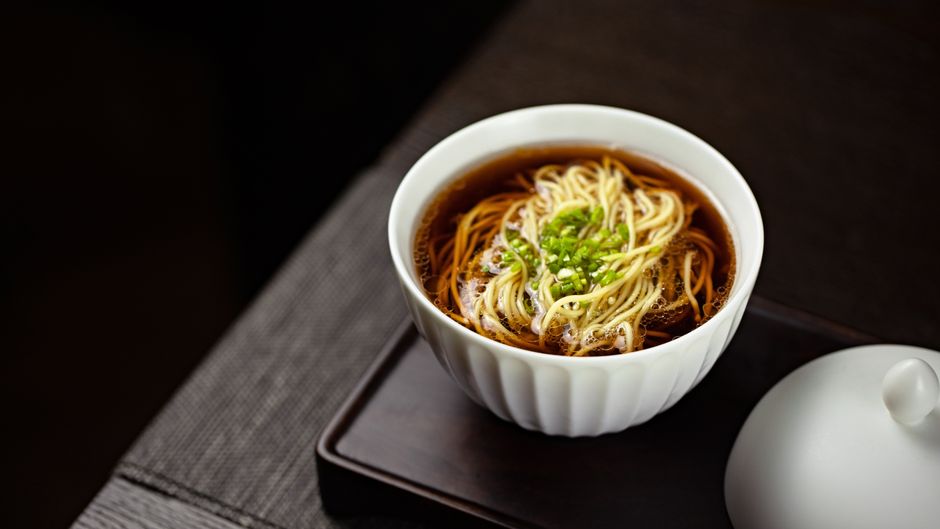
Soba noodles are made from buckwheat flour and water. That is the traditional recipe, and it is still the standard in Japan. The word “soba” actually means buckwheat in Japanese. Most soba sold in the United States is not purely buckwheat, though. It usually contains a mix of buckwheat and wheat flour, and sometimes added colorings or flavorings.
Understanding what is actually in soba matters for two reasons. First, buckwheat is not wheat. It is not even a grain in the botanical sense. Second, if you are avoiding gluten, the wheat flour in most commercial soba means the noodle is not gluten-free. This distinction trips up a lot of people.
What Are Soba Noodles Made Of?
Traditional soba is made from three ingredients: buckwheat flour, water, and a binder. The binder is the interesting part.
Buckwheat flour contains no gluten. Gluten is the protein network that gives wheat dough its stretch and elasticity. Without it, a dough made from 100% buckwheat flour tends to crumble and fall apart during cooking. So Japanese noodle makers developed a workaround. They add a small amount of wheat flour to hold the dough together. This style is called nihachi soba, which means 80% buckwheat and 20% wheat. Other common ratios include juwari (100% buckwheat) and hachi-wari (80% buckwheat).
Juwari soba, the fully buckwheat version, is difficult to make. It requires experienced hands and careful handling. It is also more expensive. In Japan, juwari soba is considered a premium product and is typically served fresh at specialized restaurants rather than sold dried in supermarkets.
Some producers use alternative binders instead of wheat. These include yamaimo (Japanese mountain yam), egg white, or a small amount of rice flour. These variations are less common but do exist, particularly among producers targeting gluten-free consumers.
Is Buckwheat Actually Wheat?
No. Buckwheat is not wheat, and it is not related to wheat. It is a seed from a flowering plant in the Polygonaceae family, which makes it more closely related to rhubarb and sorrel than to wheat, barley, or rye.
This is where the name causes real confusion. The word “buckwheat” contains “wheat,” but that is a naming coincidence, not a botanical classification. Buckwheat is what nutritionists call a pseudocereal. It is used like a grain in cooking but does not come from a grass plant the way true grains do. Quinoa and amaranth are also pseudocereals.
This matters for anyone managing celiac disease or gluten sensitivity. Pure buckwheat is naturally gluten-free. The problem is cross-contamination and added wheat flour. Most soba noodles on American grocery shelves contain wheat flour as a binder, which means they are not gluten-free even though buckwheat itself is.
What Is the Difference Between Soba and Other Noodles?
Soba is not the same as udon, somen, or rice noodles. The differences come down to ingredients, texture, and how they are eaten.
| Noodle Type | Main Ingredients | Gluten-Free? |
|---|---|---|
| Soba (traditional) | Buckwheat flour, water, wheat flour binder | No (unless 100% buckwheat) |
| Juwari Soba | 100% buckwheat flour, water | Yes |
| Udon | Wheat flour, water, salt | No |
| Somen | Wheat flour, water, salt | No |
| Rice noodles | Rice flour, water | Yes |
The texture difference is noticeable. Soba has a nutty, earthy flavor and a firm, slightly grainy bite. Udon is thick, chewy, and neutral in taste. Somen is thin and delicate. Rice noodles are soft and slightly translucent.
Soba is typically served either hot in broth or cold with a dipping sauce called tsuyu. Cold soba is the more traditional way to eat it in Japan, especially during summer months.





Does Soba Contain Gluten?
Most soba contains gluten because most soba includes wheat flour. If the ingredient list shows wheat flour, the product contains gluten.
Finding gluten-free soba requires reading labels carefully. Look for products labeled “100% buckwheat” or “juwari.” Even then, cross-contamination is a real concern. Facilities that process wheat flour on the same equipment can transfer trace amounts of gluten to buckwheat products. For people with celiac disease, this matters. The threshold for gluten-free labeling in the United States is less than 20 parts per million, and products must be certified to carry that claim.
Some brands specifically test and certify their soba as gluten-free. Without that certification, a 100% buckwheat label tells you the ingredients but not necessarily the manufacturing conditions.
What Nutrients Do Soba Noodles Provide?
Buckwheat has a nutritional profile that differs from wheat. It contains more protein than rice or wheat flour, and it provides rutin, a flavonoid antioxidant.
According to USDA nutritional data, a 100-gram serving of cooked soba noodles provides approximately:
- 99 calories
- 5.1 grams of protein
- 21.4 grams of carbohydrates
- 0.1 grams of fat
- 1.8 grams of fiber
Buckwheat also contains manganese, magnesium, and copper. It provides all eight essential amino acids, though not in large amounts. The protein quality is higher than that of wheat noodles, but soba is not a significant protein source in typical serving sizes.
One point worth clarifying: the rutin content in buckwheat is real, but the amounts in a bowl of soba are modest. Some marketing suggests buckwheat noodles deliver meaningful antioxidant benefits. The evidence for that specific claim in humans eating soba is limited. Buckwheat contains rutin. Whether eating soba produces measurable health effects from that rutin has not been established in large human trials.
How Can You Tell If Soba Is Mostly Buckwheat?
The ingredient list is the most reliable way. Ingredients are listed by weight, so the first ingredient tells you the most. If buckwheat flour is first and wheat flour is second, the product is likely 70-80% buckwheat. If wheat flour is first, it is mostly wheat.
Color offers a clue. Traditional buckwheat soba is grayish-brown and slightly speckled. Very pale or uniformly light soba often contains more wheat flour or has been diluted with other starches. Some manufacturers add green tea powder (cha soba) or other flavorings that change the color, so color alone is not definitive.
Texture also matters. Higher buckwheat content produces a more fragile noodle that breaks easily when cooked. If your soba holds up like spaghetti, it probably contains a significant amount of wheat.
Does Cooking Change What Soba Is Made Of?
Cooking does not change the ingredients. It changes the texture and the water content.
Dried soba absorbs water during boiling. A 100-gram portion of dry soba becomes roughly 250-300 grams cooked, depending on cooking time and the specific product. This means the nutrient values per gram drop after cooking because the noodle is now mostly water.
Some nutrients leach into the cooking water. This is true for water-soluble vitamins and minerals in most boiled foods. If you are eating soba primarily for its mineral content, the amounts you actually absorb are lower than the raw numbers suggest. That does not make soba a poor choice. It just means the nutritional contribution of a serving is moderate, not exceptional.
What About Instant and Flavored Soba?
Instant soba products often contain more than buckwheat, wheat, and water. They may include salt, sugar, MSG, preservatives, and flavor packets with additional sodium.
These products are still soba in the sense that they contain buckwheat flour. But the ingredient profile is different from traditional soba. If you are choosing soba for specific nutritional reasons, instant versions may not deliver the same profile. Reading the label is the only way to know what you are actually getting.
Some flavored soba products contain very little buckwheat. The buckwheat content can be as low as 20-30% in some budget products, with wheat flour and other starches making up the rest.
Frequently Asked Questions
Is soba gluten-free?
Most soba is not gluten-free because it contains wheat flour as a binder. Only soba labeled 100% buckwheat or juwari is gluten-free by ingredients, and even then cross-contamination during manufacturing is possible.
Is buckwheat the same as wheat?
No, buckwheat is a seed from a plant related to rhubarb, not a true grain. The name is misleading because it contains the word “wheat,” but buckwheat does not contain gluten.
What is the healthiest type of soba?
There is no established ranking of soba types by health benefit. Higher buckwheat content means more buckwheat nutrients and fewer wheat ingredients, but the overall nutritional difference between types in a single serving is modest.
Can I eat soba if I have celiac disease?
Only if the product is certified gluten-free and tested to meet the standard of less than 20 parts per million of gluten. Traditional soba with wheat flour is not safe for someone with celiac disease.
