
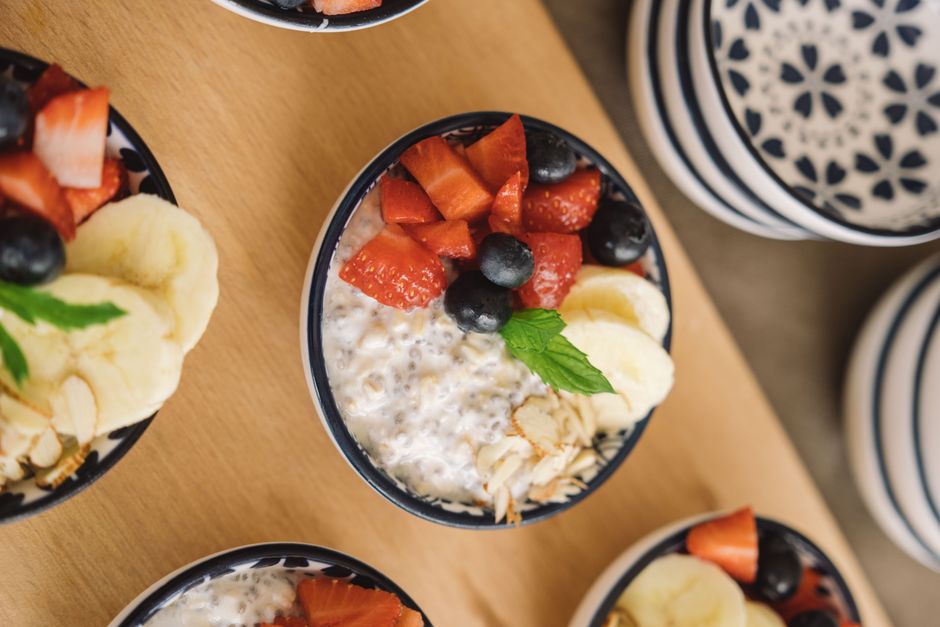
Quick oats are rolled oats that have been cut into smaller pieces before being steamed and flattened, which is why they cook in about one to two minutes instead of the ten to twenty minutes whole rolled oats often need. They are the same grain as old-fashioned oats, just processed into smaller, thinner flakes. That single difference in size explains almost everything else about them: how fast they cook, how soft they get, and how your body digests them.
What Are Quick Oats?
Quick oats start as oat groats, the whole inner kernel of the oat grain. The groats are steamed to soften them, then cut into two or three smaller pieces, and finally rolled flat into flakes. Old-fashioned rolled oats skip the cutting step and are simply steamed and rolled whole. Steel-cut oats are different again. They are groats chopped into pieces but never rolled flat, which is why they take much longer to cook.
So quick oats are not a different food. They are rolled oats made smaller. The smaller surface area means water and heat reach the center of each flake faster, so the oats hydrate and soften quickly.
One detail worth knowing: the oat bran, the fiber-rich outer layer, stays attached during this process. Quick oats are not stripped of their fiber the way some people assume. They retain most of the nutritional value of whole rolled oats.
Are Quick Oats Healthy?
Yes, quick oats are a nutritious whole grain. They contain the same core nutrients as old-fashioned rolled oats: fiber, protein, B vitamins, iron, magnesium, and zinc.
The main nutrient of interest is beta-glucan, a type of soluble fiber found in oats. Beta-glucan forms a gel in your digestive tract. Research consistently shows that this fiber helps lower LDL cholesterol, the “bad” cholesterol, when eaten as part of a diet low in saturated fat. The FDA allows a health claim on oat products for this reason, based on the soluble fiber content.
Here is where the processing matters. Because quick oats are cut into smaller pieces, they have a slightly higher glycemic index than whole rolled oats. That means your blood sugar may rise a bit faster after eating them. The difference is real but modest, and it depends heavily on what you eat with them. Oatmeal eaten alone will affect blood sugar differently than oatmeal with nuts, seeds, or yogurt added.
One non-obvious point: the word “instant” on a package does not automatically mean “less healthy.” Instant oats are quick oats that are often pre-cooked and dried, so they just need hot water. But many instant packets come with added sugar, salt, and flavorings. That is the ingredient list talking, not the oat itself.
Quick Oats vs Old-Fashioned Rolled Oats
Nutritionally, the two are very close. The table below compares them on the factors that matter most.
| Feature | Quick Oats | Old-Fashioned Rolled Oats |
|---|---|---|
| Processing | Cut, steamed, rolled flat | Steamed, rolled flat (not cut) |
| Flake size | Smaller, thinner | Larger, thicker |
| Cook time | About 1–2 minutes | About 5–10 minutes |
| Texture | Softer, smoother | Chewier, more distinct |
| Fiber (per dry ounce) | Roughly 2–3 grams | Roughly 2–3 grams |
| Glycemic index | Slightly higher | Slightly lower |
The fiber figures are approximate because brands vary. The key takeaway is that the nutritional gap between quick and old-fashioned oats is small. The bigger difference is texture and cooking time, not health value.





How Do Quick Oats Affect Blood Sugar?
Because quick oats are processed into smaller flakes, they digest somewhat faster than whole rolled oats. Faster digestion generally means a quicker rise in blood sugar.
This does not make quick oats a “bad” food for most people. The overall glycemic effect of a meal depends on the whole plate. Adding protein, fat, or fiber slows digestion and blunts the blood sugar response. So oatmeal with Greek yogurt and nuts affects blood sugar differently than plain oatmeal with honey.
For people managing diabetes or prediabetes, portion size and what you pair with the oats matter more than the choice between quick and rolled oats. Some studies suggest that steel-cut oats produce a lower blood sugar response than either quick or rolled oats, because they are the least processed. If blood sugar control is a priority, that is worth discussing with a doctor or dietitian rather than guessing.
The evidence here is mixed on how much the quick-versus-rolled difference matters in practice. It is a real difference, but likely a small one for most healthy adults eating balanced meals.
What Should You Look For When Buying Quick Oats?
The most useful habit is reading the ingredient list. Plain quick oats should list one ingredient: oats. That is it.
Flavored instant packets are a different product. They often contain added sugar, salt, and artificial flavors. Some have more sugar per serving than a candy bar. If you want the convenience of instant oats without the additives, buy plain quick oats and add your own toppings.
A few things to check:
- Ingredient list: One word — “oats” — is the clearest sign of a plain product.
- Sugar content: Plain oats have almost no sugar. Anything above a gram or two per serving is added.
- Fiber content: Look for at least 2–3 grams per serving.
- Sodium: Plain oats are naturally very low in sodium. Flavored packets can be high.
- “Gluten-free” label: Oats are naturally gluten-free, but they are often processed on equipment that also handles wheat. If you have celiac disease or gluten sensitivity, look for a certified gluten-free label.
Certified gluten-free oats matter for people with celiac disease because cross-contamination during farming and processing is common. This is a case where the label is not marketing — it reflects a real safety concern for a specific group.
Do Quick Oats Lose Nutrition During Processing?
Not much. The steaming and rolling process does not remove the bran or the germ, so the fiber and most nutrients stay intact. This is different from refined grains like white flour or white rice, where the bran and germ are stripped away and a large share of the fiber and nutrients is lost.
Quick oats are still a whole grain. The American Heart Association and other health bodies count oats as a whole grain regardless of whether they are quick, rolled, or steel-cut.
Some heat-sensitive vitamins can be slightly reduced by processing, but the loss is minor compared with the difference between whole and refined grains. The bigger nutritional variable is what you add to your bowl, not the oat flake itself.
How Should You Cook and Use Quick Oats?
Quick oats cook fast. On the stovetop, bring water or milk to a boil, add the oats, and simmer for about one to two minutes, stirring occasionally. In the microwave, combine oats and liquid in a bowl and cook for roughly one and a half to two minutes, then let them sit for a minute to thicken.
The ratio is a matter of preference. A common starting point is equal parts oats and liquid by volume for a thicker bowl, or one part oats to two parts liquid for a looser texture. You can adjust from there.
Quick oats work well beyond hot cereal. They can be used in:
- Overnight oats, where no cooking is needed at all
- Baked goods like muffins, cookies, and granola bars
- Meatloaf and veggie burgers as a binder
- Smoothies, where they add fiber and thickness
Because they are finer than rolled oats, quick oats blend more smoothly into batters and drinks. That is a texture advantage, not a nutritional one.
Frequently Asked Questions
Are quick oats the same as instant oats?
They are closely related but not identical. Quick oats are cut and rolled thin, while instant oats are usually quick oats that have been pre-cooked and dried so they only need hot water.
Are quick oats less healthy than rolled oats?
No, the nutritional difference is small. Quick oats have a slightly higher glycemic index, but they retain the same fiber and most of the same nutrients as rolled oats.
Can you eat quick oats without cooking them?
Yes, quick oats are already steamed during processing and can be eaten raw in overnight oats or smoothies. Cooking simply softens them further and makes them easier to digest for some people.
Are quick oats gluten-free?
Oats are naturally gluten-free, but they are often grown and processed near wheat, so cross-contamination is possible. If you have celiac disease, choose oats labeled certified gluten-free.
