
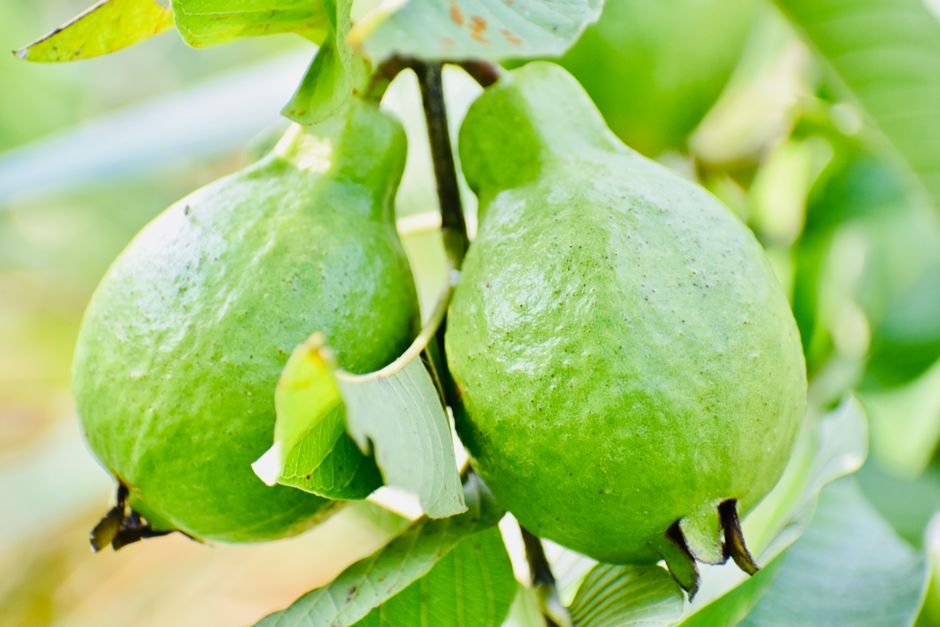
Guava is a tropical fruit that grows on trees and shrubs in the Psidium genus, most commonly Psidium guajava. It is round or oval, with green skin that often turns yellow as it ripens, and flesh that ranges from white to pink to deep red. The fruit is known for its sweet, floral aroma and its high concentration of vitamin C — a single guava contains more of this nutrient than an orange.
What Is Guava Fruit Nutritionally?
Guava is one of the most nutrient-dense fruits available. A typical raw guava provides about 68 calories per 100 grams. It is an excellent source of vitamin C, providing roughly 228 mg per 100 grams — more than double the vitamin C found in oranges.
The fruit is also rich in dietary fiber. One guava delivers about 3 grams of fiber, which is roughly 12% of the daily recommended intake. This fiber comes mostly from the edible skin and seeds, which means eating the whole fruit matters for getting the full nutritional benefit.
Guava contains significant amounts of other nutrients as well, including folate, potassium, and vitamin A. The pink-fleshed varieties contain lycopene, the same antioxidant pigment found in tomatoes and watermelon. The leaves of the guava plant are also used in some cultures to make tea, though the fruit itself is the primary focus of most nutritional research.
What Are the Proven Health Benefits of Guava?
Research consistently shows that guava consumption can have measurable effects on several health markers. The strongest evidence relates to blood sugar control, heart health, and digestion.
Some studies indicate that guava may help lower blood sugar levels. Research published in the journal Nutrition and Metabolism found that eating ripe guava before meals reduced post-meal blood sugar spikes in people with type 2 diabetes. The fiber content slows sugar absorption, and some compounds in the fruit may inhibit enzymes that break down carbohydrates. However, these findings come from relatively small studies, and guava should not replace diabetes medication.
Guava shows promise for heart health. Several studies have found that regular guava consumption can lower total cholesterol, LDL (bad) cholesterol, and triglycerides while raising HDL (good) cholesterol. One study in Journal of Medicinal Food observed these effects in healthy adults who ate guava daily for 12 weeks. The potassium content also supports healthy blood pressure regulation.
For digestion, guava’s fiber and water content help prevent constipation. Some traditional medicine systems use guava leaf extracts to treat diarrhea, and laboratory research supports this use — compounds in the leaves appear to inhibit the growth of certain diarrhea-causing bacteria. But human clinical trials on guava leaves for diarrhea are limited.
How Does Guava Compare to Other Fruits?
Guava stands out among common fruits for its nutrient density. The table below compares guava to several other popular fruits based on standard USDA nutritional data per 100 grams.
| Fruit | Calories | Vitamin C (mg) | Fiber (g) | Potassium (mg) |
|---|---|---|---|---|
| Guava | 68 | 228 | 5.4 | 417 |
| Orange | 47 | 53 | 2.4 | 181 |
| Apple | 52 | 4.6 | 2.4 | 107 |
| Banana | 89 | 8.7 | 2.6 | 358 |
| Strawberry | 32 | 58 | 2.0 | 153 |
Guava exceeds most common fruits in vitamin C and fiber content. Its potassium level is comparable to bananas. The fruit is also relatively low in sugar compared to many tropical fruits, making it a reasonable choice for people monitoring carbohydrate intake.





How Do You Choose and Eat Guava?
Choosing a ripe guava is straightforward once you know what to look for. A ripe guava yields slightly to gentle pressure, similar to a ripe avocado. The skin color changes from bright green to a lighter yellow-green, and the fruit gives off a distinct sweet fragrance.
Unripe guavas are hard and very tart. You can ripen them at room temperature over a few days. Once ripe, guavas should be refrigerated and eaten within a few days.
The entire guava is edible — skin, flesh, and seeds. Many people eat it like an apple, biting into it directly. The seeds are hard but safe to swallow, and they provide additional fiber. Some people prefer to slice the fruit and remove the seeds, especially when using guava in recipes.
Guava works well in smoothies, fruit salads, and salsas. It can be cooked into jams and jellies, though this adds significant sugar. The fruit is also pressed into juice, but whole fruit is a better choice because commercial juices often add sugar and remove fiber.
Are There Any Risks or Side Effects?
Guava is safe for most people when eaten as food. Allergic reactions are rare but possible, particularly in people with latex allergy, since guava contains proteins similar to those found in latex.
People taking blood sugar-lowering medication should monitor their blood glucose if they significantly increase their guava intake. The fruit can add to the blood sugar-lowering effect of these medications, potentially causing hypoglycemia in extreme cases.
Guava leaves and leaf extracts are different from the fruit. While the leaves have been used in traditional medicine, concentrated leaf supplements have not been thoroughly studied in humans. No clinical guidelines currently exist for dosing guava leaf supplements, and their safety in pregnant or breastfeeding women has not been established.
For most people, the greatest practical concern is sugar content. While guava is lower in sugar than many tropical fruits, it still contains natural sugars. Eating the whole fruit in reasonable portions — about one medium guava — is consistent with a healthy diet.
Does Guava Help With Weight Loss?
Guava can be a useful part of a weight management plan, but no food causes weight loss on its own. The fruit’s combination of fiber and water content increases fullness with relatively few calories. One medium guava contains about 37 calories and provides roughly 12% of the daily fiber recommendation.
Some research suggests that eating low-energy-density foods — foods with few calories relative to their weight — supports weight management. Guava fits this pattern. However, the evidence specifically linking guava to weight loss is limited. No large clinical trials have confirmed that guava produces greater weight loss than other fruits.
The practical approach is to eat guava in place of higher-calorie snacks, not in addition to them. Swapping a processed snack for a whole guava reduces calorie intake while adding nutrients.
Is Guava Good for Skin and Immunity?
Guava’s vitamin C content supports immune function, and the evidence here is well established. Vitamin C is required for the proper function of immune cells, and a deficiency impairs immunity. Eating guava can help you meet your daily vitamin C needs, which supports normal immune function.
For skin, the evidence is more indirect. Vitamin C is a cofactor for collagen production, and collagen is the main structural protein in skin. Getting adequate vitamin C is necessary for skin health. The lycopene in pink guavas also has antioxidant properties that may protect skin cells from oxidative damage.
However, the marketing claim that guava “reverses aging” or “transforms skin” is not supported by evidence. Eating guava as part of a nutrient-rich diet supports skin health the same way any vitamin C-rich food does. No topical guava product has been proven to outperform standard skincare approaches.
How Much Guava Should You Eat?
There is no official daily recommendation for guava specifically. The general dietary guidance for fruit intake is about 1.5 to 2 cups per day for adults, depending on age, sex, and activity level. One medium guava is roughly half a cup of fruit.
Eating one to two guavas per day is reasonable for most people. This provides substantial vitamin C, fiber, and potassium without excessive sugar intake. Pregnant women can safely eat guava as part of a normal diet, and it provides folate, which is important during pregnancy.
If you have kidney disease, talk to your doctor about guava consumption. The fruit is high in potassium, and people with impaired kidney function may need to limit potassium-rich foods.
Frequently Asked Questions
Can you eat guava seeds?
Yes, guava seeds are safe to eat and provide additional fiber. Some people prefer to remove them for texture reasons, but swallowing them is completely harmless.
Is guava high in sugar?
Guava contains about 9 grams of sugar per 100 grams, which is lower than many other tropical fruits like mango or banana. It is a reasonable fruit choice for people monitoring sugar intake.
Does guava lower blood pressure?
Guava is a good source of potassium, which helps counterbalance sodium and supports healthy blood pressure. Some studies suggest regular guava consumption may modestly lower blood pressure, but it should not replace prescribed medication.
Can guava be eaten during pregnancy?
Yes, guava is safe to eat during pregnancy and provides beneficial nutrients including folate and vitamin C. Wash the fruit thoroughly before eating, and consume it as part of a balanced diet.
