

Platelet-rich plasma, or PRP, is a concentration of your own platelets made from a sample of your blood. A machine spins the blood to separate the platelets from other components, creating a fluid with more platelets than normal. When injected into injured tissue, these platelets release growth factors that signal the body to start its natural repair process.
What Are PRPs And How Does Platelet Rich Plasma Work?
PRP starts with a simple blood draw, similar to routine lab work. The blood goes into a centrifuge, a device that spins at high speed to separate blood into layers based on density. The goal is to isolate the platelet layer and mix it back into a small amount of plasma — the liquid part of blood.
Platelets are best known for forming clots when you bleed. But they also carry hundreds of proteins called growth factors. These proteins tell nearby cells to divide, form new blood vessels, and produce collagen. Collagen is the main structural protein in tendons, ligaments, and cartilage.
The theory behind PRP is simple: inject a high concentration of these signaling proteins directly into damaged tissue. The body responds with a healing cascade that might otherwise be slower or incomplete, especially in areas with poor blood supply like tendons and cartilage.
What Conditions Are PRP Injections Used For?
PRP is most commonly used for musculoskeletal problems. Doctors inject it for tendon injuries like tennis elbow, Achilles tendinitis, and patellar tendinitis. It is also used for osteoarthritis, particularly in the knee, and for ligament sprains.
Some clinicians use PRP for muscle injuries, plantar fasciitis, and rotator cuff issues. In sports medicine, it gained attention after professional athletes received PRP injections to speed recovery from muscle and tendon injuries.
PRP has also been explored for other purposes. Some dermatologists use it for facial rejuvenation, sometimes called the “vampire facial.” Others have studied it for hair loss, particularly androgenetic alopecia. Evidence for these cosmetic uses is less established than for musculoskeletal conditions.
The evidence is not uniform across all these conditions. Knee osteoarthritis has the most research support. Tendon conditions show mixed results in studies. Some patients improve significantly while others see no benefit beyond what a placebo injection provides.
How Is The PRP Procedure Performed?
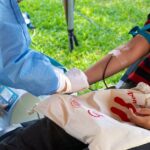
The procedure typically takes under an hour. Blood is drawn from your arm, usually about 30 to 60 milliliters — roughly 2 to 4 tablespoons. The blood goes into a centrifuge for about 10 to 15 minutes.
After separation, the clinician collects the platelet concentrate. Some preparations add calcium chloride or thrombin to activate the platelets before injection. Others inject the PRP without activation, letting the body’s own tissue trigger the release of growth factors.
The injection site is numbed, sometimes with a local anesthetic. For deeper structures like the knee joint, ultrasound guidance helps the doctor place the needle accurately. For tendons, the injection may target the area of most damage, which can be identified on imaging.
Most people receive a series of injections rather than a single one. Common protocols involve three injections spaced about four to six weeks apart. Some clinicians recommend a single injection followed by reassessment. There is no universally accepted protocol.




Does PRP Actually Work? What Does The Research Show?
The research on PRP is genuinely mixed. For knee osteoarthritis, several studies have found that PRP injections reduce pain and improve function compared to placebo injections. Some research suggests PRP performs similarly to or better than hyaluronic acid injections, another common treatment for knee arthritis.
For tendon conditions, the picture is less clear. Some randomized trials show benefit for tennis elbow. Others show no significant difference between PRP and saline injections. A well-known study on Achilles tendinopathy found PRP offered no advantage over placebo.
Part of the problem is that PRP preparations vary widely. There is no standard recipe. Different centrifuge machines, spin speeds, and activation methods produce different products. Some preparations have high platelet concentrations; others barely exceed normal blood levels. This makes comparing studies difficult.
Another issue is that many early studies were small or lacked proper control groups. Some were funded by device manufacturers, which can introduce bias. The most reliable evidence comes from randomized controlled trials, and those are still limited in number for most conditions.
What Are The Risks And Side Effects Of PRP?
PRP is generally considered low-risk because it uses your own blood. There is no risk of disease transmission or allergic reaction to foreign material. The most common side effects are pain at the injection site, swelling, and temporary soreness.
These effects typically resolve within a few days. Some people experience a flare of pain in the first week after injection. This is often described as an inflammatory response, which is part of the intended healing process, though it can be uncomfortable.
Serious complications are rare but possible. Infection can occur with any injection, though the risk is low when proper sterile technique is used. Nerve damage is possible if the needle hits a nerve directly. This is why many clinicians use ultrasound guidance for deeper injections.
PRP should not be injected into areas with active infection or into cancerous tissue. People with bleeding disorders or those taking blood thinners should discuss risks with their doctor before the procedure.
Who Is A Good Candidate For PRP?
Good candidates are people with chronic tendon problems or mild to moderate osteoarthritis who have not improved with conservative treatment. Conservative treatment usually means physical therapy, rest, and anti-inflammatory medications.
PRP is often considered before surgery but after simpler treatments have failed. For example, someone with tennis elbow that has not improved after six months of physical therapy might be offered PRP before considering surgery.
People with severe joint damage, advanced arthritis, or completely torn tendons are less likely to benefit. In these cases, the structural damage may be too extensive for growth factors to overcome. Surgery may be more appropriate.
Age may play a role. Some research suggests younger patients respond better to PRP, possibly because their tissues have greater healing capacity. But this is not firmly established, and many older patients still benefit.
What Should You Expect After A PRP Injection?
Recovery varies by injection site and individual response. In the first few days, expect soreness and possibly mild swelling. Ice and over-the-counter pain relievers can help, though some doctors advise against anti-inflammatory medications because they may interfere with the healing response PRP is meant to trigger.
This is a point of ongoing debate. Nonsteroidal anti-inflammatory drugs (NSAIDs) like ibuprofen reduce inflammation. Since PRP works partly through inflammation, some clinicians recommend avoiding NSAIDs for a week or two after injection. Others see no convincing evidence that this matters. Ask your doctor for their specific recommendation.
Returning to normal activity is gradual. Most protocols involve a short rest period followed by progressive physical therapy. Tendons and ligaments need controlled loading to heal properly. Physical therapy is often recommended alongside PRP rather than instead of it.
Full recovery can take several weeks to months. PRP does not produce instant results. The growth factors initiate a process that unfolds over time. Many patients notice improvement by six to twelve weeks after their injection series.
How Much Does PRP Cost And Is It Covered By Insurance?
PRP is typically not covered by health insurance. Most insurers consider it experimental or investigational. This means patients usually pay out of pocket.
Costs vary widely by location and provider. A single injection can range from several hundred to over a thousand dollars. A series of three injections can cost several thousand dollars total. Some clinics bundle the cost of the series into a single package price.
Because costs are significant, it is reasonable to ask about evidence for your specific condition before committing. Ask your doctor how many injections they recommend and what outcomes you can realistically expect based on current research.
How Does PRP Compare To Other Treatments?
For knee osteoarthritis, PRP is often compared to hyaluronic acid injections, also called viscosupplementation. Hyaluronic acid is a lubricating fluid that may reduce friction in the joint. PRP aims to modify the joint environment at a cellular level.
Some studies suggest PRP provides longer-lasting pain relief than hyaluronic acid for knee arthritis. Other studies find no meaningful difference. Both treatments have modest effect sizes, meaning the average benefit is real but not dramatic.
For tendon problems, PRP is compared to physical therapy, corticosteroid injections, and surgery. Corticosteroids reduce pain quickly but may weaken tendon tissue over time. PRP aims for tissue repair rather than just pain suppression, but the evidence that it achieves this is inconsistent.
Surgery remains the definitive treatment for complete tendon tears and severe structural damage. PRP is not a replacement for surgery in these cases. It is best understood as an intermediate option between conservative care and invasive procedures.
Frequently Asked Questions
How many PRP injections will I need?
Most protocols use a series of three injections spaced about four to six weeks apart. Some people improve after one injection, but there is no universally accepted standard number.
Is PRP painful?
The injection itself can be uncomfortable, and the area may feel sore for a few days afterward. Numbing agents and ultrasound guidance help reduce discomfort during the procedure.
How long does it take to see results from PRP?
Most people notice improvement within six to twelve weeks after completing their injection series. PRP does not provide immediate relief because it works by initiating a healing process that takes time.
Can PRP be used for hair loss?
Some studies show PRP injections may increase hair density in people with androgenetic alopecia. The evidence is promising but not conclusive, and results vary significantly between individuals.
