
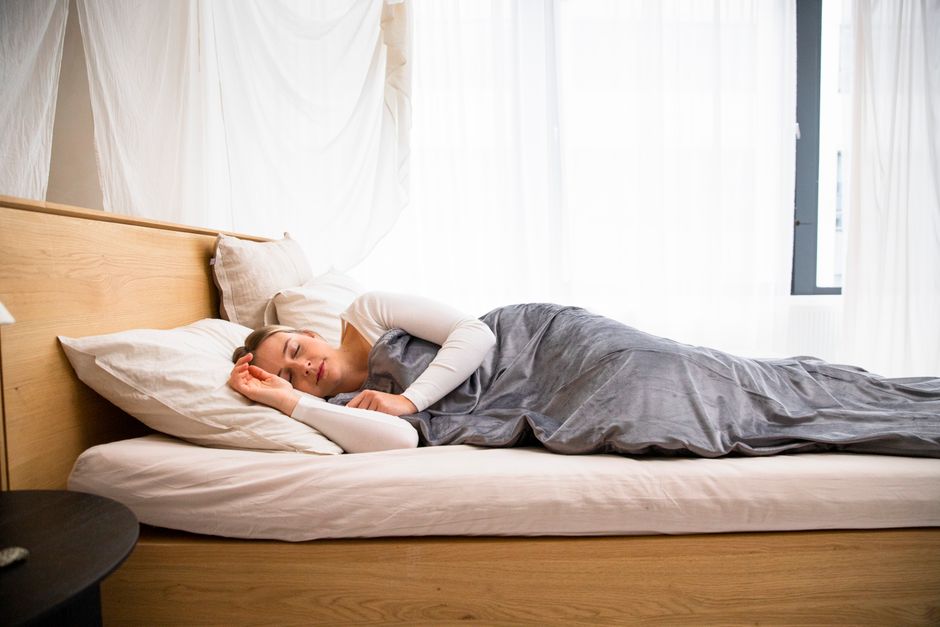
Grounding sheets are bedding products woven with conductive materials, usually fine silver threads, that connect to a home’s electrical ground through a cord plugged into the grounding port of an outlet. The idea behind them is that direct skin contact with the sheet lets excess static or electrical charge on your body flow into the earth. The concept comes from “earthing” or “grounding” theory, which claims that modern people have lost a natural electrical connection to the earth that our ancestors had by walking barefoot outside.
What Are Grounding Sheets?
A grounding sheet looks like a normal fitted sheet. The difference is in the weave. Manufacturers mix silver-coated fibers or carbon threads into the fabric so the surface conducts electricity. A snap or stud on the sheet connects to a wire, and that wire plugs into the round grounding hole on a standard US wall outlet. That hole is connected to the earth ground in your home’s wiring.
The claim is that when you lie on the sheet, your body becomes electrically continuous with the earth. Proponents say this lets electrons flow from the ground into your body, which they believe reduces inflammation, improves sleep, and supports recovery.
That is the theory. It is worth separating the theory from the evidence, because those two things are not the same.
How Does Earthing Theory Work?
The human body does carry measurable electrical charge. Your heart, brain, and muscles all run on electrical signals. Your skin and body fluids conduct electricity to some degree. Those facts are not in dispute.
What is disputed is whether a person’s body accumulates a meaningful “charge imbalance” during ordinary life, and whether connecting to the earth corrects it in a way that changes health outcomes.
The earth does hold a slight negative electrical charge relative to the atmosphere. Walking barefoot on soil or grass, or touching water, can equalize the small voltage difference between your body and the ground. This is real physics. The open question is whether that equalization does anything measurable for your health.
Some researchers have proposed that contact with the earth’s surface allows free electrons to enter the body and act as antioxidants. This idea has been published in peer-reviewed journals, including work on earthing and inflammation. But the body of research is small, and much of it has been funded or supported by companies that sell earthing products. That does not automatically make the findings wrong, but it does mean the evidence deserves careful reading.
Do Grounding Sheets Actually Improve Sleep?
Some small studies have reported that people using grounding sheets or mats fell asleep faster or reported better sleep quality. Most of these studies were short, involved a small number of participants, and relied on self-reported outcomes rather than objective sleep measurements like polysomnography.
Self-reported sleep quality is notoriously influenced by expectation. When a person buys a product and believes it will help them sleep, that belief alone can change how they feel. This is not a flaw in the person. It is a well-documented feature of how the brain works, and it is exactly why placebo-controlled trials exist.
Larger, independent trials using objective sleep measures and proper blinding are lacking. That does not mean grounding sheets cannot help someone sleep. It means the evidence is not strong enough to say they reliably do.




What Does the Research Actually Show?
The published research on earthing and grounding falls into a few categories:
- Small studies on sleep, pain, and mood, often with design limitations
- Physiological studies measuring things like skin voltage, heart rate variability, or blood markers
- Reviews and commentaries, some of which are written by researchers with financial ties to earthing companies
Some physiological effects have been measured. For example, studies have looked at changes in heart rate variability and blood viscosity during grounding. But the sample sizes tend to be tiny, and replication by independent groups is limited.
There is no large, well-controlled trial showing that grounding sheets reduce inflammation, prevent disease, or improve any hard clinical outcome. Claims that they do are ahead of the evidence.
This is a good place to be honest about a broader pattern. Many wellness products start with a plausible biological mechanism, run a few small studies, and then market the mechanism as if it were a proven outcome. Biological plausibility is not the same as demonstrated benefit. A treatment can make perfect sense in theory and still fail when tested properly.
Are Grounding Sheets Safe?
For most healthy adults, lying on a conductive sheet connected to a properly wired outlet’s ground is unlikely to cause harm. The currents involved are extremely small, and the connection is to ground, not to live voltage.
But “unlikely to cause harm” is not the same as “no risk.” A few points matter:
- The sheet must be plugged into the grounding hole, not the live slots. Using the wrong adapter or a damaged cord could create a real electrical hazard.
- People with implanted medical devices, such as pacemakers or defibrillators, should talk to their doctor before using any product that sends electrical current through the body. Even small currents can interact with these devices in theory.
- If your home’s wiring is faulty or ungrounded, the grounding connection may not work as intended. Older homes sometimes lack proper grounding.
There is no clinical guideline that recommends grounding sheets for any condition. That is worth stating plainly. They are a consumer product, not a treatment.
What Else Might Explain the Reported Benefits?
People who buy grounding sheets are often already trying to sleep better, reduce stress, or manage pain. Several things happen at once when someone starts using one:
- They pay more attention to their sleep routine
- They may go to bed at more consistent times
- They expect to feel better, which can shape perception
- Lying still on a sheet for hours is itself a restful behavior
Any of these could produce the improvements people report. Untangling which one is responsible requires controlled studies, and those have not been done at a scale that would settle the question.
None of this means the people reporting benefits are wrong or lying. It means the cause of their improvement is not established.
Should You Try a Grounding Sheet?
That is a personal decision, and this article is not going to make it for you. What it can do is lay out the honest state of things.
The mechanism is plausible but unproven for health outcomes. The studies are small and often have conflicts of interest. The safety profile for healthy adults appears reasonable, with the electrical cautions noted above. The cost is real, and no insurance covers it.
If you decide to try one, the sensible approach is to treat it as an experiment. Give it a defined period, note how you actually sleep and feel, and be willing to conclude it did not help. That is a more honest test than assuming it works because it felt good for a week.
If you have a medical device or a health condition, talk to your doctor first. And if you are dealing with persistent sleep problems or pain, those deserve a real evaluation, not just a new sheet.
Frequently Asked Questions
What are grounding sheets made of?
They are typically made of cotton or bamboo fabric woven with conductive silver-coated threads or carbon fibers. A snap connects the sheet to a cord that plugs into the grounding hole of an outlet.
Do grounding sheets really work?
Some small studies report sleep and comfort improvements, but the evidence is limited and often comes from research with ties to earthing companies. No large independent trial has confirmed that grounding sheets improve health outcomes.
Are grounding sheets safe to use every night?
For most healthy adults, using one as directed appears low risk. People with implanted medical devices like pacemakers should consult a doctor first, since any current through the body could interact with these devices.
Can grounding sheets reduce inflammation?
That claim is based on a proposed mechanism, not on strong clinical evidence. No large controlled trial has shown that grounding sheets reduce inflammation in humans.
