
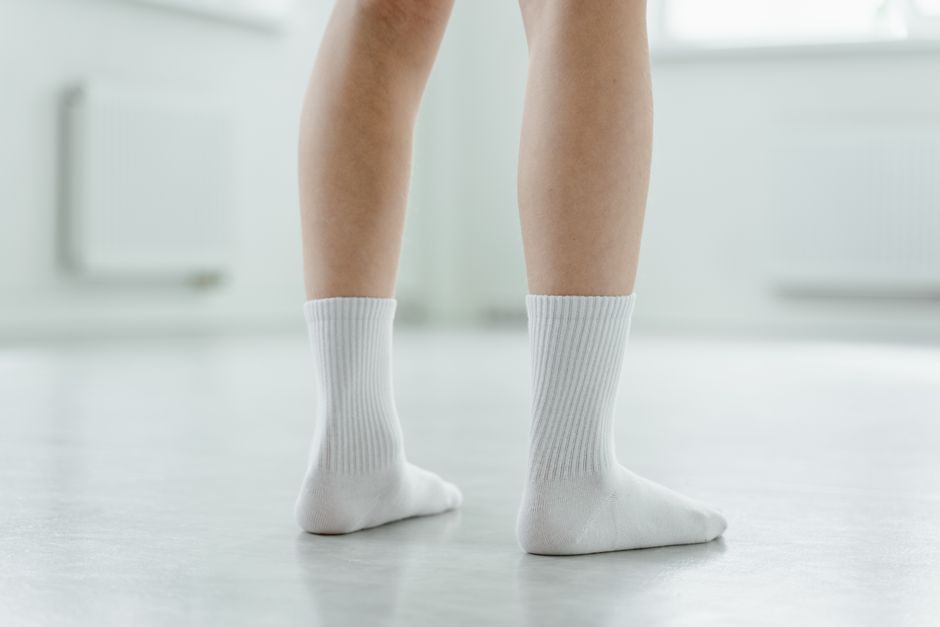
Compression socks are snug-fitting socks that apply gentle pressure to your lower legs. They are used to improve blood flow in your legs, which helps prevent swelling and reduces the risk of blood clots. Doctors often recommend them for people who stand or sit for long hours, travel on long flights, or have conditions like varicose veins.
How Do Compression Socks Actually Work?
Your veins have one-way valves that push blood back up to your heart. When these valves weaken or the muscles in your legs don’t move enough, blood can pool in your lower legs. This pooling causes swelling, heaviness, and sometimes pain.
Compression socks squeeze your legs in a specific pattern. The pressure is tightest at the ankle and gradually loosens as it moves up the leg. This gradient pressure helps your veins push blood upward, working against gravity. It essentially gives your veins a helping hand.
The effect is both mechanical and practical. By reducing the diameter of your veins, the socks increase blood flow velocity. Faster-moving blood is less likely to clot. This is the same reason compression socks are standard equipment in hospitals for patients who cannot move around easily.
Who Needs Compression Socks?
Compression socks are not just for older adults. Many different groups of people benefit from wearing them regularly. The most common users include people who spend most of their day on their feet, such as nurses, teachers, and retail workers. Standing for eight hours makes blood pool in the legs, and compression helps counteract that.
People with sedentary jobs also benefit. Sitting for long stretches, especially at a desk, slows circulation in the legs. Compression socks can prevent the heavy, tired feeling that comes at the end of a workday.
Pregnant women often use them. Pregnancy increases blood volume and puts pressure on the pelvic veins, which can lead to swelling in the legs and feet. Many obstetricians recommend compression socks during pregnancy, particularly in the third trimester.
Travelers are another major group. Long flights or car rides keep your legs still for hours, which raises the risk of deep vein thrombosis (DVT). Compression socks are widely recommended for flights lasting more than four hours, especially for people with additional risk factors.
What Medical Conditions Do Compression Socks Help With?
Compression therapy is a standard medical treatment for several conditions. The most well-documented use is for chronic venous insufficiency. In this condition, the veins in your legs cannot pump blood back to the heart efficiently. Compression socks are the first-line treatment and are supported by decades of clinical evidence.
Varicose veins are another common indication. These are twisted, enlarged veins that often appear on the legs. Compression socks do not cure varicose veins, but they reduce symptoms like pain, heaviness, and swelling. They also slow the progression of the condition.
Lymphedema is a condition where fluid builds up in tissues, causing swelling. People with lymphedema in the legs often use compression garments as part of their daily management. For this condition, prescription-strength compression is usually needed, and a healthcare provider must fit the garment.
People with deep vein thrombosis history may be advised to wear compression socks. DVT is a blood clot in a deep vein, usually in the leg. Wearing compression socks after a DVT can reduce the risk of post-thrombotic syndrome, a long-term complication that causes pain and swelling.





What Do the Numbers on Compression Socks Mean?
Compression socks come in different pressure levels, measured in millimeters of mercury (mmHg). This number tells you how much pressure the sock applies to your leg. Understanding these levels helps you choose the right sock for your needs.
Here are the standard compression levels:
- 8-15 mmHg: Mild pressure for everyday wear, minor swelling, and travel comfort. Available over the counter.
- 15-20 mmHg: Moderate pressure for mild varicose veins, pregnancy swelling, and long flights. Also available over the counter.
- 20-30 mmHg: Firm pressure for chronic venous insufficiency, moderate varicose veins, and post-surgical use. Often requires a prescription.
- 30-40 mmHg: Extra firm pressure for severe venous disease, lymphedema, and DVT management. Requires a prescription and professional fitting.
Most people who buy compression socks without a prescription choose the 15-20 mmHg range. This level provides noticeable relief without being uncomfortable. If you have a diagnosed medical condition, your doctor will tell you the exact pressure you need.
One important note: over-the-counter socks are not the same as prescription medical compression garments. Medical-grade socks are measured precisely to your leg and provide consistent, graduated pressure. A sock that is too loose will not work. A sock that is too tight can cause problems. If you have a medical condition, get fitted properly.
How Do You Choose the Right Compression Socks?
Choosing the right compression sock involves more than just picking a pressure level. The fit matters enormously. A sock that is too tight at the top can act like a tourniquet, restricting blood flow rather than helping it. The sock should be comfortable but snug, with the pressure concentrated at the ankle.
Measure your legs in the morning when swelling is minimal. You need three measurements: the circumference of your ankle, the widest part of your calf, and the length from your heel to your knee. Use these measurements against the manufacturer’s sizing chart. Do not guess based on your shoe size.
Consider the material. Compression socks are made from a blend of nylon, spandex, and sometimes cotton or wool. Moisture-wicking fabrics are better for people who sweat a lot or live in warm climates. Thicker materials provide more warmth and cushioning but may be harder to put on.
Putting on compression socks requires technique. The fabric is tight, and pulling them on like regular socks can damage them. Roll the sock down to the heel, insert your foot, and gradually unroll it up your leg. Smooth out any wrinkles, because wrinkles create uneven pressure points. Some people use a “sock donner” device to make this easier, especially if they have limited hand strength.
Replace your compression socks regularly. The elastic fibers stretch out over time, and the pressure decreases. Most manufacturers recommend replacing them every three to six months with regular use. Check for signs of wear, like loose fabric or loss of snugness.
Are There Any Risks or Side Effects?
Compression socks are generally safe for most people, but they are not for everyone. People with peripheral artery disease (PAD) should not wear compression socks without a doctor’s approval. PAD involves narrowed arteries, and compression can reduce blood flow further, worsening the condition.
People with diabetes should also be cautious. Diabetes can cause peripheral neuropathy, which reduces sensation in the feet. If you cannot feel the sock, you might not notice if it is too tight. Ill-fitting compression socks can cause skin damage or pressure sores. If you have diabetes, talk to your doctor before using compression socks.
Skin infections and open wounds on the legs are another reason to avoid compression socks. The pressure can irritate the skin and delay healing. If you have fragile skin or a history of skin ulcers, seek medical advice first.
Common side effects in healthy users are mild. Some people experience temporary indentations in the skin after removing the socks. This is normal and not a cause for concern. If you feel numbness, tingling, or increased pain while wearing them, remove the socks and consult a healthcare provider.
Do Compression Socks Improve Athletic Performance?
Many athletes wear compression socks during and after exercise. The marketing claims suggest they boost performance and speed up recovery. The evidence is mixed.
Research on athletic performance shows no consistent benefit. Some studies find no difference in speed, power, or endurance when wearing compression socks during exercise. Other studies report small improvements, but the results vary. The strongest evidence supports compression socks for recovery after exercise, not performance during it.
Wearing compression socks after a workout may reduce muscle soreness and help clear metabolic waste products like lactic acid. Some research suggests this effect is real, though the mechanism is not fully understood. If you run marathons or lift heavy weights, compression socks might help you feel better the next day. Do not expect them to make you faster.
The practical benefit for athletes is the same as for everyone else: reduced leg swelling. Long training sessions cause fluid buildup in the lower legs. Compression socks counteract this effect and keep your legs feeling fresher.
How Long Should You Wear Compression Socks Each Day?
This depends on why you are wearing them. For travel, you only need them during the flight or drive. For work, many people wear them for their entire shift, whether that is eight hours or twelve. For chronic venous insufficiency, most doctors recommend wearing them all day and removing them at night.
You should not sleep in compression socks unless a doctor specifically tells you to. While you are lying down, gravity is not working against your circulation the same way. The compression is unnecessary and can be uncomfortable.
Start gradually if you are new to compression socks. Wear them for a few hours on the first day, then increase the duration. This gives your skin time to adapt. If your legs feel sore or the socks leave deep marks that do not fade quickly, the socks may be too tight. Try a lower pressure level.
Consistency matters more than duration. Wearing compression socks every day for eight hours is more effective than wearing them occasionally for twelve hours. Make them part of your routine if you need them for a medical reason.
Frequently Asked Questions
Can compression socks prevent blood clots?
Compression socks reduce the risk of blood clots by keeping blood moving in your legs. They are most effective for travel-related clots and are commonly recommended for long flights.
Do compression socks help with swollen feet and ankles?
Yes, compression socks are one of the most effective non-medication treatments for mild to moderate leg and ankle swelling. They work by preventing fluid from pooling in your lower legs.
How tight should compression socks feel?
Compression socks should feel snug but not painful. You should feel the most pressure at your ankle, with the pressure gradually decreasing up your calf.
Can I wear compression socks all day?
Yes, many people wear them for their entire waking day, especially for medical conditions like chronic venous insufficiency. Remove them at night unless your doctor advises otherwise.
