
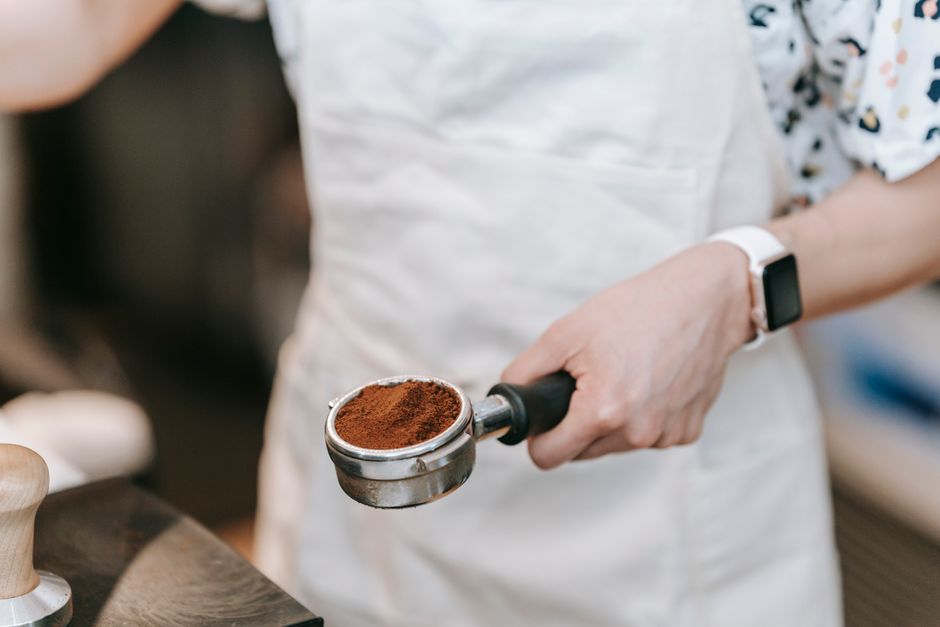
Coffee grounds are the spent, wet remains of roasted coffee beans after hot water has passed through them to make a cup of coffee. They are roughly 60 to 70 percent water, with the rest made up of plant fiber, oils, and a small amount of leftover caffeine and dissolved coffee solids. Once brewed, they are usually thrown away, though they have a long history of household, garden, and industrial use.
That leftover material is not simply “dead coffee.” It still contains meaningful amounts of nitrogen-rich organic matter, cellulose, and trace minerals. It also contains caffeine, which matters because caffeine affects plants, insects, and waterways differently depending on how and where the grounds are used. This article covers what coffee grounds actually are, what is in them, and what the evidence does and does not support for common uses.
What Are Coffee Grounds Made Of?
The composition of spent coffee grounds varies with the coffee bean, the roast level, and the brewing method. Espresso produces drier, finer grounds. French press produces coarser, wetter grounds. These differences change how the grounds behave in soil, in compost, or on a countertop.
Broadly, spent grounds contain:
- Insoluble fiber, mostly cellulose and hemicellulose, which is the bulk of the dry weight
- A small amount of protein and lipids, including coffee oils
- Nitrogen, which is the reason grounds matter for composting
- Trace minerals such as potassium, magnesium, and calcium
- Residual caffeine, typically a fraction of what was in the original beans
- Chlorogenic acids and other polyphenol compounds that survive brewing
The exact percentages depend heavily on the bean and the brew. USDA nutritional databases do not list spent coffee grounds as a standard food item, so precise nutrient values are not available from an authoritative reference. This is worth stating plainly: many online “nutrition facts” for coffee grounds are estimates, not measured data.
Does Coffee Have More Caffeine Than Coffee Grounds?
Brewed coffee contains more caffeine per serving than the spent grounds left behind, because most of the caffeine dissolves into the water during brewing. The grounds retain only a small remainder.
How much remains depends on the brewing method. A longer, hotter extraction removes more caffeine. A quick or cold extraction leaves more behind. Cold brew, for example, uses time rather than heat, and the leftover grounds may retain more caffeine than grounds from a hot drip brew.
This matters for two reasons. First, if you use grounds in a garden, that residual caffeine can affect plant growth and soil organisms. Second, if you compost grounds and then use the compost, the caffeine is generally broken down over time, but the fresh grounds are not caffeine-free.
Are Coffee Grounds Acidic or Neutral?
Fresh spent coffee grounds are mildly acidic, but that acidity does not last long in soil. When grounds are mixed into soil, the pH effect is usually small and short-lived, and some studies have found that used grounds can actually raise soil pH slightly over time as they break down.
The common claim that coffee grounds “acidify soil” for acid-loving plants like blueberries or hydrangeas is not well supported. The pH shift is generally too small and too temporary to make a meaningful difference for most garden plants. If you need to change soil pH, a soil test and a product designed for that purpose will do it more reliably than coffee grounds.
Some research suggests that using grounds as a mulch, rather than mixing them into the soil, can slightly suppress weed germination and slow water evaporation from the surface. The effect is modest, and results vary by plant and climate.




Can You Compost Coffee Grounds?
Yes. Coffee grounds are a well-established “green” compost material, meaning they are a nitrogen source. They break down readily and help heat up a compost pile.
A practical note that many guides get wrong: coffee grounds are not acidic in a way that harms compost. The bigger issue is balance. Grounds are high in nitrogen, so they should be mixed with “brown” materials like dry leaves, cardboard, or shredded paper to keep the pile from getting too wet or smelly.
Paper coffee filters can be composted along with the grounds in most home systems. The filter breaks down more slowly but is fine in a pile that is turned regularly.
Worms also tolerate coffee grounds well in moderation. Vermicomposting guides generally suggest feeding them in small amounts rather than dumping large quantities at once, because the caffeine and acidity can stress worms if the dose is too high.
Are Coffee Grounds Safe to Eat or Use on Skin?
Spent coffee grounds are not a food, and there is no established nutritional or clinical reason to eat them. Small amounts used as a flavoring or in baked goods are generally considered acceptable, but there is no reliable data on safe intake levels, and the grounds are high in insoluble fiber that the body cannot digest well.
For skin, coffee grounds are a common ingredient in homemade and commercial exfoliants. The abrasive texture can physically scrub the skin, and coffee contains caffeine and polyphenols that have been studied for their effects on skin. However, the evidence that topical coffee grounds produce meaningful skin benefits is limited. Most of the research has been done on coffee extracts or caffeine applied in controlled formulations, not on spent grounds rubbed on the face.
There is a real risk worth naming: coarse grounds can cause micro-tears and irritation, especially on sensitive or broken skin. Some clinicians advise against using them on the face for this reason. If you have a skin condition, a dermatologist is a better source than a home remedy.
What Are the Common Uses for Coffee Grounds?
The uses that have the most support are the least glamorous. Composting and soil amendment are well established. Using grounds as a mild abrasive cleaner for pots and pans works because of their texture, not because of any special chemical property.
Other popular uses fall into a grayer zone:
- Deodorizing — grounds can absorb some odors in a closed container, but the effect is limited and short-lived.
- Pest control — some gardeners report that grounds deter slugs and ants. The evidence is mixed and results vary widely.
- Dyeing — grounds can stain fabric and paper a brownish color. This works, but the color fades with washing.
- Body scrub — works mechanically, with the irritation caveat above.
- Facial masks — popular, but not supported by strong evidence for specific skin outcomes.
Claims that coffee grounds “detox” the body, boost metabolism when applied to skin, or treat cellulite are not supported by clinical evidence. Those are marketing claims, not findings.
Do Coffee Grounds Have Any Health Benefits?
There is no established clinical evidence that eating, drinking, or applying spent coffee grounds produces health benefits. The health research on coffee is about the brewed beverage, not the leftover grounds.
That research is substantial. Large observational studies have linked moderate coffee consumption to lower risk of several chronic conditions, including type 2 diabetes and some liver diseases. Those findings apply to the drink, not to the grounds, and observational studies cannot prove cause and effect. It would be inaccurate to transfer those findings to spent grounds.
Some early research has looked at extracting specific compounds from coffee grounds, such as antioxidants or dietary fiber, for use in food products or supplements. That work is largely at the lab and pilot stage. No large human trials have confirmed health benefits from consuming coffee grounds.
How Should You Store or Dispose of Coffee Grounds?
If you plan to use grounds in the garden, use them within a few days or store them in a sealed container in the refrigerator to slow mold growth. Wet grounds left in a warm, open bin grow mold quickly, and moldy grounds are not ideal for indoor composting or for use around food plants.
For disposal, small amounts can go in the trash or, where municipal programs allow, in yard waste or food scrap collection. Check your local guidelines, because rules vary by city. Never pour large amounts of grounds down a drain, as they can contribute to clogs over time.
One clarification worth making: “coffee grounds” and “coffee beans” are not interchangeable. Grounds are the brewed, spent product. Beans are the roasted seed before brewing. They have different moisture, texture, and composition, and they are not substitutes in recipes or garden applications.
Frequently Asked Questions
Are coffee grounds good for plants?
They can be, mainly as a source of organic matter and nitrogen when composted first. Fresh grounds used directly as mulch have a modest effect, and the common claim that they acidify soil is not well supported.
Can you put coffee grounds directly in the garden?
Yes, in moderation. Mixing them into soil or layering them thinly as mulch is generally fine, though a thick layer can mat and block water. Composting them first is usually the better option.
Do coffee grounds keep bugs away?
The evidence is mixed. Some gardeners report that grounds deter slugs and ants, but results vary and no strong clinical or agricultural consensus supports grounds as a reliable pest control method.
Is it safe to eat coffee grounds?
Small amounts used as a flavoring are generally considered acceptable, but there is no reliable data on safe intake levels and no established nutritional reason to eat them. They are high in indigestible fiber.
