
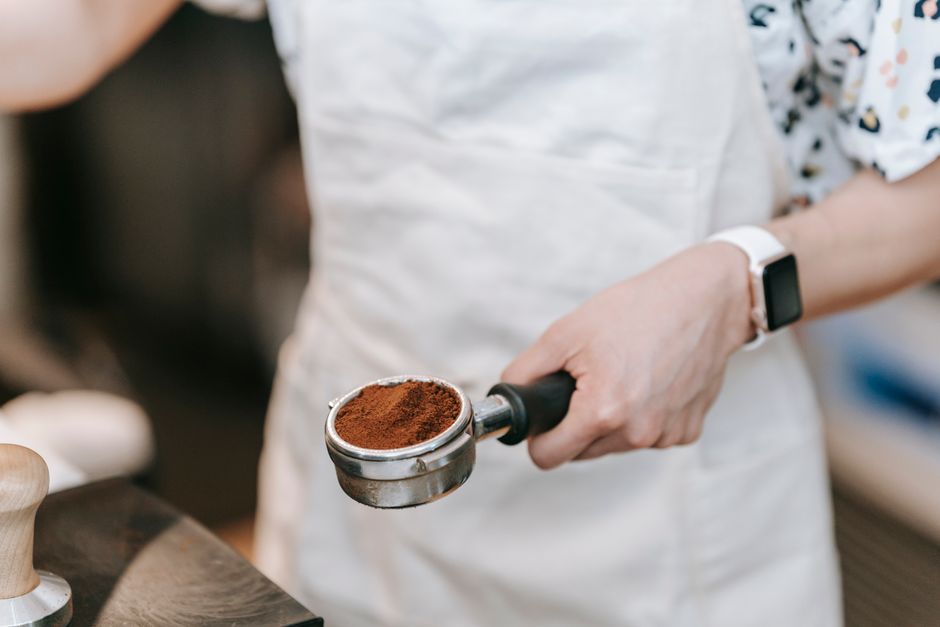
Coffee grounds are used coffee beans, and they still contain nitrogen, potassium, phosphorus, and organic matter that can benefit soil and plants. People also use them around the home for odor control, mild cleaning, and skin exfoliation. Some popular claims about coffee grounds go further than the evidence supports, so it helps to know which uses are well established and which are mostly folklore.
What Are Coffee Grounds Good For in the Garden?
Coffee grounds work best as a slow-release soil amendment after composting. They add organic matter that improves soil structure and water retention, and they break down to release small amounts of nitrogen, potassium, phosphorus, and micronutrients.
Fresh, un-composted grounds are acidic, with a pH usually somewhere in the range of 4.5 to 6.5 depending on the brew. That acidity is temporary. Once soil microbes break the grounds down, the net effect on soil pH is close to neutral. This is why spent grounds are not a reliable way to make soil meaningfully more acidic for acid-loving plants like blueberries or hydrangeas. If you need to lower soil pH, elemental sulfur or a commercial acidifying fertilizer is the tool that actually works.
One caution worth knowing: fresh grounds can temporarily tie up nitrogen at the soil surface as microbes work to break them down. Mixing them lightly into the top inch or two of soil, or composting them first, avoids that problem. A thin layer spread on top of the soil is generally fine.
Earthworms are drawn to coffee grounds, and some gardeners report improved worm activity in beds where grounds are added. That is a reasonable observation, though it is not a substitute for a balanced compost program.
Can You Use Coffee Grounds as Fertilizer Directly?
You can, but the effect is modest. Coffee grounds are not a complete fertilizer. Their nutrient content is low compared to commercial products, and the nitrogen they contain is mostly in organic forms that plants cannot take up until microbes break it down.
Think of grounds as a soil conditioner with some nutrient value, not as a replacement for fertilizer. A vegetable garden or heavy-feeding plant will still need additional nutrients from compost, aged manure, or a balanced fertilizer. Using grounds alone will not supply enough nitrogen, phosphorus, and potassium to support vigorous growth.
If you want to use them directly, spread a thin layer, no more than about half an inch, around the base of established plants and keep them a little away from stems. Piling fresh grounds thickly against plant stems can trap moisture and encourage rot.
Are Coffee Grounds Good for Composting?
Coffee grounds are one of the best kitchen scraps for compost. They count as a “green” material, meaning they are a nitrogen source, and they break down quickly once the pile is active.
A common myth says grounds are too acidic for compost or will throw off the balance. In practice, the acidity is neutralized as the pile heats up, and grounds behave more like a mild green than a strong acid. They also help the pile stay warm because they are dense and hold moisture.
A practical ratio matters more than the grounds themselves. Compost works best with a mix of roughly two to three parts “brown” material, such as dry leaves, cardboard, or straw, to one part “green” material, such as grass clippings, vegetable scraps, and coffee grounds. Too many greens and the pile gets slimy and smelly. Too many browns and it stalls.
Paper coffee filters can go in the compost too, as long as they are plain paper and not the plastic-lined or synthetic kind. Tear them up so they break down faster.





Do Coffee Grounds Keep Pests Away?
The evidence here is thin. Some gardeners report that coffee grounds deter slugs and snails, and others say they do nothing. Slugs will crawl over grounds without hesitation in many situations, especially when the grounds are wet.
Claims that grounds repel ants, mosquitoes, or cats are not backed by strong research. A few small studies have looked at coffee grounds and mosquito larvae in standing water, but the results do not support using grounds as a practical mosquito control method. For mosquito control, removing standing water is the reliable step.
If you want to try grounds around plants as a slug barrier, there is little harm in it, but do not count on it as your main defense. Copper tape, beer traps, and hand-picking tend to work better.
What Are Coffee Grounds Good For Around the House?
The household uses that hold up best are odor absorption and gentle scouring. The rest range from mildly useful to mostly hype.
- Odor absorption: Dry grounds placed in a bowl in the fridge or freezer can absorb some food odors. Replace them every week or two.
- Gentle scouring: Grounds work as a mild abrasive for scrubbing pots, pans, and sinks. They can scratch delicate surfaces, so test on a hidden spot first.
- Fridge and trash can deodorizing: A small container of dry grounds can reduce smells in a closed space.
- Fireplace cleanup: Damp grounds can help hold down ash dust while you scoop it out.
What grounds will not do reliably is unclog drains, remove tough grease, or disinfect surfaces. For those jobs, use the appropriate cleaner.
Can You Use Coffee Grounds on Your Skin or Hair?
Coffee grounds are used in many DIY scrubs and hair treatments. The evidence for benefits is limited, and there are real risks worth knowing.
As a body scrub, grounds provide a gritty texture that can slough off dead skin. The problem is that coffee grounds are irregular and fairly sharp. Used on the face, they can cause micro-tears, redness, and irritation, especially on sensitive or acne-prone skin. Dermatologists generally advise against using coffee grounds as a facial exfoliant for this reason.
Some people apply grounds to the scalp or hair, often mixed with oil or conditioner, believing it stimulates growth or adds shine. There is no strong clinical evidence that caffeine applied topically to the scalp promotes hair growth in humans. Caffeine has been studied in laboratory settings and in some topical formulations, but the results do not establish that a coffee-ground scalp mask regrows hair.
If you want to try grounds on your body, patch-test on a small area first. Avoid using them on broken skin, after sun exposure, or on the face. Rinse thoroughly and follow with moisturizer.
Are Coffee Grounds Safe to Eat or Drink Again?
No. Used coffee grounds should not be re-brewed into a second cup of coffee. The flavor compounds are already extracted, so the result tastes weak and bitter, and there is no benefit to drinking it.
Eating coffee grounds, whether used or fresh, is not recommended. Grounds contain caffeine, and consuming them delivers a much larger dose than drinking brewed coffee because the caffeine is not filtered out. Caffeine toxicity is a real concern, particularly for children, and there are documented cases of harm from eating coffee grounds or coffee-containing products. Keep grounds out of reach of children and pets.
Used grounds are also not sterile. They can grow mold if left damp for several days. If you store them for later use, keep them in a sealed container in the fridge and use them within a few days, or dry them out first.
How Should You Store Used Coffee Grounds?
Damp grounds start to mold quickly. If you plan to use them in the garden or around the house, spread them on a tray to air-dry, then store them in a breathable container. Dried grounds keep for weeks.
If you would rather not dry them, keep them in a sealed container in the refrigerator and use them within about a week. Moldy grounds should be thrown out, not added to soil or compost.
Frequently Asked Questions
Are coffee grounds good for all plants?
Most established garden plants tolerate coffee grounds well when they are composted or mixed lightly into soil. Very young seedlings and plants that need consistently alkaline soil are better off without fresh grounds worked into their root zone.
Do coffee grounds really make soil more acidic?
Fresh grounds are mildly acidic, but once soil microbes break them down, the net effect on soil pH is close to neutral. They are not a reliable way to acidify soil for acid-loving plants.
Can I put coffee grounds directly on my houseplants?
A thin sprinkle on the soil surface is generally fine for most houseplants. Piling them thickly can trap moisture and encourage mold or fungus gnats, so keep the layer light and let it dry between waterings.
Are coffee grounds safe for pets?
Used coffee grounds still contain caffeine, which is toxic to dogs and cats, so keep them out of reach. Compost bins and garden beds where grounds are spread should be secured or fenced off from pets.
