
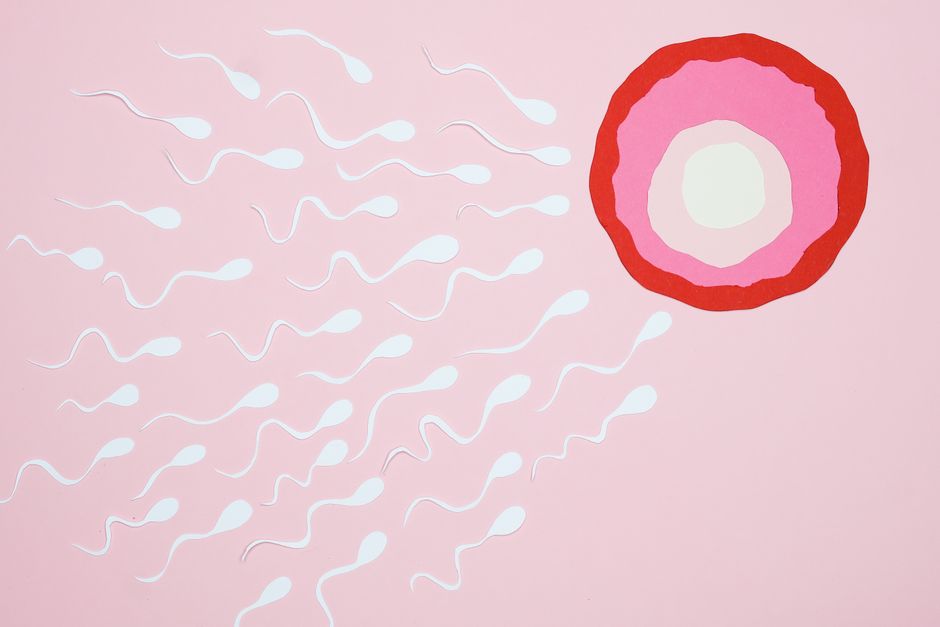
Men do not have a fixed age at which they become infertile. Unlike women, who experience a fairly predictable end to natural fertility with menopause, men can father children well into their 60s, 70s, and beyond. What actually happens with age is a gradual decline in sperm quality and fertility potential, not a hard stop.
The World Health Organization and major fertility organizations do not set an age at which men are considered infertile. Instead, the evidence shows a slow, steady drop in sperm health that begins around age 35 and continues over the following decades. Some men remain fertile for life. Others see a meaningful decline much earlier. Age matters, but it is only one factor among many.
What Age Do Men Become Infertile Sperm Facts?
There is no age at which male fertility switches off. That is the most important fact to understand, because it separates male fertility from female fertility in a fundamental way.
What the research does show is a gradual decline. Sperm quality — measured by count, movement, and shape — tends to drop slowly starting in the mid-30s. This decline is not uniform. Some men produce healthy sperm at 70. Others show reduced quality by 40.
A commonly cited figure is that male fertility begins to decline around age 35. This is a general trend, not a threshold. No blood test or semen analysis produces a result that says “infertile” based on age alone.
The confusion often comes from mixing two different ideas: the ability to conceive naturally and the statistical odds of doing so. A man in his 50s may still conceive, but on average it may take longer and may require more attempts than it would have at 25. That is a shift in probability, not a loss of function.
How Does Sperm Change With Age?
Sperm does not stay the same over a man’s lifetime. Several measurable changes tend to occur as men get older, and these changes are documented in semen analysis studies.
- Sperm count: The number of sperm per milliliter of semen tends to decrease gradually with age.
- Sperm motility: The percentage of sperm that swim properly tends to decline.
- Sperm morphology: The percentage of normally shaped sperm tends to fall.
- DNA fragmentation: Damage to the genetic material inside sperm tends to increase with age.
- Semen volume: The amount of fluid ejaculated may decrease slightly.
These changes are averages across large groups. An individual man’s numbers can look very different from the average. A 60-year-old may have better sperm parameters than a 30-year-old, depending on his health, lifestyle, and genetics.
The DNA fragmentation point deserves attention. Sperm DNA carries the genetic information that combines with the egg’s DNA. When that DNA is damaged, it can affect fertilization and early embryo development. Some studies suggest higher DNA fragmentation is more common in older men, though the exact relationship between age and DNA damage is still being studied.
Why Is There No Fixed Age for Male Infertility?
The biology explains why men do not have a clear fertility cutoff. Women are born with a finite supply of eggs, and that supply runs out. Men produce sperm continuously throughout life.
Sperm production happens in the testes through a process called spermatogenesis. This process continues in most men into old age. Because the factory keeps running, there is no built-in endpoint the way there is with eggs.
That said, the factory does age. The cells that produce sperm accumulate genetic changes over time. Hormone levels shift. Testosterone tends to decline gradually with age in many men, though the rate and degree vary widely. Blood flow, tissue health, and the supporting structures of the reproductive system also change.
So the honest answer is this: male fertility declines with age, but there is no age at which it reliably stops. A man can be fertile at 80, or he can struggle to conceive at 40. Age raises the odds of difficulty. It does not guarantee it.





Does Male Age Affect Pregnancy and Child Health?
Yes, and this is a part of the conversation that often gets overlooked. The focus is usually on whether a man can conceive, but his age may also matter for the pregnancy and the child.
Some research indicates that pregnancies fathered by older men may carry a slightly higher risk of certain outcomes, including miscarriage and some genetic conditions. The increase in risk is generally small compared to the effect of maternal age, but it appears to be real.
Advanced paternal age has been linked in some studies to a higher chance of conditions such as autism spectrum disorder and schizophrenia. These findings come from large population studies, and the absolute increase in risk for any one child is small. It is also difficult to separate the effect of paternal age from other factors that tend to go along with it.
The clearest established link is between older paternal age and a higher rate of new gene mutations in sperm. Unlike eggs, which are formed before birth, sperm are produced continuously, and each division is a chance for a copying error. Over many decades, those errors can accumulate. This is a well-supported biological mechanism, even if the downstream health effects are still being untangled.
What Other Factors Matter More Than Age?
Age is one variable. It is often not the most important one. Many younger men have fertility problems, and many older men do not. Several other factors carry significant weight.
Overall health plays a large role. Conditions such as obesity, diabetes, and high blood pressure are associated with poorer sperm quality. Smoking, heavy alcohol use, and recreational drug use are all linked to reduced fertility. Heat exposure — from frequent hot tubs, saunas, or tight clothing — can temporarily lower sperm production.
Certain medications and medical treatments affect fertility. Some are reversible when the drug is stopped. Others, such as chemotherapy and radiation, can cause permanent damage. Anyone concerned about this should speak with a doctor rather than guess.
Structural problems can also cause infertility regardless of age. These include blockages in the reproductive tract, varicocele (enlarged veins in the scrotum), and hormonal disorders. These are medical issues, not age issues, and they can affect men of any age.
When Should a Man Get Fertility Testing?
Testing is based on circumstances, not age alone. A common guideline is that a couple should seek evaluation if they have been trying to conceive for a year without success. If the woman is over 35, that window is often shortened to six months.
For men, testing usually starts with a semen analysis. This measures sperm count, motility, morphology, and other parameters. It is a straightforward test and gives useful information. A single abnormal result does not confirm infertility — sperm parameters can vary, so a doctor may recommend repeating the test.
There is no upper age limit at which testing stops being useful. If a man wants to understand his fertility, a semen analysis can provide answers at any age.
Can Older Men Improve Their Fertility?
Some factors can be changed, and some cannot. Age cannot be reversed. But certain lifestyle changes are associated with better sperm health, and they are worth considering for any man trying to conceive.
Maintaining a healthy weight, not smoking, limiting alcohol, and avoiding excessive heat exposure are all reasonable steps. Getting enough sleep and managing stress may also help, though the evidence on stress and fertility is not as strong as it is for smoking and weight.
Some supplements are marketed for male fertility. The evidence for most of them is limited. A few nutrients, such as zinc and folate, are involved in sperm production, but taking extra does not necessarily improve fertility in men who already have enough. Anyone considering supplements should talk to a doctor first.
If a specific medical problem is found — a varicocele, a hormone imbalance, an infection — treating that problem may improve fertility regardless of age. This is why testing matters. It can find a fixable cause that has nothing to do with getting older.
Frequently Asked Questions
At what age does male fertility start to decline?
Male fertility generally begins to decline gradually around age 35, based on trends in sperm count, motility, and morphology. This is an average pattern, not a fixed threshold, and many men remain fertile well beyond it.
Can a man still get a woman pregnant at 60?
Yes, men can father children in their 60s and older. Fertility may be lower and conception may take longer on average, but there is no age at which pregnancy becomes impossible based on male age alone.
Is there a male menopause that ends fertility?
No. The term “male menopause” is sometimes used to describe a gradual drop in testosterone, but it does not mark the end of fertility the way menopause does in women. Sperm production typically continues throughout life.
Does older sperm increase the risk of health problems in a child?
Some research links older paternal age to a slightly higher risk of certain conditions, including some genetic disorders and neurodevelopmental conditions. The absolute increase in risk for any single child is generally small.
