
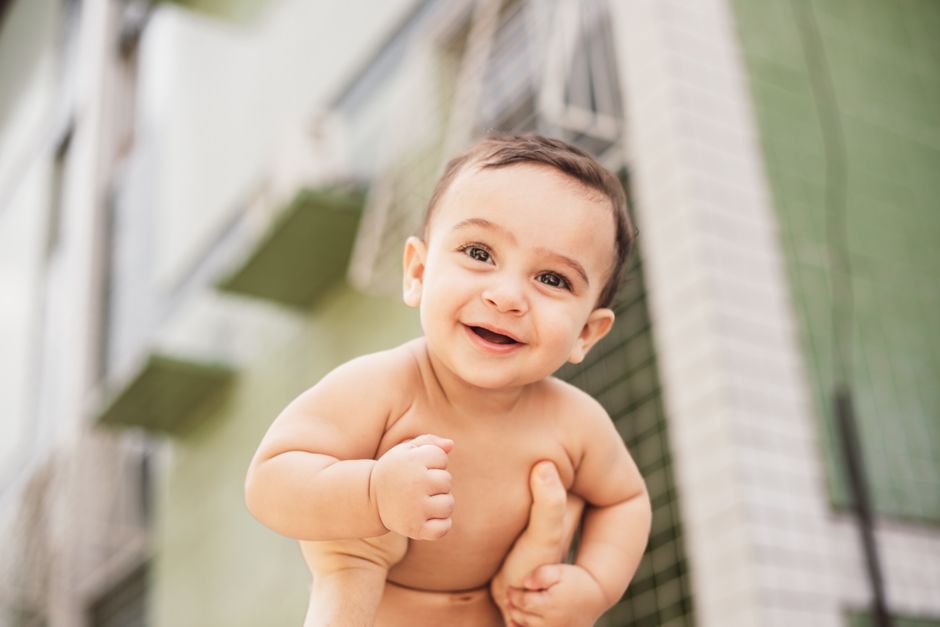
Most babies start laughing for the first time between 3 and 4 months of age. This first laugh is usually a response to something they see or feel, not a joke they understand. By 6 months, most babies laugh regularly at playful interactions like peekaboo or funny faces.
When Do Babies Start Laughing?
The timeline for laughter follows a fairly predictable pattern, though every baby develops at their own pace. The first laugh typically appears between 3 and 4 months. Some babies laugh as early as 2 months, while others wait until 5 or 6 months. Both are within the normal range.
Before the first real laugh, babies make other sounds. They coo and make vowel-like noises starting around 6 to 8 weeks. These early sounds are the building blocks for laughter. The first laugh often surprises parents because it sounds different from anything the baby has done before.
Pediatricians generally consider laughter a social milestone. It shows that a baby is engaging with the world around them. If a baby has not laughed by 6 months, it is worth mentioning at a well-child visit. This does not mean something is wrong, but it is a conversation worth having.
What Makes Babies Laugh at Different Ages?
What triggers laughter changes as a baby grows. In the early months, laughter is often a physical response. Gentle tickling, blowing raspberries on the belly, or bouncing motions can trigger that first laugh. The baby is not processing humor. They are reacting to a pleasant physical sensation.
Between 4 and 6 months, social laughter becomes more common. Babies start to laugh at faces, sounds, and simple games. Peekaboo is a classic trigger at this age because it involves surprise and social connection. The baby laughs because they recognize the pattern and enjoy the interaction.
After 6 months, laughter becomes more intentional. Babies laugh at things they find funny, like silly noises or exaggerated facial expressions. They may also laugh to get attention or to keep an interaction going. This is an important shift because it shows the baby understands that laughter is social.
By 9 to 12 months, many babies laugh at unexpected events. Dropping a toy repeatedly, making strange sounds, or watching a sibling do something silly can all produce laughter. The baby is developing a sense of what is incongruous or out of the ordinary.
What Age Do Babies Laugh at Peekaboo?
Most babies start laughing at peekaboo between 4 and 6 months. At this age, the game works because of a concept called object permanence. The baby is just beginning to understand that things still exist when they are out of sight. When the parent’s face reappears, it feels like a delightful surprise.
Before 4 months, peekaboo often produces no reaction or just a neutral stare. The baby has not yet developed the cognitive framework to find the game funny. After 6 months, peekaboo often becomes a favorite game. The baby may laugh, squeal, or reach for the parent’s hands to start the game again.
By 9 months, some babies start playing their own version of peekaboo. They may cover their own face with a blanket or their hands. This shows they understand the game structure and want to participate actively rather than just watch.





Laughing Compared to Smiling: What Is the Difference?
Smiling develops earlier than laughter. Most babies start social smiling between 6 and 8 weeks. This is a genuine smile directed at a person, not just a reflex. Laughter requires more coordination and cognitive development, which is why it appears later.
Smiling is also easier to produce. It involves fewer muscles and less breath control. Laughter requires the baby to coordinate vocal cords, breathing, and facial muscles in a specific pattern. This is a more complex motor skill.
There is also a difference in what these behaviors communicate. A smile can be a general sign of comfort or contentment. Laughter is almost always a response to something specific. It signals that the baby finds something enjoyable, surprising, or funny.
What If My Baby Is Not Laughing Yet?
If your baby is under 6 months and has not laughed, there is usually no reason for concern. Some babies are simply more serious or observant. They may smile and coo but hold off on laughing until they are ready. The range of normal development is wide.
If your baby is over 6 months and has never laughed, talk to your pediatrician. The doctor will ask about other milestones like babbling, eye contact, and social responsiveness. A delay in laughter on its own is rarely a concern. A delay in multiple social milestones is more significant.
There are things you can do to encourage laughter without forcing it. Make exaggerated facial expressions. Use a sing-song voice. Play gentle physical games like bouncing on your lap. The goal is not to make the baby laugh on command. It is to create opportunities for laughter to happen naturally.
Some research suggests that a baby’s laughter is connected to their temperament. Some babies laugh easily and often. Others are more reserved and laugh less frequently. Neither pattern is inherently better. What matters is that the baby is engaged, responsive, and meeting other developmental milestones.
Why Do Babies Laugh in Their Sleep?
Many parents notice their babies laughing or smiling during sleep. This is completely normal and not a cause for concern. Babies, like adults, cycle through sleep stages. During REM sleep, which is when dreaming occurs, facial movements and vocalizations are common.
These sleep laughs are usually reflex-like. They are not the same as the social laughter that happens during waking hours. The baby is not dreaming of something funny in the way an adult might. The laughter is more likely a neurological discharge during active sleep.
Sleep laughter typically decreases as the baby gets older. It does not require any intervention. If the baby seems otherwise healthy and sleeps well, laughing during sleep is just a normal part of infant development.
How Laughter Supports Early Development
Laughter is not just a pleasant sound. It plays a role in social and emotional development. When a baby laughs and a parent responds positively, the baby learns that their actions create reactions in others. This is an early lesson in social cause and effect.
Shared laughter also strengthens attachment. The back-and-forth of a laugh game like peekaboo is an early form of conversation. The baby learns to take turns, to anticipate, and to share an emotional experience with another person.
Laughter involves physical coordination as well. The breathing patterns, vocal control, and facial muscle movements all contribute to the development of oral motor skills. Some speech development researchers note that the vocal play involved in laughter helps babies practice the coordination they will later need for talking.
There is no evidence that babies who laugh more are smarter or will be more successful later in life. Laughter is one of many social milestones, not a measure of intelligence or future ability.
When to Talk to a Doctor
Trust your instincts as a parent. If you are worried about your baby’s development, bring it up with your pediatrician. You do not need to wait for a scheduled visit if you have concerns. An early call to the office can provide reassurance or identify a need for further evaluation.
Pay attention to the whole picture rather than focusing only on laughter. Consider whether your baby is making eye contact, responding to sounds, babbling, and showing interest in faces. A baby who is socially engaged but just does not laugh much is usually developing fine.
A baby who shows little interest in people, does not make eye contact, does not respond to their name, and has not laughed by 6 to 7 months may need a developmental assessment. Early intervention services can help if there is a delay, and starting early makes a meaningful difference.
Frequently Asked Questions
What is the average age for a baby’s first laugh?
Most babies laugh for the first time between 3 and 4 months of age. Some laugh earlier or later, and both are normal.
Is it a problem if my 5-month-old does not laugh?
No, not by itself. Some babies do not laugh until 5 or 6 months, and that is within the normal range.
Can babies laugh before 3 months?
Yes, some babies produce their first laugh around 2 months, though this is less common. These early laughs are often triggered by physical sensations rather than humor.
Do babies understand jokes when they laugh?
No. Babies laugh at sounds, faces, and physical play long before they understand humor. The cognitive ability to “get” a joke develops much later.
