
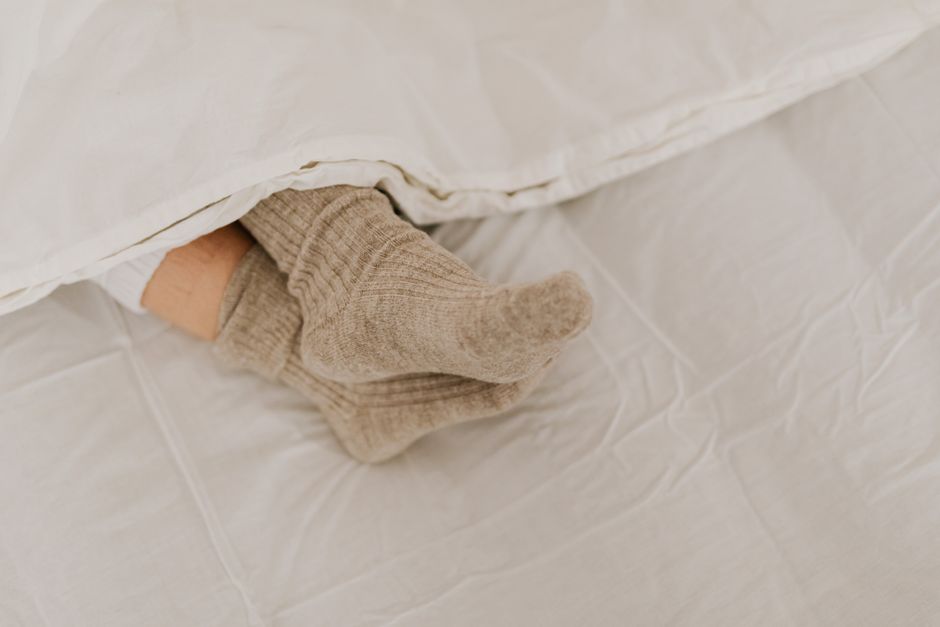
Sleeping with compression socks on is generally safe for most people and can be helpful for certain conditions, but it is not necessary for everyone. Whether you should wear them overnight depends on why you are using them, your overall health, and how your body responds. For many people, wearing them during the day provides most of the benefit, and nighttime use is reserved for specific situations.
How Do Compression Socks Actually Work?
Compression socks are designed to apply graduated pressure to your legs. The pressure is tightest at the ankle and gradually decreases as it moves up toward the knee or thigh. This design helps your veins push blood back up to your heart.
Your veins have one-way valves that keep blood moving in the right direction. When these valves weaken or become damaged, blood can pool in your lower legs. This can cause swelling, achiness, and a heavy feeling in your legs. Compression socks give your veins external support, which helps the valves work more effectively.
The pressure also helps reduce fluid buildup in the tissues of your lower legs. This is why many people notice less swelling after wearing them for several hours.
What Are the Benefits of Wearing Them at Night?
For most healthy people, the main benefit of compression socks happens during the day when you are upright. Gravity pulls blood downward, and your veins have to work harder. When you lie down at night, gravity is no longer working against you, so your veins get a natural break.
However, there are situations where nighttime use makes sense. People who have chronic venous insufficiency may benefit from wearing them overnight. This condition occurs when the veins in your legs cannot pump blood back to the heart efficiently. Some research suggests that continuous use, including at night, may help manage symptoms like swelling and skin changes.
People who stand or sit for long periods during the day often have swollen legs by evening. Wearing compression socks overnight can help reduce that swelling more quickly. Some travelers also wear them during long flights and keep them on through the night if they are sleeping in a seated position.
Another group that may benefit is people with a history of blood clots. After a deep vein thrombosis, some doctors recommend wearing compression socks to prevent post-thrombotic syndrome, a condition that causes chronic leg pain and swelling. Whether you need to wear them at night depends on your specific situation and your doctor’s advice.
Are There Any Risks to Sleeping in Compression Socks?
For most people, sleeping in compression socks is not dangerous. But there are some risks to be aware of.
Skin irritation is the most common issue. Wearing tight socks for 8 or more hours can cause redness, itching, or even breaks in the skin, especially if the socks are too tight or you have sensitive skin. If you notice any skin changes, remove the socks and check your legs.
People with peripheral artery disease should generally avoid compression socks altogether. This condition involves narrowed arteries that reduce blood flow to the legs. Compression can make this worse by further restricting blood flow. If you have peripheral artery disease, talk to your doctor before using any compression garment.
People with diabetes need to be cautious as well. Diabetes can cause nerve damage that reduces sensation in the feet. You might not notice if the socks are too tight or if they are causing pressure sores. If you have diabetes and want to use compression socks, it is best to get fitted by a professional and check your feet regularly.
Skin infections and open wounds are also reasons to avoid compression unless a doctor specifically recommends them. Compression can trap moisture and bacteria against the skin, which may worsen an existing infection.





How Tight Should Compression Socks Be?
Compression socks come in different pressure levels, measured in millimeters of mercury (mmHg). The right level depends on why you are using them.
Mild compression, around 15-20 mmHg, is commonly used for minor swelling, tired legs, and travel. This level is often available over the counter. Moderate compression, around 20-30 mmHg, is typically used for more significant swelling, varicose veins, or after certain medical procedures. This level may require a prescription depending on where you live.
Higher levels, above 30 mmHg, are usually reserved for specific medical conditions and should only be used under medical supervision. These require a proper fitting and careful monitoring.
A properly fitted sock should feel snug but not painful. You should be able to slide one finger under the top band. If the sock leaves deep indentations in your skin when you remove it, it is probably too tight. If it bunches up or slides down, it is too loose and will not provide the right pressure.
Getting professionally fitted is the best way to ensure you have the right size and pressure level. Many medical supply stores and pharmacies offer fitting services.
Should You Sleep With Compression Socks On?
The answer depends on your reason for wearing them. If you wear them during the day to manage swelling from prolonged sitting or standing, you may not need them at night. Your legs recover somewhat when you lie flat.
If you have chronic venous insufficiency or significant swelling that does not resolve overnight, wearing them while you sleep may provide extra benefit. Some doctors recommend this approach for their patients with more advanced vein disease.
For people who simply want to prevent leg discomfort or improve recovery after exercise, wearing them overnight is not necessary. The evidence for nighttime use in these situations is limited. Most of the research on compression socks focuses on daytime use or use during activity.
One important point: if you wear compression socks at night, make sure they are clean and dry each day. Wash them according to the manufacturer’s instructions and replace them when they lose their elasticity. Worn-out compression socks do not provide the right pressure and can be uncomfortable.
What About Sleeping in Them During Pregnancy?
Pregnancy increases the risk of leg swelling and varicose veins because of increased blood volume and pressure from the growing uterus. Many pregnant women find compression socks helpful during the day.
Some doctors recommend that pregnant women remove compression socks at night to allow the skin to breathe and to reduce the risk of skin irritation. Others suggest keeping them on if swelling is severe. No clinical guidelines currently exist specifically for nighttime compression sock use during pregnancy.
If you are pregnant and considering wearing compression socks at night, talk to your healthcare provider first. They can help you decide whether the potential benefits outweigh the risks for your specific situation.
When Should You Talk to a Doctor?
You should talk to a doctor before using compression socks if you have any of the following conditions:
- Peripheral artery disease
- Diabetes with nerve damage or poor circulation
- Skin infections or open wounds on your legs
- Heart failure or other conditions that cause fluid retention
- A recent blood clot
You should also see a doctor if you experience new or worsening leg pain, swelling, or skin changes while using compression socks. These could be signs of a more serious condition that needs medical attention.
If you have no underlying health conditions and simply want to try sleeping in compression socks, it is generally safe to experiment for a few nights. Pay attention to how your legs feel in the morning and check your skin for any signs of irritation.
Frequently Asked Questions
Can sleeping in compression socks cut off circulation?
Properly fitted compression socks should not cut off circulation, but socks that are too tight can restrict blood flow. If you notice numbness, tingling, or increased pain, remove the socks and consider a different size or pressure level.
How long can you wear compression socks in a 24-hour period?
Most people can wear compression socks for 12 to 16 hours a day, and many doctors recommend removing them while sleeping. Extended wear beyond 24 hours without a break increases the risk of skin irritation and should be avoided unless a doctor specifically recommends it.
Do compression socks help with restless legs at night?
Some people report that compression socks ease restless leg symptoms, but the evidence is limited and results vary. If you have restless legs syndrome, talk to your doctor about treatments that have stronger research support.
Is it okay to wear compression socks every night?
Wearing them every night is generally safe if the socks fit properly and your skin stays healthy. However, if you do not have a medical reason for nighttime use, giving your legs a break at night is usually fine.
