
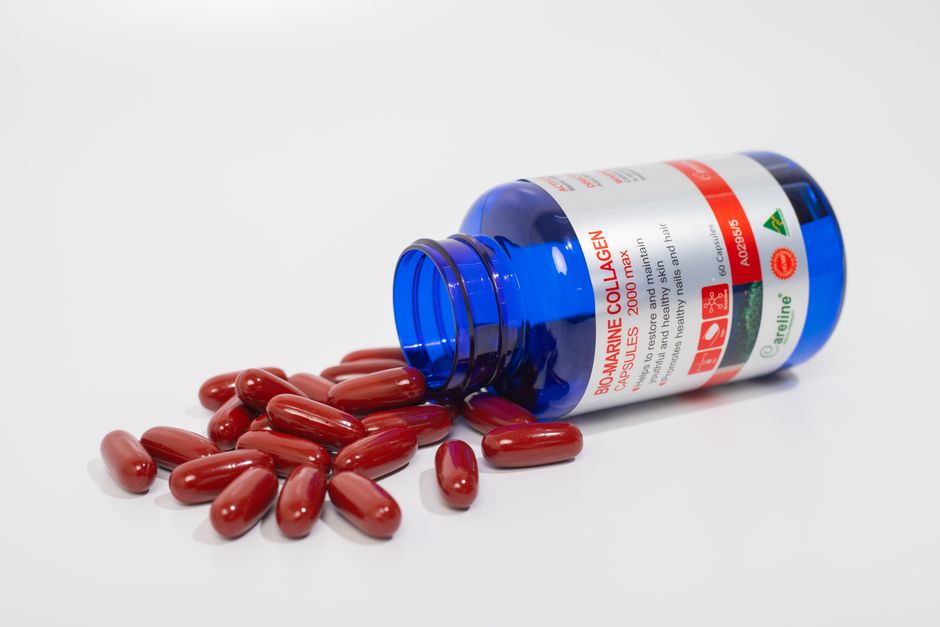
Collagen is the most abundant protein in your body. It gives structure to skin, bones, tendons, ligaments, and cartilage. Collagen supplements are marketed for wrinkles, joint pain, and hair and nail strength, but the evidence behind them is uneven. Some small trials show modest benefits for skin elasticity and joint discomfort. Others show little or nothing. If you are healthy and eat enough protein, your body makes its own collagen. Whether a supplement adds anything on top of that is genuinely unclear. Here is what the research actually shows.
What Is Collagen and What Does It Do in Your Body?
Collagen is a structural protein. It forms a scaffold that holds tissues together and gives them the ability to stretch and bear weight. There are at least 28 known types, but types I, II, and III make up most of the collagen in the human body.
Type I is the main collagen in skin, bone, tendons, and ligaments. Type II is concentrated in cartilage. Type III supports skin and blood vessel walls. The body assembles all of them from amino acids — primarily glycine, proline, and hydroxyproline — through a process that requires vitamin C.
Collagen production peaks in your twenties and gradually declines with age. This decline is real and measurable. It contributes to thinner skin, stiffer joints, and weaker connective tissue over time. That decline is also part of normal aging, not a deficiency disease.
Your diet supplies the raw materials. Gelatin and collagen-rich foods like bone broth contain the same amino acids found in supplements. Your body breaks dietary collagen into individual amino acids and then uses them wherever they are needed — not necessarily to rebuild skin or joints.
Should You Be Taking Collagen for Your Skin?
Some small clinical trials have found that daily collagen supplements improve skin elasticity and hydration compared to a placebo. Most of these trials enrolled fewer than 100 participants and ran for 8 to 12 weeks. The measured changes were modest.
A review published in the International Journal of Dermatology examined multiple randomized controlled trials and concluded that collagen supplementation showed some promise for skin aging. The authors also noted that study quality varied and that longer-term data are lacking.
The mechanism is debated. When you swallow collagen, digestive enzymes break it into short chains of amino acids called peptides and then into single amino acids. These do not travel intact to your skin. Some researchers propose that the peptides act as signaling molecules that prompt fibroblasts — the cells that make collagen — to produce more. That is a hypothesis supported by some laboratory work, not a settled fact.
An important point that often gets lost: your body cannot tell whether an amino acid came from a collagen supplement, a chicken breast, or a bowl of beans. What matters for collagen synthesis is having enough total protein and enough vitamin C. If your diet is already adequate in both, adding collagen may not change much.
Does Collagen Help With Joint Pain?
Evidence for joint benefits is mixed. Several small trials in athletes and in people with knee osteoarthritis have reported reductions in joint pain with collagen supplementation. Other trials found no difference from placebo.
A commonly cited trial published in the journal Nutrients studied adults with knee osteoarthritis and reported improved symptoms in the collagen group compared to placebo. The study was relatively small and industry-funded, which does not invalidate it but does warrant caution.
Collagen is not a recognized disease-modifying treatment for osteoarthritis. No major rheumatology guideline lists it as a recommended therapy. Some clinicians suggest it as an option for patients who want to try something low-risk alongside standard care. That is a reasonable framing — but it is different from saying the evidence proves it works.
Physical therapy, weight management where relevant, and appropriate pain medication remain the approaches with the strongest supporting evidence for knee osteoarthritis.



What About Hair, Nails, and Muscle?
Hair and nail claims rest on thin evidence. A few small studies have reported improvements in nail brittleness and hair thickness with collagen supplementation. These studies are typically short, small, and sometimes funded by supplement makers. No large independent trial has confirmed these effects.
For muscle, the picture is different. Collagen is an incomplete protein. It lacks tryptophan, an essential amino acid, and is low in several others. That makes it a poor choice as a primary protein source for muscle building or recovery compared to whey, eggs, or soy.
Some research has looked at collagen peptides combined with resistance training and vitamin C for tendon and ligament health. Results have been mixed. This is an active area of study, not an established protocol.
What Forms of Collagen Are Available?
Collagen supplements come in several forms. The form matters less than the dose and the type, though absorption differences exist.
- Hydrolyzed collagen (peptides): Broken into smaller pieces for easier absorption. Most studied form.
- Gelatin: Partially hydrolyzed collagen. Less processed than peptides. Dissolves in warm liquids.
- Undenatured collagen: Native, intact collagen. Used in some joint supplements. Absorption is limited.
- Type II collagen: Specifically marketed for cartilage and joints. Often sold as undenatured.
Marine collagen and bovine collagen differ mainly in amino acid profile and source. Marine collagen tends to be higher in type I. Bovine collagen contains more type III. Whether one works better than the other in humans has not been clearly established.
Collagen is also sold as pills, powders, capsules, and liquids. Powders are usually the most economical per gram. There is no strong evidence that liquid forms absorb better, despite marketing claims.
Are There Risks or Downsides?
For most healthy adults, collagen supplements appear to be well tolerated. Reported side effects are generally mild — bloating, fullness, or minor digestive discomfort.
People with allergies to fish, shellfish, or eggs should check the source carefully. Marine collagen comes from fish. Some products may contain traces of allergens from processing.
Because collagen is a protein, it contributes to your daily protein intake. That matters if you have kidney disease and have been advised to limit protein. Talk to your doctor before adding any protein supplement in that situation.
Collagen supplements are not regulated the same way medications are. In the United States, they fall under dietary supplement rules. That means the FDA does not verify their content, purity, or claims before they are sold. Independent testing has found that some products contain less collagen than the label states, or contain contaminants. Third-party testing seals can help identify more reliable products, though they are not a guarantee.
No clinical guidelines currently exist for collagen supplementation in pregnant women, breastfeeding women, or children. There is not enough safety data to make a recommendation for these groups.
Can You Get Collagen From Food Instead?
Yes. Collagen and gelatin are found in bone broth, skin-on poultry, fish skin, and gelatin-based foods. These provide the same amino acids as supplements.
But the more important question is whether you are getting enough total protein and vitamin C. Your body needs both to synthesize collagen. Good protein sources include meat, fish, eggs, dairy, beans, and soy. Vitamin C is found in citrus, bell peppers, strawberries, broccoli, and tomatoes.
If your diet is already adequate in protein and vitamin C, the marginal benefit of a collagen supplement is uncertain. If you eat little protein overall, a collagen supplement adds some — but an incomplete one.
What Does the Evidence Actually Support?
Here is a plain summary of where things stand:
- Skin: Some small trials suggest modest improvements in elasticity and hydration. Evidence quality is moderate at best.
- Joints: Mixed results. Some trials show pain reduction, others show none. Not a guideline-recommended treatment.
- Hair and nails: Weak evidence. No large independent trials confirm benefit.
- Muscle: Poor protein source due to incomplete amino acid profile.
- Safety: Appears well tolerated in healthy adults. Not established for pregnancy, breastfeeding, or children.
The honest position is that collagen supplements are not harmful for most people, but the evidence for their benefits is not strong enough to call them necessary. They are not a substitute for adequate dietary protein, and they are not a proven treatment for any medical condition.
Frequently Asked Questions
Does collagen actually work for wrinkles?
Some small trials show modest improvements in skin elasticity and hydration, but the evidence is not strong enough to call it proven. Results vary, and most studies were short and small.
How long does it take for collagen supplements to work?
Most studies that reported benefits ran for 8 to 12 weeks. If you see no change after three months, the evidence suggests you are unlikely to see one later.
Is it safe to take collagen every day?
For most healthy adults, daily collagen appears well tolerated with only mild digestive side effects reported. No safety data exist for pregnant women, breastfeeding women, or children.
Can I get collagen from food instead of supplements?
Yes. Bone broth, gelatin, and skin-on poultry contain the same amino acids. Your body also makes its own collagen if you eat enough protein and vitamin C.
