
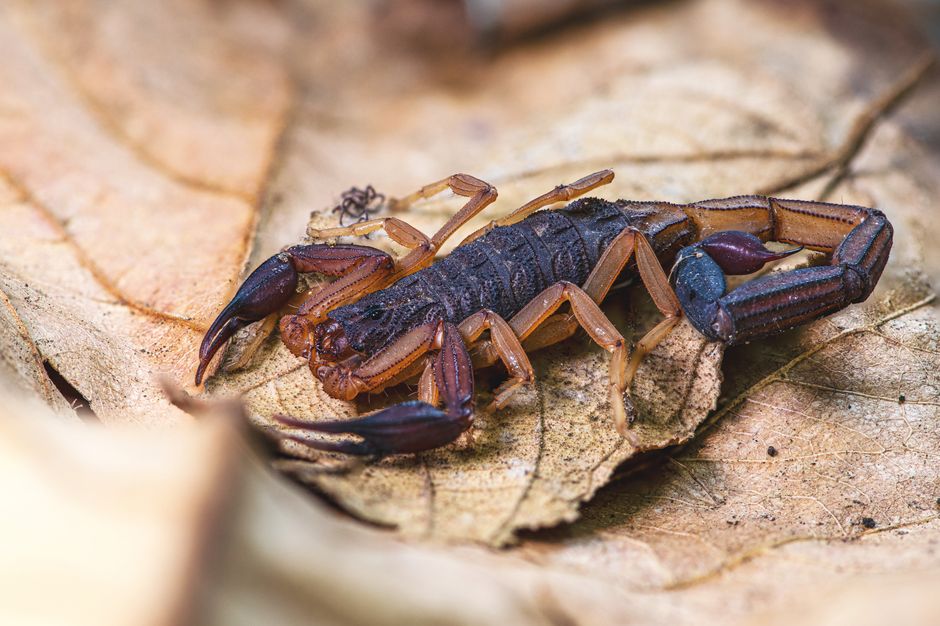
Almost all scorpions are venomous. The real question is whether a given scorpion’s venom is dangerous to humans. In the United States, only one family of scorpions — the bark scorpions, including Centruroides sculpturatus in Arizona and neighboring states — produces venom that can cause serious medical harm. Every other scorpion you are likely to encounter in North America can sting, and it will hurt, but its venom is not considered life-threatening to a healthy adult.
How To Tell If A Scorpion Is Poisonous Or Safe
You cannot reliably identify a dangerous scorpion by color, size, or how aggressive it looks. The features that actually matter are the thickness of the tail and the size of the pincers.
Scorpions with thick, heavy tails and small, slender pincers tend to rely on venom as their main defense and to subdue prey. Scorpions with thin tails and large, robust pincers tend to crush prey instead of stinging it, and their venom is usually weaker. This is a general pattern, not a rule you can bet your safety on.
In the US, the scorpion of real concern is the Arizona bark scorpion and its close relatives. It is small, pale yellow to tan, and has a thin tail. That combination — small body, slender tail — is the opposite of what most people expect from a “dangerous” animal. This is exactly why appearance-based guessing fails.
What actually keeps people safe is not identification. It is avoidance and location awareness.
- Shake out shoes, clothing, and bedding before use in scorpion regions.
- Wear gloves when moving rocks, firewood, or debris.
- Do not walk barefoot outdoors at night in desert areas.
- Check tents, sleeping bags, and shoes before climbing in.
- Use a blacklight — scorpions fluoresce under UV light, which makes them easier to spot at night.
If you are stung and you are not in the range of the Arizona bark scorpion, the sting is usually painful but not dangerous for a healthy adult. If you are in that range, treat any sting as potentially serious and seek medical evaluation, especially for children.
Which Scorpions Are Actually Dangerous?
Worldwide, roughly a few dozen scorpion species out of more than 2,000 are considered medically significant. The dangerous ones cluster in a few groups, most notably the bark scorpions of North America and several Androctonus, Leiurus, and Tityus species found in parts of Africa, the Middle East, and South America.
In the United States, the Arizona bark scorpion is the only species widely recognized as capable of causing severe symptoms in healthy people. It is found primarily in Arizona, but also in parts of New Mexico, Nevada, Utah, California, and Texas near the border.
This matters because most scorpion stings in the US happen in the Southwest. If you live or travel there, the bark scorpion is the one to know. If you are anywhere else in the country, the scorpions you meet are far less likely to cause anything beyond a painful sting.
What Does A Dangerous Scorpion Sting Feel Like?
A bark scorpion sting often causes intense, immediate pain that can feel like an electric shock. The pain may spread, and some people describe tingling, numbness, or a buzzing sensation in the stung limb.
More serious signs include:
- Muscle twitching or spasms
- Restlessness or agitation
- Increased heart rate and blood pressure
- Difficulty swallowing or excessive salivation
- Blurred vision or roving eye movements
- In children, uncontrolled crying, jerking movements, or trouble breathing
These symptoms reflect the venom’s effect on nerve signaling. Bark scorpion venom contains neurotoxins that keep sodium channels in nerve cells open longer than normal. That leads to repeated firing of nerves and muscles. This is why the effects look neurological rather than like a typical wound reaction.
A sting from a non-dangerous scorpion usually causes localized pain, redness, and swelling. Symptoms typically stay near the sting site and ease over hours to a day or two. Some people have a mild allergic reaction, which can look like hives or swelling beyond the sting area.





Who Is Most At Risk From A Scorpion Sting?
Children are at the highest risk of severe outcomes from bark scorpion stings. Their smaller body mass means a given amount of venom has a larger relative effect. This is the single most important risk factor.
Older adults and people with heart conditions or other chronic illnesses may also have a harder time with a serious sting. The venom can stress the cardiovascular system, and underlying disease can make that stress more dangerous.
For a healthy adult stung by a non-dangerous scorpion, the risk of anything beyond local pain is low. For a healthy adult stung by an Arizona bark scorpion, the risk is real but usually manageable with medical care. Deaths are rare in the US, largely because of better access to supportive care.
One non-obvious point: the number of stings does not reliably predict severity. A single sting from a highly venomous species can be worse than several stings from a mild one. Species matters more than sting count.
What Should You Do After A Scorpion Sting?
Move away from the scorpion to avoid another sting. Wash the area with soap and water. Apply a cool compress to ease pain. Keep the stung limb still and at about heart level if possible.
Do not cut the wound, try to suck out venom, or apply a tight tourniquet. These do nothing useful and can cause harm.
Over-the-counter pain relievers can help with mild pain. Some clinicians recommend them for local discomfort. If pain is severe or you notice any neurological symptoms, skip the wait-and-see approach and get medical care.
Call emergency services or go to an emergency department if:
- The person stung is a child
- Symptoms are spreading beyond the sting site
- There is muscle twitching, trouble swallowing, or breathing difficulty
- The sting occurred in Arizona or a nearby state where bark scorpions live
- You are unsure what stung you
Antivenom exists for bark scorpion stings in the US, but it is not given to everyone. It is typically reserved for severe cases, and decisions are made by clinicians based on symptoms. This is another reason not to manage a suspected bark scorpion sting at home.
Can You Prevent Scorpion Stings?
Most stings happen when people reach into or step on a place a scorpion is resting. Reducing that contact is the core of prevention.
Seal gaps around doors and windows. Repair torn screens. Keep bedding off the floor. Store shoes off the ground or shake them out before wearing. Clear debris, woodpiles, and rock stacks away from the house, since these are common hiding spots.
At night in scorpion country, wear closed shoes and use a flashlight. A UV blacklight makes scorpions easier to see because their exoskeleton glows under ultraviolet light. This is a genuine and well-documented property, not a myth.
Pest control can reduce scorpion numbers around a home, but no method eliminates them entirely. Scorpions are hardy and can survive many common pesticides. Physical exclusion and careful habits do more than spraying alone.
Common Myths About Scorpion Safety
One widespread myth is that you can judge danger by tail size alone. A thick tail does not mean “more dangerous.” In fact, many of the most medically significant scorpions have relatively slender tails and small pincers.
Another myth is that baby scorpions are more dangerous than adults. They are not. They have less venom, though their smaller size can make them harder to notice.
A third myth is that scorpions chase people. They do not. They sting when threatened or trapped. Most stings are accidental contact, not pursuit.
Finally, the idea that “all scorpions are deadly” is false. The vast majority cause pain, not lasting harm. The opposite idea — that “it’s just a scorpion, it’s fine” — is also false in bark scorpion territory. Both extremes lead to bad decisions.
Frequently Asked Questions
Can you tell a poisonous scorpion by its color?
No. Color is not a reliable indicator of venom danger, and some of the most medically significant scorpions are pale. The Arizona bark scorpion is a good example of a small, light-colored scorpion that can cause serious symptoms.
Are all scorpions venomous?
Yes, all scorpions produce venom, but only a small minority of species are dangerous to humans. Most stings cause pain and local swelling without serious harm.
What should I do if a child is stung by a scorpion?
Seek emergency medical care right away, even if the child seems fine at first. Children are at higher risk of severe reactions, and symptoms can worsen quickly.
Do scorpions glow under blacklight?
Yes, scorpions fluoresce under ultraviolet light, which makes them easier to spot at night. This is a well-established property of their exoskeleton, though it fades after molting.
