
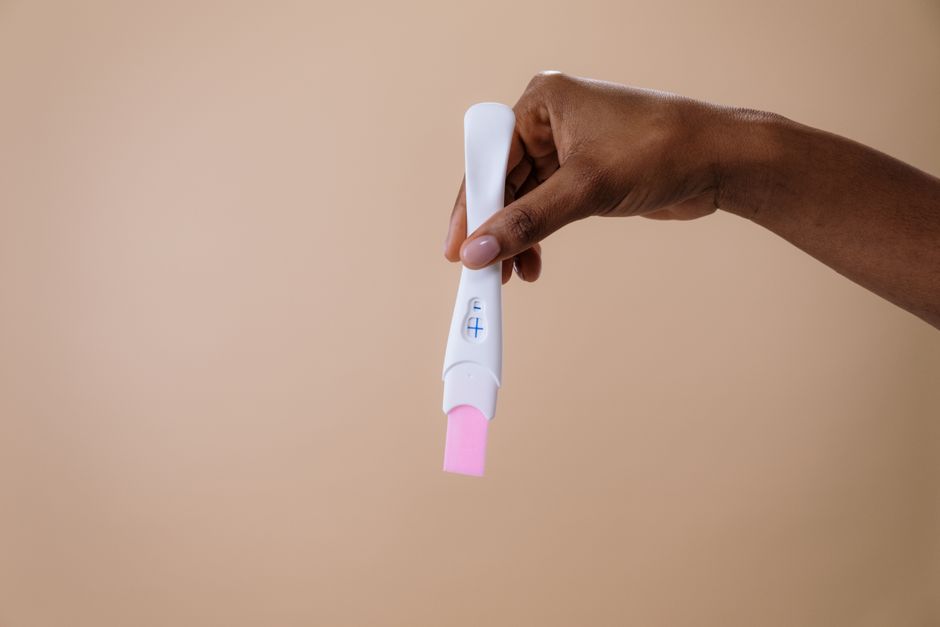
If you take a pregnancy test every day and line them up, you might expect the second line to get darker as the days pass. That does happen for some people, but it is not a rule. A pregnancy test line getting darker over time can be a reassuring sign, but a line that stays the same or even looks lighter does not automatically mean something is wrong. Home pregnancy tests are designed to answer one question — pregnant or not — not to track how a pregnancy is progressing.
How Home Pregnancy Tests Actually Work
Home pregnancy tests detect a hormone called human chorionic gonadotropin, or hCG. This hormone is produced by the cells that will eventually form the placenta. It shows up in urine and blood after a fertilized egg implants in the uterus.
The test uses antibodies that bind to hCG. When hCG is present, a chemical reaction creates a colored line or a plus sign. Most tests have a control line that appears regardless of hCG, confirming the test worked correctly. The test line only appears when hCG is detected.
What many people do not realize is that the test line is not a measurement. It is a threshold response. Once hCG crosses a certain level, the line appears. It may get slightly darker as hCG rises, but the intensity depends on many factors that have nothing to do with the health of the pregnancy.
Does a Darker Line Mean Higher hCG?
Sometimes, yes. But the relationship is not reliable enough to use as a tracking tool. Several things affect how dark a line looks:
- Urine concentration. If you are dehydrated or use first-morning urine, hCG is more concentrated. If you drank a lot of water, it is more diluted. The same hCG level can produce different line intensities on different days.
- Test brand and sensitivity. Different tests detect different minimum levels of hCG. A test sensitive to 10 mIU/mL will show a line earlier than one sensitive to 25 mIU/mL. Comparing lines across brands is meaningless.
- Time since ovulation or implantation. hCG roughly doubles every 48 to 72 hours in early pregnancy, but the starting point varies. A person who implanted later will have lower hCG at the same point in their cycle.
- Test timing and evaporation. Reading a test after the recommended window can show an evaporation line that looks like a faint positive. This is not hCG.
Because of all these variables, two tests taken 24 hours apart by the same person can look different even if hCG is rising normally. And two tests taken by different people at the same hCG level can look completely different.
Why the Line Might Not Get Darker
A line that stays faint or does not darken over several days can worry people. Sometimes that worry is justified. Sometimes it is not.
If hCG is rising normally, the line should generally get darker within a few days, assuming you are using the same brand and testing under similar conditions. But “generally” is not “always.” Many people report faint lines that never seem to progress, yet the pregnancy continues normally. Others see lines darken beautifully and then learn the pregnancy is not viable.
The line is a rough visual signal. It is not a diagnostic tool for pregnancy viability. Only a healthcare provider can assess that through blood tests and ultrasound.





When Should You Stop Testing Daily?
Once you have a clear positive result, there is usually no medical reason to keep testing. Repeating the test does not change the outcome. It does not predict miscarriage. It does not confirm that hCG is rising appropriately.
If you are concerned about whether the pregnancy is progressing, contact your healthcare provider. They can order quantitative blood tests that measure the exact amount of hCG. These are far more informative than comparing line darkness on urine tests.
Some people find that stopping daily testing reduces anxiety. Others find it hard to stop. Both responses are understandable. But it helps to know that the test was never designed to give you the information you are looking for.
What Causes a Faint Line to Appear Then Disappear?
A faint line that fades or disappears on a later test can happen for a few reasons.
Chemical pregnancy. This is a very early miscarriage that happens shortly after implantation. hCG rises enough to trigger a positive test, then falls. Many people would not know they were pregnant without testing early. Research suggests chemical pregnancies are common, though exact numbers are hard to pin down because many go unnoticed.
Test error. Sometimes a faint line is not a true positive. Evaporation lines, faulty tests, or reading the test outside the recommended time can all create a line that looks real but is not.
Variation in urine concentration. A faint line on one day and no line the next could simply mean your urine was more diluted the second time. This is especially common if you tested at different times of day or drank different amounts of water.
If you had a positive test and now have a negative one, or if you are bleeding or cramping, contact your healthcare provider. They can help you understand what is happening.
Can You Use Line Darkness to Compare Pregnancies?
No. Every pregnancy starts with different hCG levels and rises at different rates. Comparing your current test lines to a previous pregnancy, or to someone else’s tests, tells you nothing useful.
Some people post photos of their test progressions online and ask others to interpret them. This can be emotionally supportive, but it is not medically reliable. The people commenting cannot see your test in person, do not know your hydration status, and are not your healthcare provider.
If you are trying to conceive after a loss, or if you have a history of miscarriage, daily testing can become a source of stress rather than reassurance. It may help to talk with your provider about what monitoring makes sense for your situation.
What the Evidence Says About Test Line Progression
There is very little research on whether home pregnancy test line darkness correlates with pregnancy outcomes. The tests were approved for qualitative detection — yes or no — not for tracking hCG trends. No major medical organization recommends using line darkness to monitor early pregnancy.
This does not mean your observations are meaningless. It means the test is not built to give you the information you are seeking. If you want to know whether hCG is rising appropriately, a blood test is the right tool. If you want to know whether the pregnancy is viable, an ultrasound is the right tool. A urine test line is neither.
Some people find that taking a test every day helps them feel more in control. If that is true for you, there is no harm in it as long as you understand its limits. But if daily testing is making you more anxious, it may be worth stepping back.
When to Call Your Healthcare Provider
Contact your provider if you have a positive pregnancy test and then develop bleeding, cramping, or pass tissue. Also call if you have a positive test followed by negative tests over several days, or if you have symptoms like severe pain or dizziness.
If you are unsure whether you are pregnant, a blood test can give you a clear answer. Blood tests can detect hCG earlier than urine tests and can measure the exact level. Your provider can also check whether hCG is rising as expected over 48 hours.
For most people, the next step after a positive home test is simply to schedule a prenatal visit. The test did its job. The rest of the information you need will come from your provider, not from a line on a stick.
Frequently Asked Questions
Should a pregnancy test get darker each day?
Not necessarily. A darker line usually means higher hCG, but urine concentration, test brand, and timing all affect how dark the line looks. The test is designed to give a yes-or-no answer, not to track daily changes.
Why is my pregnancy test line getting lighter?
A lighter line can mean hCG is falling, which may happen with a chemical pregnancy or early miscarriage. It can also mean your urine was more diluted or you used a different test. Only a blood test can confirm what is happening.
How long should I keep testing after a positive result?
There is no medical reason to keep testing once you have a clear positive. If you have concerns about the pregnancy, contact your healthcare provider rather than repeating urine tests.
Can a faint line mean I am not pregnant?
A faint line can be a true positive if you tested early, or it can be an evaporation line if you read the test too late. Check the result within the time window listed in the instructions and confirm with another test or a blood test if unsure.
