
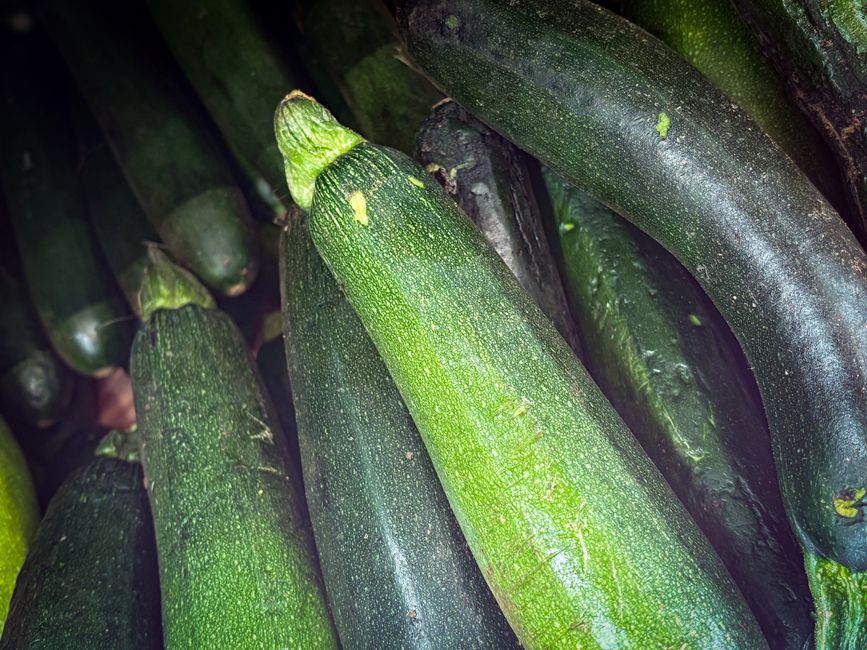
Yes, zucchini is a green squash. More specifically, it is a type of summer squash. Botanically, it is a fruit, but in cooking and agriculture, it is treated as a vegetable. All zucchini are squash, but not all squash are zucchini.
What Exactly Is a Green Squash?
The term “green squash” is not a strict botanical category. It is a casual way to describe any squash with green skin that is harvested while immature. Zucchini fits this description perfectly.
Squash falls into two main groups: summer squash and winter squash. Summer squash has soft skin and is eaten before the rind hardens. Winter squash has thick, hard skin and is harvested fully mature. Zucchini is a summer squash, along with yellow squash and pattypan squash.
Green skin alone does not make something a zucchini. Some winter squash varieties, like acorn squash or kabocha, also have green skin. The difference comes down to maturity, texture, and how the squash is used.
Is Zucchini A Green Squash By Botanical Definition?
Botanically, zucchini is a fruit because it develops from the flower of the plant and contains seeds. The plant itself is Cucurbita pepo, the same species that includes pumpkins, acorn squash, and some gourds.
In botanical terms, all squash fruits are part of the gourd family, Cucurbitaceae. So when someone asks “is zucchini a green squash,” the accurate answer is yes, but the more precise answer is that it is a summer squash fruit from the species Cucurbita pepo.
The confusion happens because people use the word “squash” loosely. In grocery stores and kitchens, “squash” refers to the edible product. In botany, it refers to a specific fruit type. Both definitions apply to zucchini.
How Zucchini Differs From Other Green Squash
Zucchini is long and cylindrical with a slight bulge at the blossom end. Its skin is typically dark green, though some varieties are lighter green or even yellow. The flesh is pale green or white and has a high water content.
Other green squash look different. Acorn squash is small, ribbed, and shaped like an acorn. Its skin is dark green with orange patches. But acorn squash is a winter squash, not a summer squash. It has hard skin and dense, sweet flesh that requires longer cooking.
Pattypan squash can be green, yellow, or white. It is flattened and scallop-edged. Like zucchini, it is a summer squash and is harvested young.
Green pumpkin varieties also exist. These are winter squash and are not eaten the same way as zucchini.




Nutritional Profile of Zucchini
Zucchini is low in calories and high in water. A medium zucchini contains about 33 calories and provides around 2 grams of protein and 2 grams of fiber.
It is a good source of vitamin C, vitamin B6, and manganese. It also contains smaller amounts of potassium, folate, and vitamin A. The skin holds most of the fiber and some nutrients, so washing and eating the skin is recommended.
Zucchini is not a significant source of protein or fat. Its main value in a diet is as a low-calorie, nutrient-dense vegetable that adds volume and hydration to meals.
Compared to winter squash, zucchini has far fewer carbohydrates and calories. A cup of cooked acorn squash has about 115 calories and 30 grams of carbohydrates. A cup of cooked zucchini has about 27 calories and 7 grams of carbohydrates.
Can You Eat Zucchini Raw?
Yes, raw zucchini is safe to eat. Many people slice it into salads, use it as a dip vehicle, or spiralize it into noodles. Raw zucchini has a mild flavor and a crisp texture.
The skin is edible and contains fiber. Washing it thoroughly under running water removes dirt and any surface residue. No special peeling is required.
One note: raw zucchini may taste slightly bitter in rare cases. This bitterness comes from compounds called cucurbitacins, which are naturally present in the gourd family. Commercial varieties are bred to have very low levels of these compounds, so bitterness is uncommon in store-bought zucchini.
If a zucchini tastes strongly bitter, do not eat it. High levels of cucurbitacins can cause stomach upset. This is rare but has been reported in homegrown squash that cross-pollinated with ornamental gourds.
How to Cook Zucchini
Zucchini cooks quickly because of its high water content. Sautéing, grilling, roasting, and steaming all work well. Overcooking turns it mushy, so short cooking times are best.
Sliced zucchini sautéed in olive oil with garlic takes about 5 to 7 minutes. Grilled zucchini slices take about 3 to 4 minutes per side. Roasted zucchini takes 15 to 20 minutes at 425°F.
Zucchini also works in baked goods. Grated zucchini adds moisture to breads, muffins, and cakes. The water content means you often need to squeeze out excess liquid before adding it to batter.
Spiralized zucchini, often called “zoodles,” is a popular low-carb substitute for pasta. It cooks in 2 to 3 minutes in a hot pan. It does not hold up as well as wheat pasta, so it is best served immediately.
Common Zucchini Myths
One common myth is that zucchini must be peeled before eating. It does not. The skin is thin, tender, and nutritious.
Another myth is that larger zucchini are better. The opposite is true for flavor and texture. Small to medium zucchini, about 6 to 8 inches long, have the best taste and fewest seeds. Large zucchini can be woody and full of tough seeds.
Some people believe zucchini is a hybrid of cucumber and squash. It is not. Zucchini is a distinct variety of Cucurbita pepo that originated in the Americas. It was developed in Italy in the 19th century, which is why it is central to Italian cooking.
A fourth myth is that zucchini has no nutritional value. It is not a superfood, but it does provide vitamin C, potassium, and fiber with very few calories. Its value comes from being a low-energy-density food that helps with satiety and hydration.
How to Select and Store Zucchini
Choose zucchini that feels heavy for its size and has glossy, unblemished skin. It should feel firm, not soft or rubbery. Small to medium sizes are best for flavor.
Store zucchini in the refrigerator in a plastic bag. It will keep for about 4 to 5 days. Do not wash it until you are ready to use it, since moisture encourages spoilage.
Zucchini does not freeze well raw because of its high water content. If you want to freeze it, blanch slices in boiling water for about 2 minutes, then cool them in ice water and pack them in freezer bags. Frozen zucchini works best in cooked dishes, not raw preparations.
Frequently Asked Questions
Is zucchini the same as green squash?
Yes, zucchini is a type of green summer squash. The term “green squash” is informal and can include other varieties, but zucchini is the most common one.
What is the difference between zucchini and yellow squash?
Zucchini is typically dark green and cylindrical, while yellow squash is bright yellow with a similar shape. Both are summer squash with similar nutritional profiles and cooking uses.
Can you substitute zucchini for other summer squash in recipes?
Yes, zucchini can replace yellow squash or pattypan squash in most recipes. They have similar water content, texture, and cooking times.
Is zucchini a fruit or a vegetable?
Botanically, zucchini is a fruit because it develops from a flower and contains seeds. In culinary terms, it is prepared and eaten as a vegetable.
