
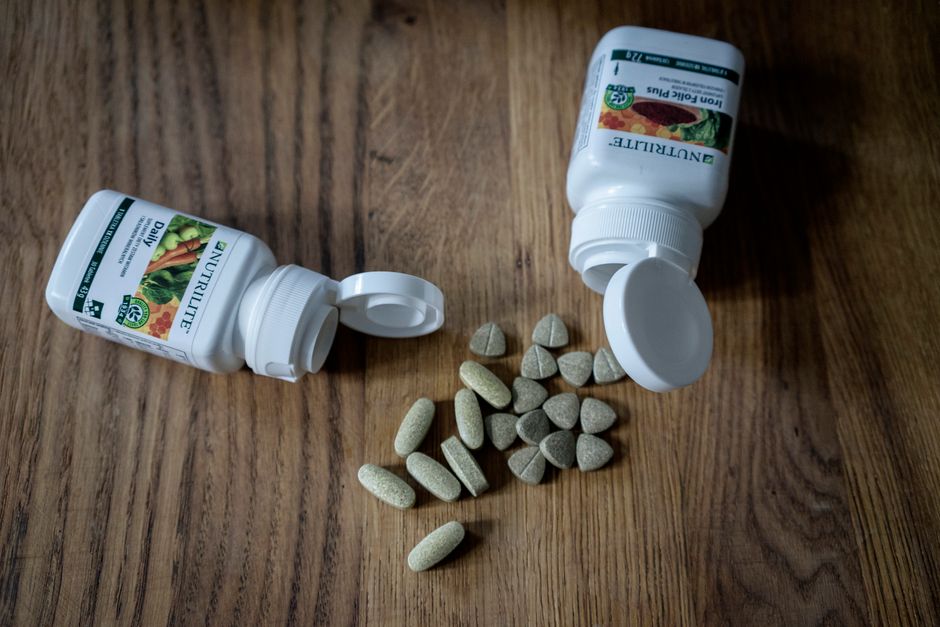
No, vitamin B6 and folic acid are two different vitamins. They are often grouped together because both belong to the B-complex family, both are water-soluble, and both play roles in how your body uses protein and builds new cells. But they are separate nutrients with separate jobs, separate food sources, and separate deficiency patterns.
Confusing them is understandable. They show up side by side on supplement labels and in the same multivitamin. Some research even studies them together. Yet treating them as interchangeable can lead to the wrong supplement, the wrong dose, or missed information about what your body actually needs.
What Is Vitamin B6?
Vitamin B6 is not one single compound. It is a group of related compounds, and the one most active in the human body is called pyridoxal 5′-phosphate, or PLP. Nearly all of the B6 in your blood is in this form.
PLP works as a coenzyme. That means it helps other enzymes do their jobs. More than 100 enzymes depend on vitamin B6 to function. These enzymes are involved in breaking down proteins, making certain neurotransmitters, and helping convert food into usable energy.
Because B6 touches so many systems, a shortage can show up in different ways. Signs may include skin rashes, a sore tongue, confusion, and a weakened immune response. Severe deficiency can affect the nerves, though this is uncommon in people eating a varied diet.
Food sources of vitamin B6 include poultry, fish, potatoes, chickpeas, bananas, and fortified cereals. The body does not store much B6, so you need a steady supply from food.
What Is Folic Acid?
Folic acid is the man-made form of folate, a natural B vitamin. Folate occurs naturally in foods like leafy greens, beans, peanuts, and citrus fruits. Folic acid is the synthetic version used in supplements and added to fortified foods such as enriched grains.
Your body uses folate to make DNA and RNA, and to help cells divide. This makes it especially important during periods of rapid growth, like pregnancy and infancy.
The most well-known role of folate involves preventing a type of birth defect called a neural tube defect. The neural tube forms the brain and spinal cord early in pregnancy, often before a person knows they are pregnant. Research consistently shows that getting enough folic acid before and during early pregnancy lowers the risk of these defects.
Because of this, many countries fortify grain products with folic acid. In the United States, this fortification began in the late 1990s, and it has been linked to a drop in neural tube defects.
Is Vitamin B6 the Same as Folic Acid?
They are not the same. Vitamin B6 and folic acid are distinct vitamins with different chemical structures and different roles in the body. B6 is central to protein metabolism and neurotransmitter production, while folate is central to DNA synthesis and cell division.
They do overlap in one area. Both help regulate homocysteine, an amino acid in the blood. High homocysteine levels are associated with certain health risks, and both B6 and folate are involved in breaking it down. This shared role is one reason the two are often studied together.
But sharing a pathway does not make them the same nutrient. You cannot substitute one for the other. A deficiency in B6 will not be fixed by folate, and a folate deficiency will not be fixed by B6.




How Do Their Functions Differ in the Body?
The clearest way to tell them apart is to look at what each one does.
- Vitamin B6 helps break down proteins, supports the making of neurotransmitters like serotonin and dopamine, and helps release glucose from stored energy.
- Folate helps build DNA and RNA, supports cell division, and is needed for the normal formation of red blood cells.
Both are water-soluble, meaning your body flushes out what it does not use and does not store large amounts. That is why you need them regularly from food.
One non-obvious point: the word “folic acid” and the word “folate” are not fully interchangeable either. Folate is the natural form found in food. Folic acid is the synthetic form. The body absorbs them somewhat differently, which matters in some clinical settings.
Which Foods Contain Each Vitamin?
Most people get both vitamins from a varied diet. The table below shows common sources of each.
| Vitamin | Common Food Sources |
|---|---|
| Vitamin B6 | Poultry, fish, potatoes, chickpeas, bananas, fortified cereals |
| Folate (natural) | Leafy greens, beans, peanuts, citrus fruits, liver |
| Folic acid (synthetic) | Supplements, fortified grains, enriched bread and pasta |
Because folic acid is added to many grain products, most people in countries with fortification get enough from food alone. Vitamin B6 is widely available in both plant and animal foods.
Can You Be Deficient in One but Not the Other?
Yes. A deficiency in one does not automatically mean a deficiency in the other. They come from different foods and are used differently, so shortages can happen independently.
Folate deficiency is more common than many people realize. It can cause a type of anemia where red blood cells become unusually large. It can also cause fatigue, mouth sores, and a swollen tongue. Low folate is seen more often in people with heavy alcohol use, certain digestive conditions, and pregnancy.
Vitamin B6 deficiency is less common in healthy people but does occur. It is seen more often in people with kidney disease, certain liver conditions, and in those taking some medications long-term. Some medications used to treat tuberculosis and Parkinson’s disease can lower B6 levels.
Because the symptoms of both deficiencies can overlap, a doctor usually checks blood levels to tell them apart rather than guessing.
Can You Take Them Together?
Yes, they are often taken together, and many multivitamins include both. They do not compete with each other, and there is no known reason they cannot be taken at the same time.
Dosing is where caution matters. Both vitamins have established recommended daily amounts, but the safe upper limits differ. For vitamin B6, long-term high doses can cause nerve damage, a condition called peripheral neuropathy. This has been documented in people taking large doses over extended periods.
Folic acid also has an upper limit for the synthetic form. Taking very high amounts over time can mask a vitamin B12 deficiency, which is a separate and serious concern.
Because of these risks, it is worth talking to a doctor before taking high-dose supplements of either vitamin, especially for long periods. Standard multivitamins generally stay within safe ranges, but individual high-dose products may not.
Do You Need Supplements?
Most people who eat a varied diet do not need to supplement either vitamin. Food sources are usually enough to meet daily needs.
There are exceptions. People who are pregnant or planning to become pregnant are generally advised to get folic acid from a supplement or fortified foods, because food alone may not provide enough during that window. This is one of the more well-established recommendations in preventive health.
For vitamin B6, supplementation is usually reserved for people with a confirmed deficiency or a condition that lowers B6 levels. Routine B6 supplementation in healthy adults is not strongly supported by evidence for most outcomes.
The evidence is mixed on whether these vitamins provide benefits beyond correcting a deficiency. Some studies have looked at B6 and folate for heart health and mood, but results vary, and no large trials have confirmed clear benefits for the general population.
Frequently Asked Questions
Is vitamin B6 the same as folic acid?
No, they are two separate B vitamins with different roles in the body. Vitamin B6 supports protein metabolism and neurotransmitters, while folic acid supports DNA synthesis and cell division.
Can I take vitamin B6 and folic acid together?
Yes, they are commonly taken together and do not interfere with each other. Many multivitamins include both in safe amounts.
What happens if I take too much vitamin B6?
Long-term high doses of vitamin B6 can cause nerve damage known as peripheral neuropathy. This risk is why high-dose supplements should be discussed with a doctor.
Do I need folic acid if I am not pregnant?
Most people can get enough folate from food, so supplements are not usually needed outside of pregnancy. Fortified grains also add folic acid to the diet in many countries.
