
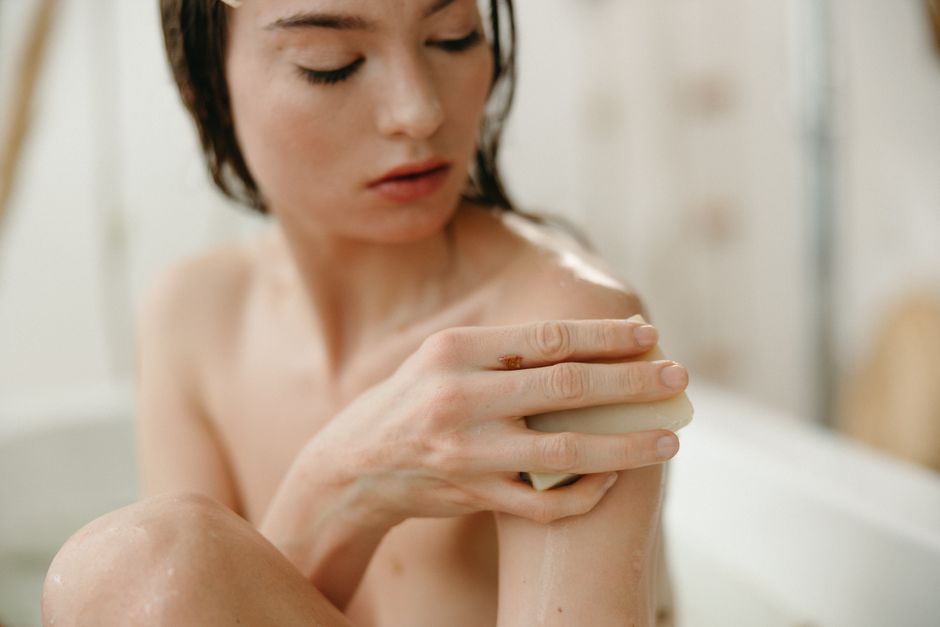
Turmeric soap is a bar or liquid cleanser that contains turmeric, the yellow spice from the Curcuma longa plant. For sensitive skin, the honest answer is mixed: turmeric has real anti-inflammatory compounds, but soap is a harsh delivery system, and the ingredient that makes turmeric yellow can also irritate or stain skin. Some people tolerate it well. Others react with redness, dryness, or a burning sensation.
The risks are not imaginary. Turmeric soap is often marketed as a fix for acne, eczema, and dark spots. The evidence for those uses is thin. What is well documented is that fragrance, essential oils, and high-pH soap bases — common in turmeric bars — are frequent triggers for sensitive skin.
What Is Turmeric Soap and What Is Actually In It?
Turmeric soap is a cleansing product that lists turmeric or curcumin among its ingredients. Curcumin is the main active compound in turmeric and the source of its color. How much curcumin a given bar contains is usually not stated on the label.
That matters, because “turmeric soap” covers a wide range of products. Some are made with a small amount of turmeric powder added to a standard soap base. Others are glycerin melt-and-pour bars with turmeric and added fragrance. A few are formulated for sensitive skin with minimal ingredients.
Common ingredients in these products include:
- Turmeric powder or curcumin extract
- Saponified oils (olive, coconut, palm, or shea butter)
- Essential oils such as tea tree, lavender, or citrus
- Fragrance
- Preservatives in liquid versions
The turmeric content is often the least standardized part. A 2021 review of turmeric products found that actual curcumin content frequently did not match label claims. That is a problem for anyone trying to judge whether a product will help or hurt.
Is Turmeric Soap Good For Sensitive Skin?
For most people with sensitive skin, turmeric soap is not the safest first choice. The reason is not turmeric itself — it is the soap.
True soap has a high pH, typically around 9 to 10. Healthy skin sits closer to pH 4.5 to 5.5. Washing with a high-pH cleanser can disrupt the skin barrier, strip natural oils, and leave skin feeling tight or irritated. For sensitive skin, that disruption is often the start of a flare.
Turmeric adds two more variables. First, curcumin is a known contact allergen for some people. Second, the yellow pigment can temporarily stain skin, nails, and fabric, especially in products with high turmeric content.
That does not mean no one with sensitive skin can use it. Some people with oily or acne-prone sensitive skin report that it helps. But “reports” are not the same as evidence, and individual tolerance varies widely.
What Does the Evidence Say About Turmeric For Skin?
Curcumin has documented anti-inflammatory and antioxidant activity in laboratory studies. That is well established in test-tube and animal research.
What is not established is whether turmeric soap delivers enough curcumin to the skin to produce a clinical benefit. Several factors work against it:
- Curcumin has poor solubility in water, which limits how much a soap can carry
- Contact time during washing is brief — usually under a minute
- Rinsing removes most of the product before it can penetrate
- Soap ingredients may degrade curcumin
Some small studies have looked at topical curcumin for conditions like acne and psoriasis. Results have been mixed, sample sizes small, and formulations varied. No large, well-controlled trial has shown that turmeric soap improves these conditions.
This is where marketing and evidence diverge. A product can contain a compound with anti-inflammatory properties and still do nothing meaningful for your skin, because the delivery and dose are wrong.





What Are the Real Risks of Turmeric Soap?
The most common risk is irritation. Sensitive skin reacts to disruption of its barrier, and high-pH soap plus fragrance plus essential oils is a combination that frequently causes it.
Contact dermatitis is the specific concern. This is an allergic or irritant reaction that shows up as redness, itching, burning, or a rash. Curcumin, fragrance, and some essential oils are all recognized contact allergens. If you have a history of reactions to skincare products, your risk is higher.
Other risks include:
- Staining. Turmeric can leave a yellow tint on skin and fabric, particularly on fair skin and light-colored towels.
- Dryness. Stripping oils can worsen conditions like eczema.
- Photosensitivity. Some essential oils used in these soaps, especially citrus oils, can make skin more sensitive to sunlight.
- Delayed reaction. Contact dermatitis can appear hours to days after use, making the cause hard to identify.
One clarification worth knowing: a reaction is not always immediate. Many people assume a product is safe because nothing happened the first time. Sensitization can build with repeated exposure.
Who Should Avoid Turmeric Soap?
Certain groups should be cautious or skip it entirely.
- Anyone with a known allergy to turmeric, curcumin, or related spices like ginger
- People with active eczema, psoriasis, or rosacea flares
- Anyone with a history of contact dermatitis from skincare products
- People using prescription retinoids, acids, or other barrier-disrupting treatments
- Anyone with broken, cracked, or sunburned skin
If you fall into any of these groups, a gentle, fragrance-free, low-pH cleanser is a more predictable choice. That is general clinical practice, not a turmeric-specific rule.
For pregnancy and breastfeeding, no specific safety data exists for topical turmeric soap. Turmeric is generally considered safe as a food, but that does not automatically translate to skin products. If you are pregnant or nursing and unsure, ask your clinician.
How to Test Turmeric Soap Safely
If you want to try it despite the risks, patch testing is the sensible first step. This is a standard approach for any new skincare product, not just turmeric soap.
Apply a small amount to a discreet area — the inner forearm works — and leave it for the time you would normally wash. Rinse and wait 24 to 48 hours. If you see redness, itching, or swelling, stop. Do not use it on your face.
If you have no reaction, you can try it on a small area of your body before broader use. Keep these points in mind:
- Use lukewarm water, not hot
- Limit contact time
- Rinse thoroughly
- Moisturize right after
- Stop at the first sign of irritation
Do not layer turmeric soap with exfoliating acids, retinoids, or other actives. That combination raises the odds of a reaction.
Are There Better Options For Sensitive Skin?
For sensitive skin, the goal is a cleanser that removes dirt and oil without disrupting the barrier. That usually means a low-pH, fragrance-free, non-soap formula.
If your interest in turmeric is about calming inflammation or fading dark spots, there are better-studied options. For dark spots, ingredients like niacinamide, azelaic acid, and vitamin C have more clinical support. For inflammation, gentle cleansing and consistent moisturizing often do more than any single active.
If you specifically want turmeric, a leave-on product formulated for sensitive skin is a more logical format than soap, because contact time is longer and the base is gentler. Even then, the evidence for benefit is limited.
None of this means turmeric soap is useless. It means the claims made about it usually outrun the evidence, and for sensitive skin the risks are real enough to take seriously.
Frequently Asked Questions
Is turmeric soap safe for sensitive skin?
It can be, but it is not the safest choice. The high pH of soap and added fragrance or essential oils are common triggers for sensitive skin, and curcumin itself can cause reactions in some people.
Can turmeric soap cause a rash?
Yes. Contact dermatitis from turmeric, fragrance, or essential oils is a documented risk. Reactions can appear hours to days after use, so a delayed rash is still possible even if the first use seemed fine.
Does turmeric soap actually help acne or dark spots?
No large, well-controlled trial has shown that turmeric soap improves acne or dark spots. Contact time during washing is brief and rinsing removes most of the product before it can penetrate.
How do I patch test turmeric soap?
Apply a small amount to your inner forearm, leave it on as you would during washing, then rinse. Wait 24 to 48 hours and stop if you see redness, itching, or swelling.
