
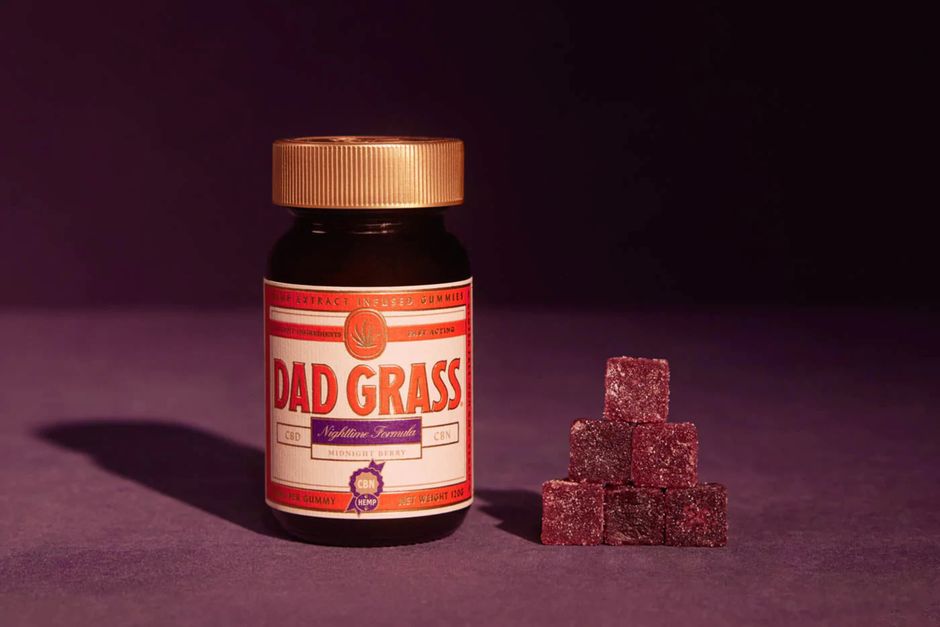
Yes, some CBD gummies contain THC, and many people take them without knowing it. CBD products in the US are not held to a single federal purity standard, so what is printed on a label does not always match what is inside the bottle. Independent lab testing has repeatedly found that a share of CBD gummies contain THC, sometimes at levels high enough to trigger a positive drug test or a noticeable effect.
This is not a rare fluke. It is a predictable result of how these products are made, labeled, and regulated. Understanding the difference between full-spectrum, broad-spectrum, and isolate gummies, and knowing what a lab report actually proves, tells you far more than the marketing on the front of the package.
Is There THC in CBD Gummies?
Often, yes. CBD and THC are both cannabinoids found in the cannabis plant, and they naturally occur together. How much THC ends up in a finished gummy depends on which part of the plant was used, how it was extracted, and whether the maker removed the THC afterward.
Hemp is legally defined in the US as cannabis containing no more than 0.3 percent THC on a dry weight basis. That number is a threshold for the plant material, not a guarantee for the product made from it. A gummy is a small, concentrated dose. If the starting extract carries THC near that limit, a serving can deliver a measurable amount.
There is a second layer to this. Delta-8 THC and similar compounds are chemically related to the THC most people mean when they say “THC,” which is delta-9 THC. Some products labeled as CBD contain delta-8 or other THC variants that were not listed on the label. A person expecting a non-intoxicating product can get an intoxicating one.
Full-Spectrum vs Broad-Spectrum vs CBD Isolate Gummies
The type of extract is the single biggest factor in whether THC is present. These three categories are not marketing tiers. They describe genuinely different chemical contents.
- Full-spectrum: Contains CBD plus the full range of other plant compounds, including THC. THC is typically present at low levels but is not zero.
- Broad-spectrum: Contains multiple cannabinoids and plant compounds, but THC has been removed or reduced to trace amounts. In practice, “trace” is not always zero, and removal is not always complete.
- CBD isolate: Contains CBD alone, with other cannabinoids stripped out. This is the form least likely to contain THC, though it still depends on the quality of the starting material and the manufacturing process.
The word “spectrum” tells you about what is included, not about purity. A full-spectrum product is supposed to contain THC. A broad-spectrum or isolate product is supposed to be nearly free of it. Whether it actually is comes down to testing.
How Much THC Can Legally Be in a CBD Gummy?
Federal law sets the 0.3 percent THC limit for hemp, but it does not set a per-gummy THC limit for finished CBD products sold as supplements. That gap is the source of most of the confusion.
In practice, a full-spectrum gummy might contain a small amount of THC per serving, while a broad-spectrum or isolate gummy is intended to contain little to none. Because there is no enforced per-serving cap for most products on the supplement market, the amount can vary widely from brand to brand and even batch to batch.
State-licensed cannabis products are a different category. Those are regulated and tested under state rules, with THC content required on the label. CBD sold online, in gas stations, or in wellness shops generally is not covered by those same rules.





What Do CBD Gummy Labels Actually Tell You?
Labels are a starting point, not proof. A label can say “THC-free” or “0.0% THC” and still be wrong, because in most of the supplement market no one verifies that claim before the product is sold.
A few label details are worth checking:
- The extract type (full-spectrum, broad-spectrum, or isolate)
- The amount of CBD per serving, in milligrams
- Whether THC is listed, and at what amount
- A batch or lot number that can be matched to a lab report
- A QR code or website where a certificate of analysis can be found
If a product claims to be THC-free but is full-spectrum, that is a contradiction worth noticing. If there is no batch number and no way to look up test results, you have no way to verify anything on the label.
How Are CBD Gummies Tested for THC?
Testing is done by third-party labs using methods like high-performance liquid chromatography or mass spectrometry. These techniques can detect and measure specific cannabinoids, including delta-9 THC and related compounds, in a sample of the product.
The key word is “third-party.” A lab report produced by the company selling the product is not independent verification. A certificate of analysis from an outside lab, matched to the specific batch you bought, is the standard worth looking for.
One limitation matters here. A lab tests the sample it receives. It cannot guarantee that every gummy in every bottle from that batch contains the same amount. Manufacturing is not perfectly uniform, so minor variation between units is normal even in a well-made product.
Can CBD Gummies Cause a Positive Drug Test?
They can. Most workplace and legal drug screens look for THC metabolites, and those metabolites can show up after using a product that contains THC, even at low levels. This is one of the most common and most serious real-world consequences of an unlabeled or mislabeled product.
How much THC it takes to trigger a positive result varies by person and by test. Body weight, how often the product is used, and how sensitive the test is all play a role. There is no reliable way to predict a cutoff for a given individual, and no CBD gummy can be called safe for a drug test with certainty.
For anyone in a job or legal situation that involves drug testing, this is the practical bottom line. If the product contains any THC, or if you cannot verify that it does not, there is a real risk. Products marketed as THC-free have tested positive for THC.
Are CBD Gummies Safe?
CBD is generally well tolerated by many adults, but “generally well tolerated” is not the same as “safe for everyone.” The evidence here is more limited than the marketing suggests, and the THC question adds another layer.
CBD can interact with some prescription medications by affecting how the liver breaks them down. Anyone taking medication, especially for seizures, blood thinning, or liver conditions, should talk to a clinician before using CBD. CBD is also not recommended during pregnancy or breastfeeding.
For THC specifically, the effects range from nothing noticeable at low doses to impairment, drowsiness, and anxiety at higher ones. Because the amount in an unregulated gummy is not guaranteed, the effect is not guaranteed either. Some people report feeling intoxicated after taking a CBD product they believed contained no THC.
There is no clinical guideline that sets a safe THC dose for children, and CBD products are not appropriate for children without medical supervision. No clinical guidelines currently exist for THC exposure from CBD gummies in infants or young children, so any exposure in that group should be treated as a medical concern.
What to Check Before Buying a CBD Gummy
You cannot eliminate the THC question entirely, but you can reduce the guesswork. The goal is to move from trusting a label to checking a test.
- Choose isolate or broad-spectrum if you want the lowest likelihood of THC
- Look for a batch-specific certificate of analysis from an outside lab
- Check that the report lists THC, not just total cannabinoids
- Be cautious of any product claiming zero THC with no test to back it
- Avoid products with no lot number or no way to verify testing
The most useful habit is simple. Treat the label as a claim and the lab report as the evidence. When a company will not or cannot show you batch-specific testing, you are being asked to take their word for it. That is exactly the situation where THC tends to show up unannounced.
Frequently Asked Questions
Do all CBD gummies contain THC?
No, but many do, especially full-spectrum products. CBD isolate gummies are the least likely to contain THC, though quality and testing still matter.
Can full-spectrum CBD gummies get you high?
They can cause effects in some people, but the amount of THC is usually low and varies by product. A gummy with more THC than the label states is more likely to produce noticeable effects.
Will CBD gummies show up on a drug test?
They can, because most drug tests detect THC metabolites that can come from a product containing THC. There is no reliable way to predict whether a given product will trigger a positive result.
How can I tell if a CBD gummy has THC?
Check the extract type and look for a batch-specific certificate of analysis from an independent lab that lists THC. A label claim alone does not confirm what is actually in the product.
