
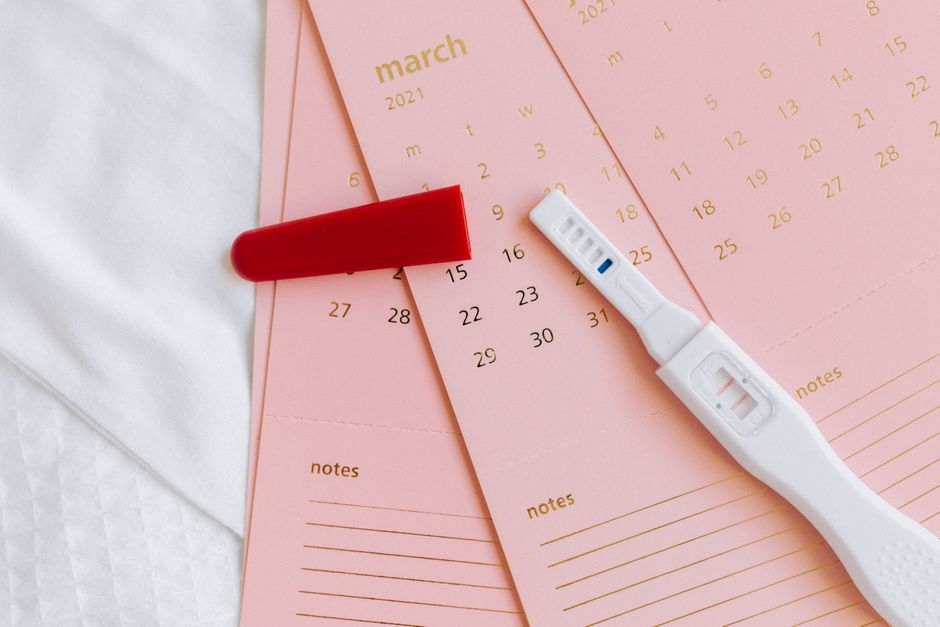
Ovulation predictor kits are highly accurate when used correctly, detecting the hormone surge that triggers egg release in about 98% of cycles. But that accuracy comes with a catch: the test tells you the body is preparing to ovulate, not that ovulation will definitely happen. Understanding what the test measures, when to use it, and what it cannot tell you makes the difference between a useful tool and a confusing one.
What Do Ovulation Tests Actually Measure?
Ovulation tests measure luteinizing hormone (LH) in urine. LH is produced by the pituitary gland, and levels stay low for most of the menstrual cycle. About 24 to 36 hours before ovulation, the brain signals a sudden spike in LH. This is called the LH surge. The surge triggers the ovary to release a mature egg.
The test detects this surge by comparing the amount of LH in your urine to a set threshold. Most tests work like pregnancy tests — a line appears, and you compare its darkness to a control line. When the test line is as dark or darker than the control line, the result is positive. That positive result means the LH surge has started.
The key point: a positive test does not mean the egg is already released. It means ovulation will likely happen within the next day or two. This is why timing intercourse in the 24 to 48 hours after a positive result gives the best chance of conception.
How Accurate Are Ovulation Tests Compared to Other Methods?
Ovulation tests are more precise than calendar-based methods. Calendar methods estimate ovulation based on average cycle length, but cycles vary. One study found that predicting ovulation by calendar alone is wrong more than half the time. Ovulation tests measure actual hormone changes in your body, making them far more reliable for pinpointing the fertile window.
Compared to tracking basal body temperature, ovulation tests give earlier warning. Temperature rises after ovulation has occurred, confirming it in hindsight. Ovulation tests predict it in advance. That makes tests more useful for timing intercourse, since sperm can survive several days but the egg only lives about 12 to 24 hours after release.
Fertility monitors that track multiple hormones, like estrogen along with LH, can provide a longer fertile window heads-up. But for confirming the surge itself, standard LH tests perform similarly. The main advantage of multi-hormone monitors is detecting the estrogen rise that happens a few days before the LH surge.
Why Ovulation Tests Can Give a False Positive
An LH surge does not guarantee ovulation will follow. In some cycles, the surge happens but the egg is not released. This is called luteinized unruptured follicle syndrome (LUFS). The body produces the hormone surge, but the follicle fails to break open. The test reads positive, but no egg emerges.
Certain medical conditions also cause persistently elevated LH. Polycystic ovary syndrome (PCOS) is the most common culprit. Women with PCOS often have higher baseline LH levels, which can make tests read positive throughout the cycle. In this case, the test is not wrong — it is detecting real LH — but the information is not useful for pinpointing ovulation.
Pregnancy and menopause can also cause false positives. hCG, the pregnancy hormone, shares a similar chemical structure with LH. Some tests may cross-react with hCG. Approaching menopause, LH levels naturally rise, which can produce positive readings without ovulation occurring.





Why Ovulation Tests Can Give a False Negative
Missing the surge is the most common reason for a false negative. The LH surge is brief — it typically lasts 12 to 24 hours in urine. If you test only once a day, you can easily miss it entirely. Testing twice daily, especially in the late morning and early afternoon, catches more surges than testing once each morning.
Urine concentration affects results. Testing with very dilute urine, such as after drinking large amounts of fluid, can produce a negative result despite an active surge. Testing with first morning urine is not always ideal either, since the LH surge often begins in the early morning but may not show up in urine for several hours.
Some women have LH surges that stay below the test’s detection threshold. This is uncommon, but it happens. Digital tests that read results automatically may label a borderline result as negative, while a manual test might show the line as matching the control.
How to Use Ovulation Tests Correctly
Timing matters. Start testing a few days before you expect ovulation. For a regular 28-day cycle, that means starting around day 10 or 11. For longer or irregular cycles, you may need to start earlier or use a fertility monitor to determine when to begin.
Test at the same time each day. Late morning to early afternoon is often recommended because the surge typically begins in the morning. Avoid testing after heavy fluid intake. If you test once daily and want maximum accuracy, consider testing twice daily once you approach your expected surge window.
Follow the test instructions exactly. Each brand has specific rules about how long to hold the test in urine and how long to wait before reading. Reading too early or too late can produce inaccurate results.
Here are key practices that improve accuracy:
- Test at the same time each day, ideally between 10 a.m. and 2 p.m.
- Reduce fluid intake for two hours before testing
- Test twice daily if you have irregular cycles or short surges
- Continue testing until you get a positive result, not just for a preset number of days
- Store tests properly — heat and humidity can damage them
What Ovulation Tests Cannot Tell You
Ovulation tests confirm an LH surge. They do not confirm that an egg was released, that your fallopian tubes are open, that your partner’s sperm is healthy, or that implantation will succeed. Conception requires all of these pieces to work together.
Tests also cannot tell you the exact moment of ovulation. The surge precedes ovulation by 24 to 36 hours on average, but this window varies between women and even between cycles for the same woman. Some women ovulate within 12 hours of the surge; others take closer to 48 hours.
Ovulation tests do not assess egg quality. Age-related fertility decline is primarily about egg quality, not whether ovulation occurs. A positive ovulation test in a 40-year-old woman does not mean her eggs have the same chances as a 25-year-old’s.
When Ovulation Tests Are Less Reliable
Certain groups should interpret ovulation test results with extra caution. Women with PCOS may see persistently positive or near-positive results. Women approaching perimenopause may have elevated LH levels that confuse results. Women taking fertility medications — particularly Clomid or gonadotropins — may have altered LH patterns that make test interpretation difficult.
Breastfeeding can suppress ovulation while LH levels fluctuate unpredictably. Some women ovulate without a clear LH surge during this time. Women with irregular cycles have a harder time knowing when to start testing, which increases the chance of missing the surge entirely.
If you have been using ovulation tests for six months without conceiving, see a healthcare provider. Infertility evaluation is typically recommended after 12 months of trying for women under 35, and after six months for women 35 and older. Ovulation tests can tell you if you are surging, but they cannot tell you why conception is not happening.
The Bottom Line on Ovulation Test Accuracy
Ovulation tests are among the most reliable at-home fertility tools available. They correctly detect the LH surge in the vast majority of cycles when used properly. Their main limitation is not the technology — it is what the technology can and cannot measure.
A positive test is strong evidence that ovulation will occur within the next day or two. It is not proof that ovulation occurred, that the egg is healthy, or that any other part of the reproductive system is functioning. Use the test as what it is: a timing tool. It tells you when to have intercourse. It does not diagnose fertility problems or guarantee pregnancy.
For most couples trying to conceive, ovulation tests are a practical, accurate way to identify the fertile window. If you are unsure about your results, cycle patterns, or how to interpret what you see, a healthcare provider can offer guidance specific to your situation.
Frequently Asked Questions
Can ovulation tests be wrong?
Yes, but usually from user error or underlying conditions rather than faulty tests. Missing the surge, testing at the wrong time, or having conditions like PCOS that elevate LH levels are the most common causes of inaccurate results.
How many days after a positive ovulation test do you ovulate?
Ovulation typically occurs 24 to 36 hours after the LH surge begins. The timing varies between women, so having intercourse on the day of the positive result and the following two days covers the most likely window.
Can you get a positive ovulation test and not ovulate?
Yes. A condition called luteinized unruptured follicle syndrome causes an LH surge without egg release. Conditions like PCOS can also produce positive readings without ovulation occurring.
Is testing once a day enough for ovulation tests?
For many women, yes, but testing twice daily catches more surges. The LH surge can last less than 24 hours, so a single daily test can miss it entirely.
