
That musty smell in your basement is not just unpleasant. It is a sign that mold is actively growing somewhere in the space, and mold growth means moisture is present. Whether that mold poses a real danger to your health depends on several factors: what kind of mold it is, how much of it is there, how long you are exposed, and whether anyone in your home has a lung condition or a weakened immune system.
For most healthy adults, everyday exposure to common basement molds like Cladosporium or Penicillium is unlikely to cause serious illness. But for people with asthma, mold allergies, or compromised immune systems, even moderate mold exposure can trigger real symptoms. A small number of mold species produce toxins called mycotoxins, and certain molds can cause serious infections in immunocompromised people. The bottom line: mold in your basement is a moisture problem that needs fixing, and for some people it is a genuine health concern.
Is The Mold In My Basement Dangerous To Your Health?
Mold itself is not automatically toxic. The health risk depends on three things: the type of mold, the amount of exposure, and the health of the person breathing it in.
Every environment contains mold spores. They float through outdoor air and settle indoors. When spores land on a damp surface — a basement wall with a leak, a carpet that stayed wet, cardboard boxes in humid air — they grow into visible colonies. Those colonies release more spores and, in some cases, chemical byproducts.
The health effects fall into three broad categories:
- Allergic reactions — the most common problem. Sneezing, runny nose, itchy eyes, coughing, and skin irritation. People with mold allergies react more strongly.
- Asthma aggravation — mold exposure can trigger asthma attacks and worsen symptoms in people who already have the condition. This is one of the better-documented effects in the research literature.
- Infection — rare in healthy people, but a serious risk for those with severely weakened immune systems. Certain molds, including Aspergillus species, can colonize the lungs of immunocompromised individuals.
What about mycotoxins? Some molds — notably certain Stachybotrys species, sometimes called “black mold” — produce toxic compounds. The word “toxic” gets used loosely in media coverage. The scientific picture is more nuanced. Mycotoxins are a genuine concern in contaminated food (where ingestion levels can be high), but the evidence that inhaling typical indoor mold spores causes mycotoxin poisoning in humans is limited and debated. Some studies suggest a possible link between damp indoor environments and various symptoms, but no clinical evidence currently confirms that airborne mycotoxins at typical indoor levels cause a distinct toxic syndrome.
What Are the Symptoms of Mold Exposure?
Mold exposure symptoms look a lot like allergy symptoms, because that is what most of them are. The most commonly reported symptoms include:
- Stuffy or runny nose
- Watery, itchy eyes
- Frequent sneezing
- Coughing or wheezing
- Throat irritation
- Headache
- Skin rash or irritation
- Worsening asthma symptoms
These symptoms tend to appear or worsen when you spend time in the moldy area and improve when you leave it. That pattern — symptoms that track with exposure — is one of the clearest signs that mold is the trigger.
Some people report difficulty concentrating, fatigue, or general malaise. The evidence linking mold exposure to these kinds of symptoms is weaker and more mixed. Some studies suggest a connection; others do not find one. It is hard to separate mold exposure from other factors in a damp home, like dust mites, poor ventilation, or volatile organic compounds from building materials.
If symptoms are severe — shortness of breath, chest tightness, fever — see a doctor. Those can signal something more than a simple allergy.
Who Is Most at Risk From Basement Mold?
Not everyone reacts to mold the same way. Some people can live with a damp basement for years and never notice a thing. Others react within minutes.
The groups at highest risk include:
- People with asthma — mold is a well-established asthma trigger. Research consistently shows that damp indoor environments worsen asthma symptoms.
- People with mold allergies — if you are allergic to mold spores, exposure will cause symptoms.
- Infants and young children — their lungs are still developing, and some research suggests early exposure to damp indoor environments may increase the risk of developing asthma later. The evidence here is suggestive but not definitive.
- Older adults — especially those with existing lung conditions.
- People with weakened immune systems — those undergoing chemotherapy, organ transplant recipients, people with HIV/AIDS, or anyone taking immunosuppressive medications. For this group, mold can cause serious lung infections.
- People with chronic lung diseases — COPD, cystic fibrosis, and similar conditions make the lungs more vulnerable.
If you or someone in your household falls into one of these groups, mold in the basement is not something to ignore.





How Does Mold in a Basement Actually Affect Indoor Air?
A moldy basement does not stay contained. Air moves through a house constantly — up stairwells, through gaps around pipes, through heating and cooling systems. Spores from a basement colony can travel to living areas above.
The concentration of airborne spores in a basement is often higher than in other parts of the home. But how much reaches the upper floors depends on ventilation, air sealing, and the HVAC system. A basement with a mold problem and an open door to the living space is a very different situation from a sealed crawlspace with a small patch of surface mold.
Humidity matters too. Basements are naturally more humid than upper floors because cool air holds less moisture and because basements are often below grade, where groundwater and soil moisture create constant pressure. When relative humidity in a basement stays above roughly 60%, mold can grow on almost any organic surface — wood, drywall, carpet, cardboard, fabric.
This is why controlling moisture is the real solution. Killing visible mold without fixing the moisture source means it will come back.
How Do You Know If You Have a Mold Problem?
You often do not need a test to know. Visible growth, a persistent musty odor, or water stains on walls and floors are enough to tell you mold is present.
If you want to confirm, options include:
- Professional inspection — a certified mold inspector can identify the extent of growth and find hidden moisture sources.
- Air sampling — measures spore counts in the air. Results can be hard to interpret because outdoor spore levels vary by season and region.
- Surface sampling — a swab or tape lift can identify what type of mold is growing. This is useful for confirming species but does not tell you whether the mold is a health risk.
Here is a point many people miss: knowing the exact species of mold rarely changes what you should do. Whether it is Cladosporium or Stachybotrys, the fix is the same — remove the mold and eliminate the moisture. Species testing is more useful for peace of mind than for guiding action.
What Should You Do About Mold in Your Basement?
The core principle is simple: remove the mold and fix the moisture. One without the other does not work.
For small areas — roughly less than 10 square feet of visible mold on hard surfaces — cleanup can often be handled with proper precautions. Larger areas or mold in HVAC systems generally call for professional remediation.
Steps that make a difference:
- Find and fix the water source. Leaks, poor drainage, cracked foundation walls, and high humidity all need to be addressed. Without this step, mold returns.
- Keep basement humidity below 60%. A dehumidifier helps. So does proper ventilation and sealing gaps.
- Remove porous materials that are moldy. Carpet, drywall, insulation, and cardboard that have been wet and moldy usually cannot be cleaned effectively and should be discarded.
- Clean hard surfaces. Non-porous surfaces can be cleaned with detergent and water. The CDC does not recommend bleach as a routine mold cleanup method because it does not penetrate porous surfaces and can off-gas.
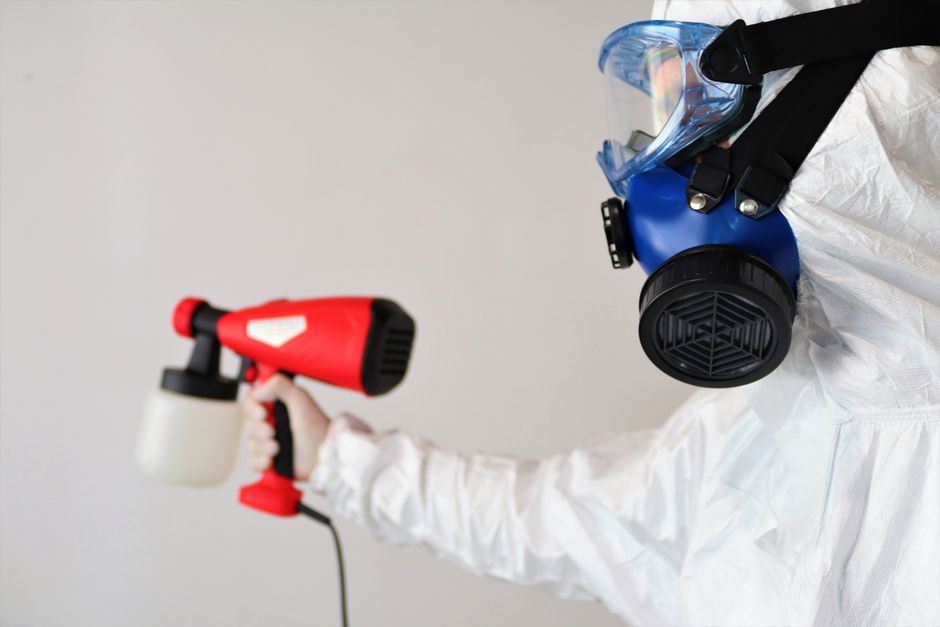
- Use protective gear. An N95 respirator, gloves, and eye protection reduce spore inhalation during cleanup.
- Consider professional help for extensive growth, mold in HVAC systems, or if anyone in the home has a health condition that mold could worsen.
Some clinicians recommend that people with mold allergies or asthma avoid being in the home during major remediation work. This is common-sense guidance rather than something established by controlled trials, but it aligns with what is known about spore exposure during disturbance.
Does Mold in a Basement Cause Long-Term Health Problems?
For healthy adults, the evidence does not support the idea that typical basement mold exposure causes lasting health damage. Symptoms usually resolve once exposure stops.
For people with asthma, the picture is different. Repeated exposure to damp indoor environments is associated with worse asthma control over time. Research published in peer-reviewed journals has linked damp housing to increased asthma symptoms and flare-ups in both children and adults.
The most serious long-term risk is invasive mold infection in immunocompromised people. This is uncommon but can be life-threatening. It requires medical treatment, not just home remediation.
Claims that mold causes chronic fatigue syndrome, fibromyalgia, or other complex multi-system illnesses are not supported by strong clinical evidence. Some people report these symptoms in connection with mold exposure, and their experience is real. But the research has not established a causal link.
Frequently Asked Questions
Is black mold in a basement dangerous?
Some molds called “black mold,” particularly certain Stachybotrys species, can produce mycotoxins, but the evidence that inhaling typical indoor levels causes serious harm in healthy people is limited. The bigger concern is that any mold growth signals excess moisture, which can worsen asthma and allergies.
Can basement mold make you sick?
Yes, for some people. Mold exposure commonly causes allergy symptoms like sneezing, coughing, and itchy eyes, and it can trigger asthma attacks. Serious infections are rare and mostly affect people with severely weakened immune systems.
How do I get rid of mold in my basement?
Fix the moisture source first, then remove the mold. Keep humidity below 60%, discard moldy porous materials like carpet and drywall, clean hard surfaces with detergent and water, and use an N95 respirator during cleanup. Large areas may need professional remediation.
Should I test my basement for mold?
Testing is usually not necessary. Visible growth or a musty smell confirms mold is present, and the fix is the same regardless of species. Testing can be useful for identifying hidden mold or confirming the extent of a problem.
