
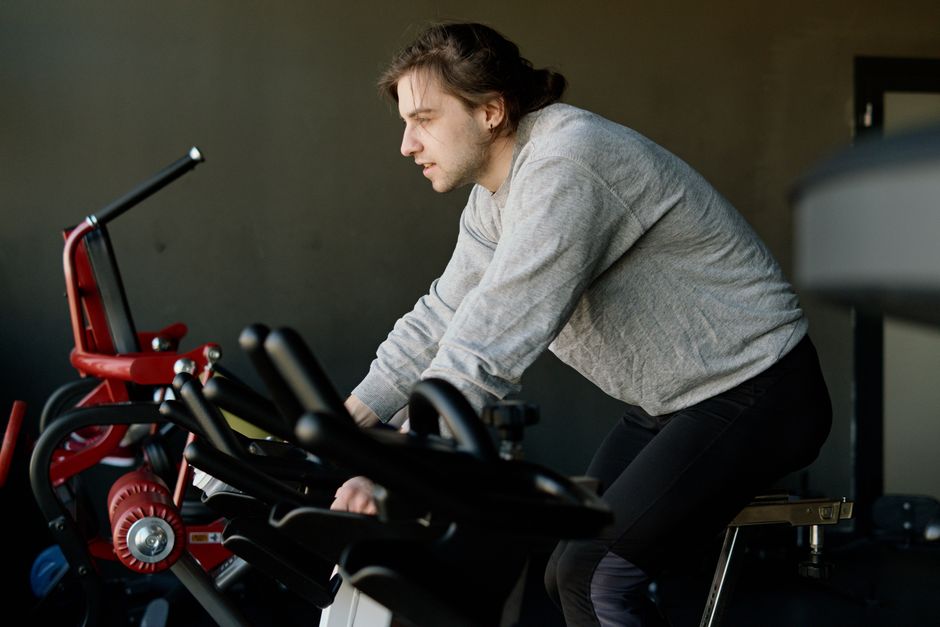
Yes, a stationary bike is excellent cardio. It raises your heart rate, improves lung capacity, and builds endurance, all while being gentle on your joints. It is one of the most accessible forms of aerobic exercise, suitable for everyone from beginners to elite athletes.
What Does Stationary Bike Cardio Actually Do to Your Body?
Riding a stationary bike makes your heart work harder. Your heart is a muscle, and like any muscle, it gets stronger with regular exercise. A stronger heart pumps more blood with each beat, which means it doesn’t have to work as fast at rest. This lowers your resting heart rate over time.
Your lungs also benefit. As you pedal, your breathing rate increases to supply oxygen to your working muscles. Over weeks and months, your body becomes more efficient at using that oxygen. You will notice daily activities like climbing stairs or carrying groceries feel easier.
Your leg muscles — the quadriceps, hamstrings, glutes, and calves — do the heavy lifting. But cardio is not just about muscle building. The continuous movement increases blood flow, which helps regulate blood pressure and improves circulation throughout your body.
Is It Better Than Running or Walking?
It depends on your goals and your body. Running burns more calories per minute than stationary cycling for most people. But running also carries a higher risk of injury, especially to knees, ankles, and shins. The impact of each foot strike is roughly two to three times your body weight.
A stationary bike is a non-weight-bearing exercise. Your body weight is supported by the seat. This makes it a safer choice for people with arthritis, joint pain, or those recovering from injury. You can push yourself hard on a bike without worrying about impact-related injuries.
Walking is lower intensity than both. It is excellent for overall health and is a great starting point. But if your goal is to significantly improve cardiovascular fitness, you will likely need to progress to something more vigorous. A stationary bike lets you do that while staying safe.
For calorie burn, the bike is competitive if you work at a high intensity. A vigorous cycling session can burn a substantial number of calories, comparable to a moderate run. The key is effort — a leisurely pedal will not give you the same results as an intense session.
What Are the Main Health Benefits?
Regular stationary bike use improves several key health markers. Studies consistently show that consistent aerobic exercise reduces the risk of heart disease, stroke, and type 2 diabetes. Cycling helps manage blood pressure and improves cholesterol profiles — raising HDL (good) cholesterol and lowering LDL (bad) cholesterol.
It is also an effective tool for weight management. The calories you burn during a session contribute to a calorie deficit, which is necessary for weight loss. For many people, cycling is easier to sustain than high-impact exercise because it is more comfortable.
Mental health benefits are real too. Exercise releases endorphins, which are natural mood elevators. Many people report reduced stress and anxiety after a cycling session. The rhythmic nature of pedaling can be meditative, providing a mental break from daily pressures.
For older adults, stationary cycling helps maintain muscle mass and balance. This reduces the risk of falls, which is a major concern as we age. It also helps maintain bone density, though weight-bearing exercise is better for this specific benefit.





How Often Should You Ride for Good Cardio?
Consistency matters more than intensity. For general cardiovascular health, aim for at least 150 minutes of moderate-intensity aerobic activity per week. This is a widely accepted guideline from public health organizations. That breaks down to about 30 minutes, five days a week.
If you prefer more vigorous workouts, 75 minutes per week of high-intensity cycling is sufficient. You can also combine moderate and vigorous sessions to meet your goals. The important thing is to make it a regular habit.
Beginners should start with shorter sessions — 10 to 15 minutes — and gradually increase duration and intensity. Your body needs time to adapt. Pushing too hard too soon leads to soreness and burnout. Listen to your body and progress at a sustainable pace.
You can ride every day if you want, but rest days are important. Muscles need time to recover and rebuild. For most people, riding five to six days a week with one or two rest days is a good balance. On rest days, you can do light stretching or take a leisurely walk.
How Do You Measure Intensity on a Stationary Bike?
There are several ways to gauge how hard you are working. The simplest is the talk test. At moderate intensity, you can hold a conversation but you are breathing heavier than normal. At vigorous intensity, you can only say a few words before needing a breath.
Heart rate is a more precise method. Your maximum heart rate is roughly 220 minus your age. Moderate intensity is about 50 to 70 percent of that number. Vigorous intensity is 70 to 85 percent. Many stationary bikes have built-in heart rate monitors, or you can use a chest strap or wrist monitor.
Perceived exertion is also valid. On a scale of 1 to 10, moderate exercise feels like a 5 or 6. Vigorous exercise feels like a 7 or 8. You should feel challenged but not completely out of control. If you cannot catch your breath, you are working too hard.
A good workout structure includes a warm-up, a main set, and a cool-down. Spend five minutes pedaling at an easy pace to warm up. Then do your main workout at your target intensity. Finish with five minutes of easy pedaling to let your heart rate gradually return to normal.
What About Interval Training on a Stationary Bike?
Interval training is a highly effective way to improve cardiovascular fitness. It involves alternating between short bursts of high-intensity effort and periods of lower-intensity recovery. This approach can produce significant fitness gains in less time than steady-state exercise.
A simple interval session might look like this: pedal hard for 30 seconds, then pedal easily for 90 seconds. Repeat this cycle 8 to 10 times. The entire workout can be completed in 20 minutes including warm-up and cool-down. This is sometimes called HIIT, or high-intensity interval training.
Research shows that interval training improves VO2 max — a measure of aerobic fitness — more rapidly than steady-state exercise in some people. VO2 max is how much oxygen your body can use during intense exercise. Higher values indicate better cardiovascular fitness.
However, intervals are demanding. They are not appropriate for absolute beginners or people with certain health conditions. If you have heart disease, high blood pressure, or other chronic conditions, talk to your doctor before attempting high-intensity intervals. Start with longer recovery periods and shorter work intervals until you build fitness.
Can You Lose Belly Fat With a Stationary Bike?
You cannot target fat loss from one specific area of your body. This is a common misconception. When you lose weight, your body decides where fat comes from based on genetics and hormones. No exercise can force your body to burn belly fat specifically.
However, stationary cycling can help you lose overall body fat, which includes belly fat. Consistent cardio creates a calorie expenditure that contributes to weight loss when combined with a sensible diet. As overall body fat decreases, belly fat typically decreases too.
Spot reduction — the idea that exercising a specific muscle burns fat in that area — has been repeatedly debunked in research. Doing hundreds of crunches does not specifically reduce belly fat. The same principle applies to cycling. It strengthens your legs but does not specifically target abdominal fat.
The most effective approach for reducing belly fat is a combination of regular aerobic exercise, resistance training, and a healthy diet. Consistency over months and years produces the best results. Quick fixes and crash diets rarely lead to lasting fat loss.
What Are the Downsides or Risks?
Stationary cycling is low risk, but it is not completely without downsides. The most common issue is discomfort or numbness in the saddle area. This is often caused by an improperly fitted seat or excessive pressure. A properly adjusted seat and padded cycling shorts can usually resolve this.
Knee pain can occur, especially if the seat is too low. When your seat is at the correct height, your knee should have a slight bend at the bottom of the pedal stroke. A seat that is too low puts excessive stress on the knee joint. Adjust your seat so your leg is almost fully extended but not locked.
Some people find stationary cycling boring compared to outdoor activities. The lack of scenery and changing terrain can make workouts feel monotonous. Using entertainment — streaming shows, music, or virtual cycling apps — can help maintain motivation.
If you have severe heart disease, uncontrolled high blood pressure, or other significant health problems, get medical clearance before starting any new exercise program. A doctor can advise you on safe intensity levels based on your individual situation.
Is a Recumbent Bike as Good as an Upright Bike?
Both types provide excellent cardiovascular benefits. The choice depends on your comfort and specific needs. An upright bike mimics traditional cycling with a more forward-leaning position. It engages your core muscles more and provides a slightly higher calorie burn because you support more of your body weight.
A recumbent bike has a reclined seat with pedals in front of you. It offers more back support and is easier on the lower back. Many people find it more comfortable, especially older adults or those with back problems. The cardiovascular benefits are comparable, though some studies suggest upright cycling engages slightly more muscle mass.
If you have balance concerns, a recumbent bike is safer because you are closer to the ground in a stable position. If you want to train specifically for outdoor cycling, an upright bike is more sport-specific. Both are valid choices for improving cardio health.
Frequently Asked Questions
How many minutes a day should I ride a stationary bike?
Aim for at least 30 minutes of moderate-intensity cycling most days of the week. This meets the general guideline of 150 minutes of moderate aerobic activity per week.
Will riding a stationary bike build leg muscle?
Yes, it builds endurance in your leg muscles, but it is primarily a cardio exercise. For significant muscle growth, you would need to add resistance training with high resistance on the bike or separate strength exercises.
Is 20 minutes of stationary bike enough for cardio?
Twenty minutes of vigorous cycling can be sufficient, especially if you use interval training. For moderate-intensity exercise, 30 minutes or more is generally recommended for optimal cardiovascular benefit.
Can I ride a stationary bike every day?
Yes, you can ride daily, but include some easy days to allow your muscles to recover. Alternating hard and easy sessions is a sustainable approach that reduces the risk of overuse injuries.
