
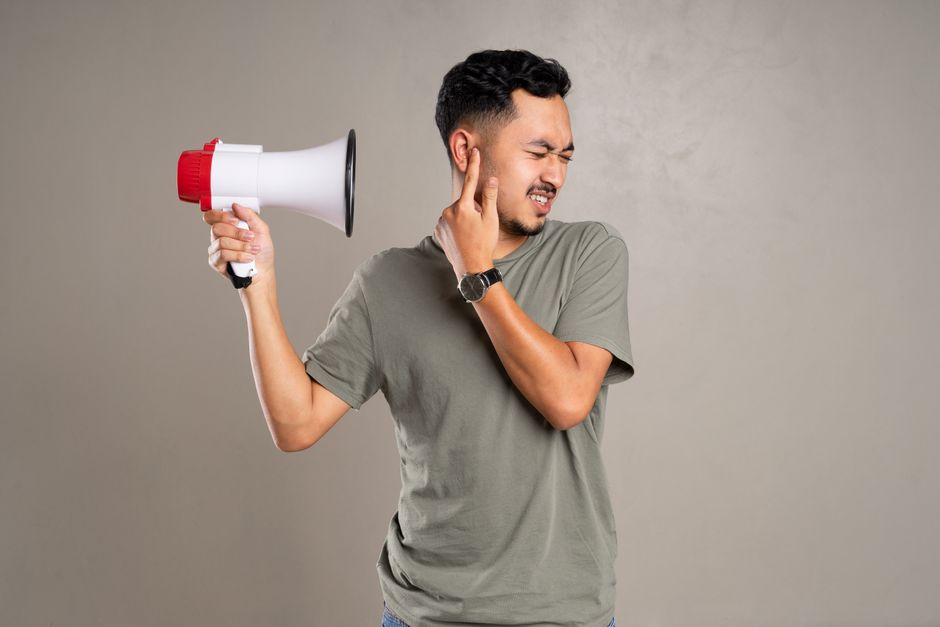
Hearing a vacuum cleaner, a school bell, or a crowded restaurant can be genuinely painful for some people. If your child covers their ears at sounds other kids shrug off, you may wonder whether that reaction points to autism. Sensitivity to loud noises is common in autistic people, but by itself it is not a sign of autism. Many children with sound sensitivity are not autistic, and many autistic people have no unusual reaction to sound at all.
Is Sensitivity To Loud Noises A Sign Of Autism?
No. Sound sensitivity alone does not indicate autism. It is one trait that appears more often in autistic people, but it also shows up in children with typical development, in people with anxiety, and in several other conditions.
Autism is diagnosed by looking at patterns across two broad areas: social communication and restricted or repetitive behaviors. Sensory differences are part of the diagnostic picture, but they are one piece among many. A child who dislikes loud noises but communicates easily, plays flexibly, and handles daily routines without distress does not meet the criteria for autism on that basis.
The reverse is also true. An autistic child may have no noticeable reaction to sound. Sensory profiles in autism vary widely. Some autistic people seek out loud sounds. Some are under-responsive to noise. Some notice specific frequencies or textures that others do not. There is no single sensory signature that defines autism.
This matters because parents often search for one clear early sign. Sound sensitivity is not that sign. It is a clue worth noticing, not a diagnosis.
Why Do Some People Find Loud Noises Painful?
The brain processes sound by converting pressure waves in the air into electrical signals. Those signals travel through the brainstem and midbrain before reaching the auditory cortex, where they are interpreted. In most people, this system filters and prioritizes sound automatically. Background noise fades. A sudden loud sound triggers a startle response but does not cause lasting distress.
In some people, that filtering works differently. Sounds that others find manageable can feel overwhelming or physically uncomfortable. Researchers sometimes describe this as reduced sensory gating — the brain does not dampen repeated or background input as efficiently. The result is that more sound reaches conscious awareness, and the nervous system responds with a stress reaction.
This is not a matter of willpower or attention. It reflects how the nervous system is wired. The same mechanism appears in people with and without autism.
Two terms are worth separating. Hyperacusis is a reduced tolerance for ordinary environmental sounds, which may feel uncomfortably loud even at normal volume. Misophonia is a strong emotional reaction — often irritation or disgust — to specific sounds such as chewing or tapping. Neither is unique to autism, and neither is the same as the sensory sensitivity described in autism assessments. A clinician evaluating a child may consider all three.
How Common Is Sound Sensitivity In Autism?
Sensory differences are common in autism. Estimates vary because studies use different definitions and different age groups, but unusual responses to sound are among the most frequently reported sensory features in autistic children and adults.
That said, “common in autism” is not the same as “specific to autism.” Sound sensitivity also appears frequently in:
- Children with anxiety disorders
- People with attention deficit hyperactivity disorder
- Individuals with sensory processing differences who do not meet autism criteria
- People with migraines or certain neurological conditions
- Children with no diagnosis at all
The overlap is the key point. A trait can be more frequent in one group without being a reliable marker for that group. Sensitivity to loud noises is a symptom that appears across many populations, which is why clinicians do not use it as a standalone screening tool.





What Other Signs Should Parents Look For?
Autism diagnosis rests on patterns, not single traits. Clinicians look at how a child communicates, interacts socially, and whether they show restricted interests or repetitive behaviors. The signs below are the ones that carry more diagnostic weight.
In social communication:
- Limited back-and-forth conversation or shared enjoyment
- Reduced use of eye contact, gestures, or pointing to share attention
- Difficulty understanding nonverbal cues or tone
- Delayed or unusual language development
In behavior and interests:
- Strong preference for sameness and distress at small changes
- Repetitive movements such as hand flapping or rocking
- Intense focus on specific topics or objects
- Unusual play patterns, such as lining up toys rather than pretending
Sensory differences — including sound sensitivity — sit alongside these features. They add context. They do not replace the core criteria.
One clarification worth making: a child who is sensitive to sound and also shows several of the signs above may benefit from a developmental evaluation. A child who is sensitive to sound and shows none of them generally does not need one on that basis alone.
Can Sound Sensitivity Have Other Causes?
Yes, and this is where parents often get stuck. Sound sensitivity has many possible sources, and identifying the right one changes what help looks like.
Temporary causes include ear infections, impacted earwax, and fluid behind the eardrum. These can make normal sounds feel louder or more irritating. An audiology exam can rule them out.
Persistent causes include hyperacusis, misophonia, anxiety, and sensory processing differences. Some children are simply more sensitive to stimulation in general — bright lights, tags on clothing, strong smells — and sound is one part of that pattern.
Autism is one possible context for sound sensitivity. It is not the only one, and it is not the most common one in young children. A pediatrician or audiologist can help sort through the possibilities.
When Should You Seek An Evaluation?
Consider an evaluation if sound sensitivity is causing real problems — if your child avoids everyday places, melts down regularly, or cannot focus at school because of noise. The distress matters more than the sensitivity itself.
Also consider an evaluation if sound sensitivity appears alongside concerns about social communication or repetitive behaviors. That combination is what warrants a developmental assessment.
Evaluations typically involve a pediatrician, a developmental specialist, and sometimes an audiologist and speech-language pathologist. No single test diagnoses autism. Diagnosis is based on observation, developmental history, and standardized assessment tools.
If you are in the United States, early intervention services for children under three and school-based evaluations for older children are available at no cost through public programs. A pediatrician can explain how to request one.
What Helps With Sound Sensitivity?
Approaches depend on the cause and the person. What works for one child may not work for another, and the evidence base varies by strategy.
Common supports include:
- Ear protection such as earmuffs or earplugs in specific noisy settings
- Advance warning before loud events
- Quiet spaces available during the day
- Gradual, supported exposure when a person wants to build tolerance
Ear protection is widely used and generally considered low-risk, though some clinicians caution against relying on it constantly, since it may reduce opportunities to adapt. The evidence on long-term effects is limited.
Occupational therapy is often recommended for sensory differences. Some families find it helpful. The research on sensory integration therapy for autism has shown mixed results, and it is not considered a cure for autism or a substitute for other supports.
For misophonia specifically, some clinicians use cognitive behavioral therapy or sound-based approaches. Evidence is still developing, and no single treatment is established as reliably effective.
No supplement, diet, or device has been shown in large human trials to reduce sound sensitivity in autism. Claims otherwise should be treated with caution.
Frequently Asked Questions
Does sound sensitivity mean my child is autistic?
No. Sound sensitivity is common in autistic people but also appears in children with typical development, anxiety, ADHD, and other conditions. It is not a diagnostic marker on its own.
At what age does sound sensitivity usually appear?
It can appear in toddlerhood and is often noticed when children start attending preschool or other noisy group settings. There is no specific age at which it reliably signals autism.
Can a child outgrow sensitivity to loud noises?
Some children become less reactive as they get older and develop coping strategies. Others remain sensitive throughout life. Outcomes vary, and there is no reliable way to predict which pattern a child will follow.
Should I get my child evaluated if they cover their ears at loud sounds?
An evaluation makes sense if the sensitivity causes real distress, limits daily activities, or appears alongside concerns about communication or repetitive behaviors. A pediatrician can help decide whether a developmental or audiology assessment is warranted.
