
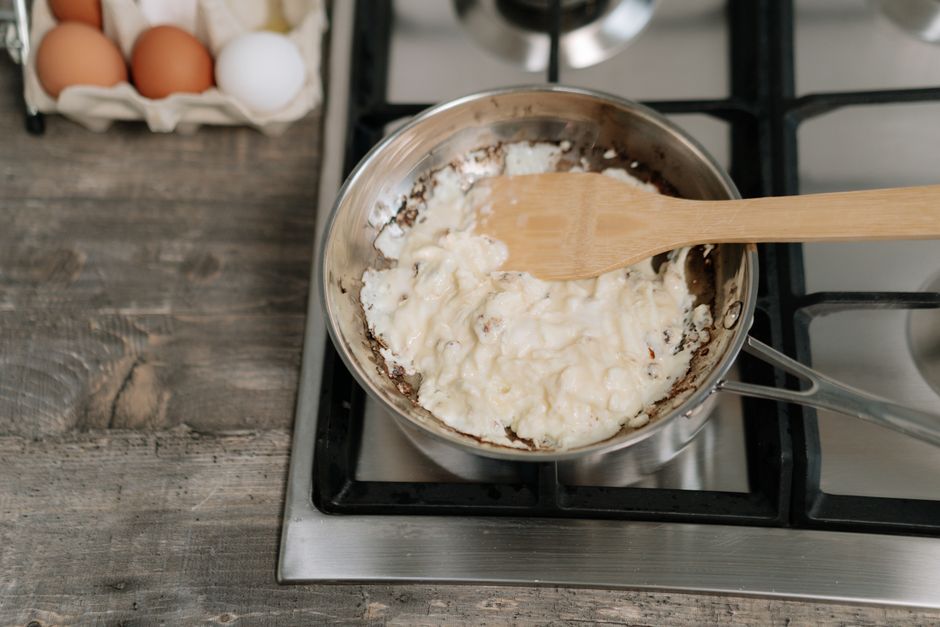
Eggs have been blamed for weight gain, then cleared, then blamed again. The short answer: a scrambled egg by itself is not fattening. One large egg has about 72 calories and roughly 6 grams of protein. What usually adds the calories is the butter, oil, cheese, or cream stirred into the pan — not the egg.
That distinction matters more than most people realize. The egg is one of the most nutrient-dense foods you can eat for the calories it provides. The problem tends to live in the cooking method and what lands on the plate beside it.
How Many Calories Are in Scrambled Eggs?
A plain large egg contains around 72 calories, 6 grams of protein, and about 5 grams of fat. Scramble two of them with no added fat and you are looking at roughly 144 calories. That is a light meal by almost any standard.
The number changes fast once you add cooking fat and mix-ins. Here is a realistic comparison using standard USDA-style values:
| Preparation | Approximate Calories |
|---|---|
| 2 large eggs, no added fat | ~144 |
| 2 large eggs + 1 tsp butter | ~178 |
| 2 large eggs + 1 tbsp butter | ~246 |
| 2 large eggs + 1 tbsp butter + 1 oz cheddar | ~360 |
| 2 large eggs + 2 tbsp cream + 1 tbsp butter | ~330 |
Notice that the egg did not change. The preparation did. One tablespoon of butter adds about 102 calories. One ounce of cheddar adds around 114. These are not small numbers when you are watching your intake.
Many restaurant scrambled eggs are cooked in generous amounts of butter or oil and often finished with cream or cheese. A diner-style serving can easily exceed 400 to 500 calories before you add toast, potatoes, or bacon.
Does Eating Eggs Cause Weight Gain?
Eating eggs does not cause weight gain in itself. Weight gain happens when you consistently take in more calories than your body uses. Eggs are simply a food — they do not override that basic principle.
What makes eggs interesting is their protein content. Protein takes longer to digest than refined carbohydrates and tends to promote fullness. Research on satiety has fairly consistently found that higher-protein breakfasts reduce hunger later in the morning compared with carbohydrate-heavy breakfasts of the same calories.
That does not mean eggs burn fat or speed up metabolism in any meaningful way. No food does that to a degree that matters. The practical benefit is simpler: if a protein-rich breakfast keeps you from snacking two hours later, that can help with overall calorie control.
Some studies suggest that people who eat eggs for breakfast consume fewer calories at their next meal. The effect is modest and varies between individuals. It is also not unique to eggs — Greek yogurt, cottage cheese, or tofu scramble would produce a similar result.
What About Cholesterol in Eggs?
For most people, dietary cholesterol from eggs has a smaller effect on blood cholesterol than saturated and trans fats do. This represents a shift from older guidance that limited eggs to a few per week.
The liver produces the majority of cholesterol in your body. When you eat more cholesterol, the liver typically adjusts its own production downward. For many people this compensation works well. For others — sometimes called hyper-responders — dietary cholesterol does raise blood levels more noticeably.
People with diabetes, existing heart disease, or a family history of high cholesterol may be advised to be more cautious with egg intake. Guidance on this has evolved and varies between organizations. If you have a specific cardiovascular condition or take a statin, that is a conversation to have with your own clinician rather than applying a general rule.
What is well established: the saturated fat in butter, cheese, and processed meats raises LDL cholesterol more reliably than the cholesterol found in the egg yolk itself.





Is Scrambled Egg Fattening Compared to Other Breakfasts?
Compared with most common breakfast options, plain scrambled eggs are on the lighter side. A plain bagel with cream cheese can run 400 to 500 calories with far less protein. A bowl of sweetened cereal with milk can land in a similar range.
The comparison gets murkier when you look at what people actually eat. Scrambled eggs are rarely eaten alone. They come with buttered toast, hash browns, sausage, or a side of fruit that nobody touches.
Here is a rough comparison of common breakfasts:
- Two plain scrambled eggs: ~144 calories, 12g protein
- Two scrambled eggs with butter and cheese: ~360 calories, 20g protein
- Bagel with cream cheese: ~400-500 calories, 10-12g protein
- Instant oatmeal packet with milk: ~250 calories, 8g protein
- Greek yogurt with berries: ~180 calories, 15g protein
The pattern is clear. Eggs are not the outlier. The company they keep is.
How Should You Cook Scrambled Eggs to Keep Them Light?
The cooking method is where most of the calorie difference lives. A nonstick pan needs little or no added fat. A well-seasoned cast iron pan works similarly. If you use butter or oil, measuring it instead of pouring it makes a real difference.
A few practical approaches:
- Use a nonstick pan and a small amount of cooking spray or a teaspoon of oil
- Add a splash of water or low-fat milk instead of cream
- Skip cheese or use a smaller amount of a strongly flavored cheese like parmesan
- Load up on vegetables — spinach, peppers, onions, tomatoes — for volume with minimal calories
- Pair with whole grain toast or fruit rather than processed meat or fried potatoes
None of these are rules. They are simply ways to keep the calorie count closer to what the egg itself provides. If you prefer your eggs cooked in butter and that fits within your daily intake, there is nothing wrong with that.
Can Scrambled Eggs Fit Into a Weight Loss Diet?
Yes, and they often do. The protein and fat in eggs make them satisfying, and satisfaction matters for sticking with any eating pattern long enough to see results.
The evidence on weight loss is consistent about one thing: no single food determines the outcome. What matters is the overall pattern — total calories, protein intake, fiber, and whether the approach is sustainable for you.
Some research indicates that including protein at breakfast can help reduce appetite and support lean muscle retention during weight loss. Eggs are one convenient way to get that protein. They are not the only way, and they are not magic.
One thing worth noting: the “egg white only” approach that was popular years ago removes most of the fat and about half the protein. The yolk carries the fat-soluble vitamins, choline, and much of the flavor. Unless you have a specific medical reason to avoid yolks, there is little evidence that separating them improves weight outcomes.
Does the Type of Egg Matter for Weight?
Not for calories. A large egg has roughly the same calorie count whether it is conventional, cage-free, organic, or pasture-raised. The differences between these categories relate to farming practices and, in some cases, minor differences in fatty acid profile. They do not meaningfully change the calorie content.
Brown eggs and white eggs are nutritionally equivalent. The shell color depends on the breed of hen, not the quality or nutritional value of the egg.
Omega-3 enriched eggs do contain more omega-3 fatty acids because the hens are fed flaxseed or similar feed. That is a real difference in fatty acid composition. Whether it translates to meaningful health benefits compared with eating fish or taking a supplement is not clearly established.
Frequently Asked Questions
Is scrambled egg fattening if I eat it every day?
No, eating scrambled eggs daily does not cause weight gain if your total calorie intake stays in balance. The calories from added butter, oil, and cheese are what tend to push the number up.
How many calories are in two scrambled eggs with milk?
Two large eggs scrambled with a splash of low-fat milk come to roughly 150 to 160 calories. Whole milk or cream adds more, and butter or oil in the pan adds about 100 calories per tablespoon.
Are scrambled eggs good for weight loss?
They can be part of a weight loss diet because their protein helps with fullness. No single food drives weight loss — the overall pattern of eating is what matters.
Is it better to eat boiled eggs than scrambled for weight loss?
Boiled eggs have fewer calories only because no cooking fat is added. The egg itself is identical. If you scramble with a nonstick pan and no butter, the calorie difference disappears.
