
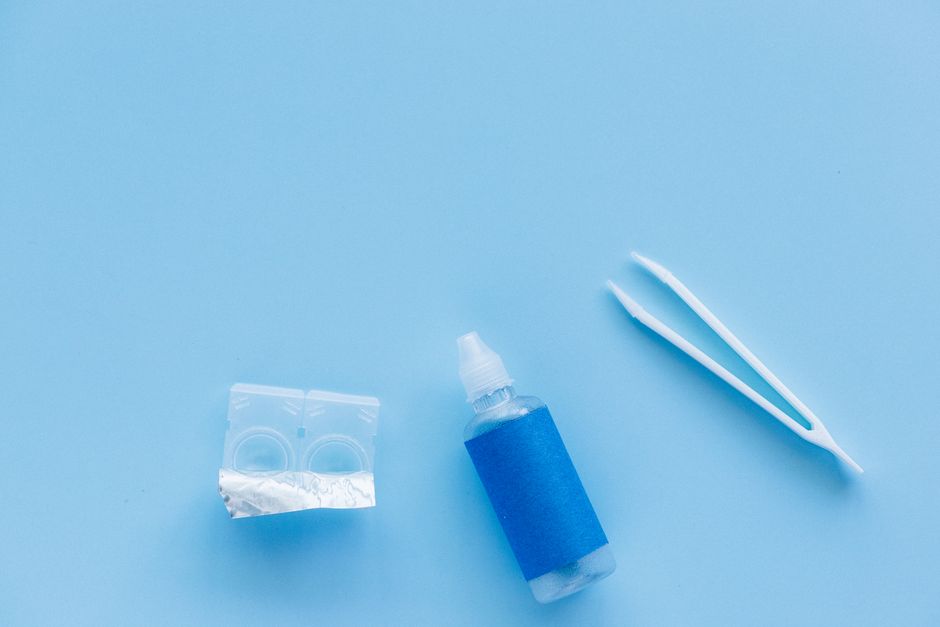
Saline solution is safe for rinsing contact lenses before wearing them, but it is not a disinfectant and cannot replace multipurpose solution or a proper cleaning system. Many people grab saline thinking it cleans lenses the same way, which leads to serious eye infections. Understanding the difference between rinsing and disinfecting is the only way to keep your eyes healthy while wearing contacts.
What Is Saline Solution and How Is It Different From Contact Solution?
Saline solution is a sterile mixture of salt and water that matches the salt concentration of your tears. Its only job is to rinse debris, dust, or loose particles off a lens before you put it in your eye. It does not kill bacteria, fungi, or viruses.
Multipurpose contact solution does the rinsing job too, but it also contains disinfecting agents like polyquaternium-1 or myristamidopropyl dimethylamine. These ingredients actively kill microorganisms that build up on lenses throughout the day and overnight. Saline has none of these ingredients.
Research shows that using only saline for overnight storage leads to a high risk of microbial keratitis, a serious corneal infection. A study published in the journal Ophthalmology found that people who stored lenses in saline instead of disinfecting solution had significantly higher rates of bacterial contamination. The saline kept lenses moist but did not reduce the bacterial load.
Some people confuse saline with “contact solution” because both come in similar bottles and both can be used for rinsing. The key difference is that saline is not labeled for disinfection. If the bottle says “for rinsing only” or “not for disinfection,” it is saline and should never be used for overnight storage.
Can You Use Saline Solution to Clean Contact Lenses?
You can use saline to physically rinse a lens before inserting it, but that is not the same as cleaning. Cleaning a contact lens requires rubbing the lens with solution and then storing it in disinfecting solution for the recommended time.
Saline does not break down protein deposits, lipid buildup, or debris that accumulates on lenses during wear. When you rinse with saline, you are only washing off loose particles. The biofilm of bacteria and proteins remains on the lens surface.
Some people report that their lenses feel more comfortable after a saline rinse compared to a multipurpose solution rinse. That is because saline is gentler and does not contain preservatives that can sting. But comfort does not equal cleanliness. A comfortable lens can still be contaminated.
If you are out of multipurpose solution and considering using saline as a substitute for cleaning, do not do it. The American Academy of Ophthalmology warns that this is one of the most common mistakes contact lens wearers make. Even one night of storing lenses in saline can allow bacteria to multiply to dangerous levels.
What Does Research on Saline Solution for Contacts Show?
Current research suggests that saline solution has a specific and limited role in contact lens care. It is useful for rinsing lenses immediately before insertion, especially for people who are sensitive to preservatives in multipurpose solutions.
A 2022 study in Contact Lens and Anterior Eye examined the bacterial contamination rates of lenses stored in different solutions. Lenses stored in saline for eight hours had bacterial counts 100 times higher than lenses stored in multipurpose solution. The study concluded that saline has no antimicrobial activity and should never be used for disinfection.
Another study looked at the effectiveness of saline for rinsing during lens insertion. Researchers found that a saline rinse removed visible debris just as well as multipurpose solution. But when they tested for bacterial presence after rinsing, saline did not reduce bacterial counts at all. Multipurpose solution reduced bacterial counts by over 99 percent.
The evidence is consistent across multiple studies. Saline is safe for rinsing but useless for disinfection. If you use saline, you must still use a disinfecting solution for cleaning and storage. There is no shortcut around this step.
What Are the Risks of Using Saline Instead of Disinfecting Solution?
The primary risk is infection. When bacteria grow on a contact lens and the lens sits against your cornea for hours, the bacteria can invade the corneal tissue. This condition, called microbial keratitis, can cause pain, blurred vision, sensitivity to light, and in severe cases, permanent vision loss.
Pseudomonas aeruginosa is a common bacteria found in contaminated contact lens cases. It thrives in moist environments and can cause rapid corneal damage. A study in the British Journal of Ophthalmology reported that improper lens storage, including the use of saline instead of disinfectant, was a leading risk factor for Pseudomonas keratitis.
Fungal infections are also possible. Fusarium and Candida species can grow on lenses stored in saline. These infections are harder to treat than bacterial infections and often require long courses of antifungal eye drops.
There is also the risk of acanthamoeba keratitis, a rare but serious infection caused by a microscopic organism found in water. If you rinse your lenses with saline that has been contaminated or if you store lenses in saline and then expose them to tap water, acanthamoeba can multiply. This infection is extremely painful and difficult to treat.
The risk increases with extended wear lenses. If you sleep in your lenses and use saline for storage, the combination of reduced oxygen and lack of disinfection creates an ideal environment for infection.
When Is It Actually Okay to Use Saline Solution for Contacts?
Saline is appropriate for rinsing lenses immediately before insertion, assuming you have already cleaned and disinfected them properly. This is the only routine use that is safe.
Saline can also be used for rinsing the contact lens case. After you empty the case and before you refill it with fresh disinfecting solution, a saline rinse can remove any leftover debris. But the case should still be air-dried completely.
Some people use saline during the day to rewet dry lenses. If your lenses feel dry or gritty, a drop of saline can add moisture without the preservatives found in rewetting drops. This is safe as long as the saline is sterile and you do not touch the bottle tip to your eye.
People with very sensitive eyes may prefer to rinse their lenses with saline before insertion to avoid the sting of multipurpose solution. This is fine as long as the lenses were stored overnight in disinfecting solution. The saline rinse just removes residual disinfectant.
As of 2026, no major eye health organization recommends using saline for any purpose other than rinsing. The FDA classifies saline as a rinsing solution only. Any use beyond that is off-label and carries risk.
What Is the Right Way to Clean and Store Contact Lenses?
The correct routine involves three steps: rub, rinse, and store. First, rub the lens with multipurpose solution for about 20 seconds on each side. This physically loosens debris and biofilm. Second, rinse the lens with fresh solution to wash away the loosened material. Third, place the lens in a clean case filled with fresh disinfecting solution.
Never top off old solution. Always empty the case, rinse it, and fill it with fresh solution. Reusing old solution reduces its disinfecting power and allows bacteria to survive.
Replace your contact lens case every three months. Cases develop biofilm over time, and bacteria can hide in scratches or cracks. A clean case is just as important as clean solution.
Wash your hands with soap and water before handling lenses. Dry them with a lint-free towel. Any moisture on your fingers can transfer bacteria to the lens.
Never use tap water, distilled water, or homemade saline on your lenses. Only use commercially prepared sterile saline or multipurpose solution. Tap water contains microorganisms that can cause serious eye infections.
Common Misconceptions About Saline and Contact Lenses
One widespread myth is that saline and contact solution are interchangeable. This is not true. Saline is for rinsing. Multipurpose solution is for cleaning, disinfecting, and storing. They serve different purposes and cannot substitute for each other.
Another myth is that if saline does not sting, it must be safer. Stinging is usually caused by preservatives in multipurpose solution, not by damage. The absence of stinging simply means the solution lacks preservatives. It does not mean the solution is more effective.
Some people believe that storing lenses in saline and then using a disinfecting rinse before insertion is safe. This is incorrect. Bacteria multiply during storage, and a quick rinse does not kill them. The disinfection step must happen during storage, not after.
There is also a belief that saline is natural and therefore better for your eyes. Saline is indeed closer to natural tears in composition, but natural tears contain antimicrobial proteins. Saline does not. Your tears protect your eyes. Saline just adds moisture.
Frequently Asked Questions
Frequently Asked Questions
Can I use saline solution instead of contact solution for one night?
No. Even one night of storing lenses in saline allows bacteria to multiply enough to cause infection. Always use multipurpose disinfecting solution for overnight storage.
Is saline solution safe to put directly in my eyes?
Yes, sterile saline is safe for direct eye contact and can be used as a rinse for dry eyes or to rewet lenses during the day. It does not disinfect, so do not use it as a cleaning substitute.
Can I make my own saline solution at home for contacts?
No. Homemade saline is not sterile and can contain harmful bacteria. Only use commercially prepared sterile saline from a pharmacy for contact lens care.
Does saline solution expire and is it still safe to use after expiration?
Yes, saline expires. After the expiration date, the solution may no longer be sterile and can harbor bacteria. Discard expired saline and do not use it on your eyes or lenses.
