
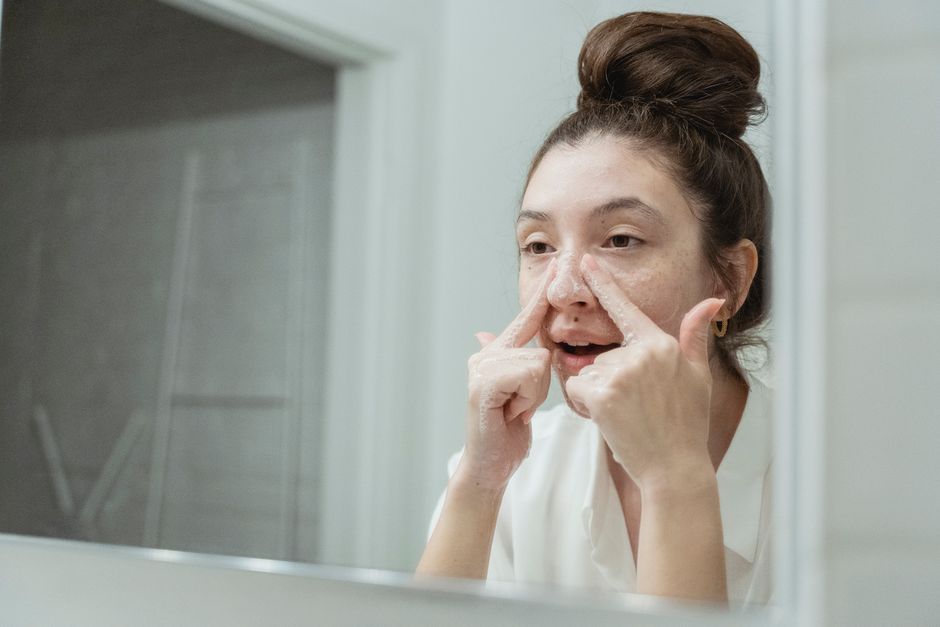
Retinol is not an exfoliant. It is a vitamin A derivative that works by speeding up how fast your skin cells turn over, not by dissolving the bonds that hold dead cells to the surface. That distinction matters more than it sounds, because it changes how you should use retinol, what you should pair it with, and what results you can realistically expect.
Exfoliants remove dead skin cells from the surface. Retinol changes what happens deeper in the skin, in the living layers where new cells are made. The visible shedding that sometimes follows retinol use is a side effect of faster turnover, not the mechanism itself. This is why retinol and exfoliating acids feel similar in some ways but behave very differently.
What Actually Counts as an Exfoliant?
Exfoliants fall into two categories, and both work on the skin’s surface.
Physical exfoliants use friction. Scrubs, brushes, and cleansing grains lift and slough off dead cells mechanically. Chemical exfoliants use acids or enzymes to break the chemical bonds between dead cells so they detach. Alpha-hydroxy acids like glycolic and lactic acid, beta-hydroxy acid (salicylic acid), and polyhydroxy acids all fall into this group.
The key point is location. Exfoliants act on the stratum corneum, the outermost layer of dead, flattened cells. They do not penetrate into the living epidermis or dermis in any meaningful way at typical cosmetic concentrations.
Retinol does the opposite. It has to get past the surface to do anything at all.
How Does Retinol Actually Work in the Skin?
Retinol is a precursor. Once it penetrates the skin, enzymes convert it first to retinaldehyde and then to retinoic acid, the active form. Retinoic acid binds to receptors in skin cells and changes how certain genes are expressed.
The result is a faster cell turnover cycle. Skin cells are born in the basal layer at the bottom of the epidermis, mature as they move upward, and eventually flatten and die at the surface. Retinoic acid speeds up that journey. It also affects how the cells mature along the way, which is why skin treated with retinoids tends to look smoother and more evenly toned over time.
There is a second mechanism worth knowing about. Retinoic acid also influences enzymes called matrix metalloproteinases that break down collagen, and it supports the production of new collagen. Research published in the Journal of Investigative Dermatology and related dermatology journals has documented increased collagen synthesis with topical retinoid use. This is a structural change in the dermis, well below where any exfoliant reaches.
So retinol is not removing dead cells. It is changing the behavior of living cells.
Why Does Retinol Cause Peeling Then?
Peeling and flaking are the most common reasons people assume retinol is an exfoliant. The logic seems obvious: skin is coming off, so something must be exfoliating it.
What is actually happening is a disruption of the skin barrier during the adjustment period. When cell turnover accelerates, the outer layers do not always mature and shed in an orderly way. The result is visible flaking, dryness, and sometimes redness. This is irritation, not exfoliation.
This distinction has real consequences. If you treat retinol like an exfoliant, you may be tempted to scrub your skin to remove the flakes. That makes the barrier problem worse. The flakes are a sign the skin is stressed, not a sign the product is working harder.
Most people adjust to retinol over several weeks to a few months, and the peeling typically fades. If irritation continues well beyond that, the concentration or frequency is usually too high for that person’s skin.





Can You Use Retinol and Exfoliants Together?
You can, but the combination needs care. Both retinol and exfoliating acids stress the skin barrier, and using them at the same time increases the chance of irritation, redness, and peeling.
A common approach is to use them on different days or at different times of day. Some clinicians suggest using an exfoliant in the morning and retinol at night, or alternating nights. Others recommend pausing exfoliants entirely when starting retinol so the skin can adjust to one active at a time.
There is no single correct schedule that fits everyone. Skin tolerance varies widely. The general principle is to introduce one active at a time and add the second only once the first is well tolerated.
One clarification that gets lost in skincare discussions: exfoliating before retinol does not help retinol absorb better in a useful way. It mainly increases irritation risk by stripping the barrier first.
Does Retinol Exfoliate Dead Skin Cells at All?
Indirectly, yes. Over time, faster turnover means dead cells reach the surface and shed sooner than they otherwise would. So the end result can look similar to exfoliation, and the skin can feel smoother.
But the process is different. An exfoliant removes cells that are already dead and sitting on the surface. Retinol changes how quickly cells are produced and how they mature, which means the cells arriving at the surface are different, not just arriving faster.
This is why retinol can improve things exfoliants cannot touch, such as fine lines, uneven pigmentation, and collagen loss. Exfoliants mainly affect texture, brightness, and clogged pores. The overlap is real but partial.
Retinol vs. Exfoliants: How They Compare
| Feature | Retinol | Exfoliants (AHAs, BHAs) |
|---|---|---|
| Primary action | Speeds cell turnover, affects living cells | Removes dead surface cells |
| Depth of action | Epidermis and dermis | Stratum corneum (surface) |
| Main benefits | Fine lines, texture, pigmentation, collagen support | Texture, brightness, unclogging pores |
| Common side effects | Dryness, peeling, redness, sun sensitivity | Stinging, redness, dryness |
| Time to visible results | Often several weeks to months | Often days to a few weeks |
The timeline difference is one of the clearest signals that these are not the same type of product. Exfoliants can produce visible smoothness quickly because they act on the surface. Retinol takes longer because it is changing cell behavior, and that takes time to show.
What Should You Know Before Using Retinol?
Retinol increases sun sensitivity, so daily sunscreen use is not optional. This is one of the most consistent findings in dermatology and applies to all topical retinoids.
Start with a low concentration and use it a few nights per week. Increase frequency slowly. Applying it to dry skin and using a moisturizer afterward can reduce irritation for many people.
Retinol is not recommended during pregnancy. Oral retinoids are known to cause birth defects, and while the evidence for topical retinol is less clear, most clinicians advise avoiding it during pregnancy and breastfeeding as a precaution. If you are pregnant or breastfeeding, talk to your doctor before using any retinoid product.
If your skin is sensitive, easily irritated, or you have a condition like rosacea or eczema, retinol may be harder to tolerate. A dermatologist can help you decide whether it is appropriate and how to introduce it.
One more point worth being honest about: not everyone sees dramatic results from over-the-counter retinol. It is a weaker precursor compared to prescription tretinoin, and the conversion to retinoic acid is limited. Some people notice meaningful improvement, others notice little. The evidence supports retinoids as a category, but individual response varies, and stronger forms are not automatically better for every skin type.
Frequently Asked Questions
Is retinol an exfoliant?
No, retinol is not an exfoliant. It works by speeding up cell turnover in the living layers of the skin, while exfoliants remove dead cells from the surface.
Does retinol peel your skin like an exfoliant?
Retinol can cause peeling, but this is irritation from a disrupted skin barrier, not exfoliation. The flaking usually fades as your skin adjusts to the product.
Can I use retinol and exfoliating acids on the same night?
It is generally not recommended, since both stress the skin barrier and increase irritation risk. Many people alternate them on different days or use one in the morning and the other at night.
Does retinol remove dead skin cells?
Indirectly, yes. Faster turnover means dead cells reach the surface and shed sooner, but retinol does not dissolve or lift them the way an exfoliant does.
